If you are looking for a palm that brings genuine tropical drama to an indoor space without the demanding care requirements of some of its relatives, the cat palm is one of the best choices available. With its dense, arching fronds of narrow, bright green leaflets, it creates a lush, full appearance that works beautifully in living rooms, bright hallways, and any space that needs a statement plant. Cat palm care is straightforward once you understand what this plant needs, and it rewards consistent attention with year-round greenery and steady growth. Here is everything you need to know.
What Is a Cat Palm?
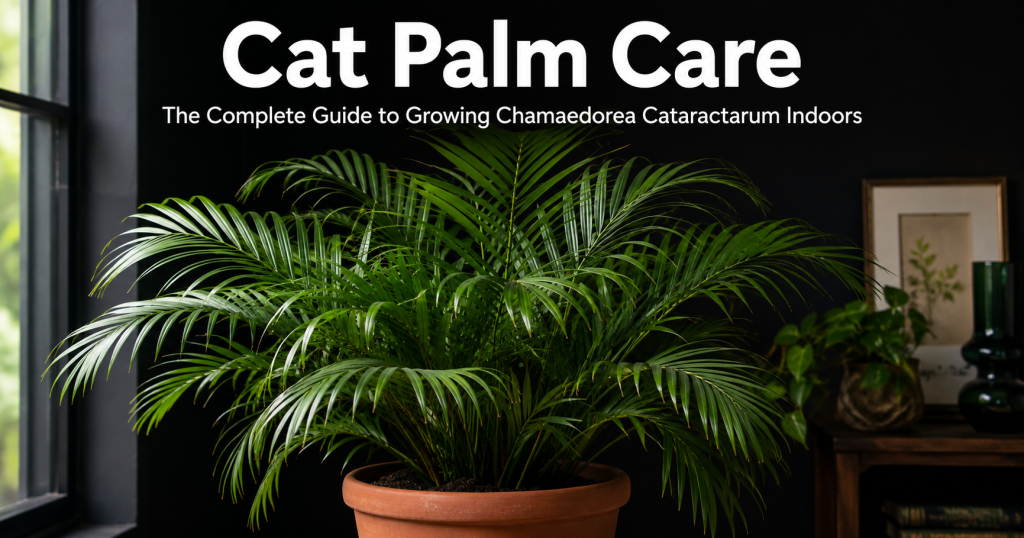
Cat palm (Chamaedorea cataractarum) is a clustering palm native to southern Mexico and Central America, where it grows naturally in humid, shaded forest understories near streams and rivers. Unlike many palms that grow as a single trunk, cat palms produce multiple stems from the base, creating a dense, bushy clump rather than the single-stemmed look of many other palm species.
The fronds are long and arching with narrow, dark green leaflets arranged along a central stem, giving the plant a feathery, graceful appearance. Mature plants can reach four to six feet indoors, though growth is relatively slow, making them practical for most indoor spaces over many years.
The name “cat palm” is sometimes used interchangeably with “cataract palm,” both referring to the same species.
Light Requirements
Cat palms prefer bright, indirect light. They are naturally understory plants that grow beneath a forest canopy, which means they are adapted to filtered light rather than intense direct sun. Direct sunlight, especially harsh afternoon sun through a south or west-facing window, can scorch the leaflets and cause them to turn yellow or brown quickly.
At the same time, cat palms need more light than true low-light palms like parlor palms. A spot near an east or west-facing window with good indirect light produces the healthiest growth. In lower light conditions, growth slows significantly and the plant may gradually lose its vibrant color.
If you notice yellowing fronds across the entire plant with no other obvious cause, insufficient light is often a contributing factor along with watering issues.
Watering
Consistent watering is one of the most important aspects of cat palm care. These plants prefer to stay evenly moist rather than cycling between very wet and very dry conditions.
Water when the top inch of soil feels dry, then water thoroughly and allow excess to drain completely. Never let the pot sit in standing water, since waterlogged roots quickly develop root rot. At the same time, do not allow the soil to dry out completely between waterings, since drought stress causes the leaflet tips to turn brown and is difficult to reverse once the damage has occurred.
Cat palms are sensitive to the minerals and fluoride in tap water, which can cause brown leaf tips over time. If your tap water is heavily chlorinated or high in minerals, using filtered water or leaving tap water to sit overnight before using it can help reduce tip browning.
Humidity
Humidity is arguably the most important environmental factor for cat palm health indoors. These plants come from naturally humid environments near water and struggle in dry indoor air, particularly during winter when heating systems reduce household humidity significantly.
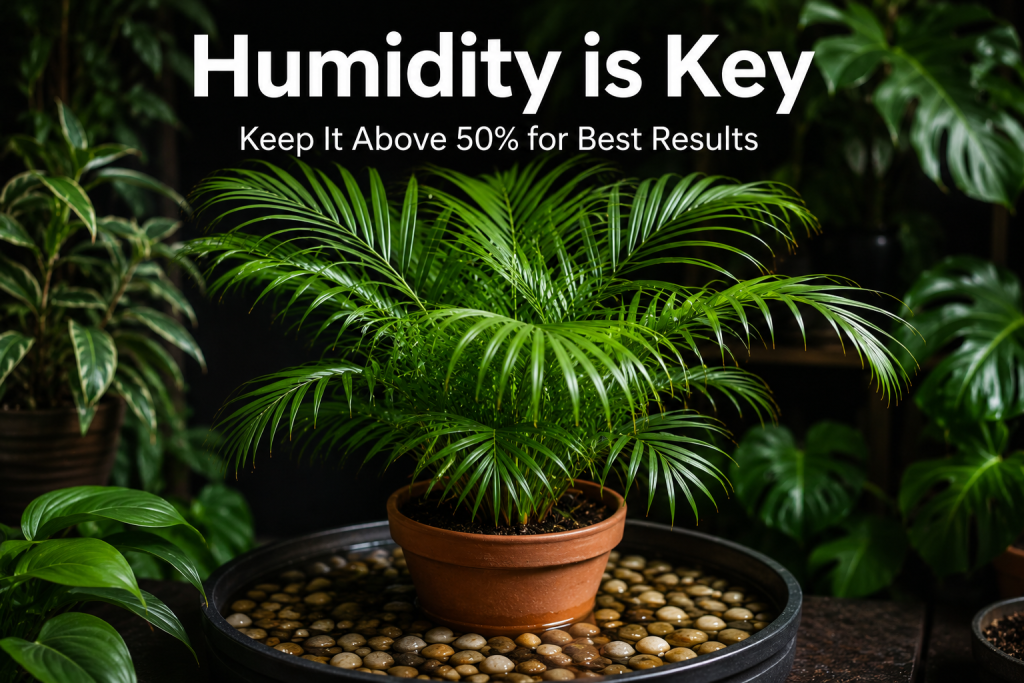
Aim for humidity levels above 50% and closer to 60% if possible. Practical ways to maintain adequate humidity include:
Place the pot on a pebble tray filled with water, ensuring the base of the pot sits above the waterline rather than in it.
Grouping the cat palm with other humidity-loving plants to create a more humid microclimate.
Using a small humidifier nearby is the most reliable method for consistent humidity maintenance, especially in winter.
Low humidity is one of the leading causes of brown leaf tips on cat palms, often working alongside tap water minerals and inconsistent watering to create the browning that many cat palm owners find frustrating.
Temperature
Cat palms prefer temperatures between 65 and 80°F (18 and 27°C) and are not cold-hardy. They should be kept away from cold drafts, air conditioning vents, exterior doors that are frequently opened in cold weather, and windows that get cold in winter. Temperatures below 50°F (10°C) can cause significant damage, and frost will kill the plant.
Outdoors, cat palms are suitable for growing in USDA hardiness zones 9-11, but as indoor plants, they need to stay in consistently warm conditions year-round.
Soil and Potting
A well-draining potting mix is essential for cat palms. A palm-specific potting mix or a standard indoor potting mix combined with perlite and coarse sand creates good drainage while retaining enough moisture for the plant’s needs. Avoid heavy, dense mixes that stay wet for extended periods.
Choose a pot with drainage holes. Cat palms have relatively shallow but wide-spreading root systems, so wide pots are more appropriate than very deep ones. Terracotta pots help prevent overwatering by allowing moisture to evaporate through the sides.
Repot every two to three years in spring when the roots have clearly filled the current container, moving up one pot size at a time.
Fertilizing
Feed cat palms with a slow-release palm fertilizer in spring and summer or use a balanced liquid fertilizer diluted to half strength once a month during the growing season. Palm fertilizers typically contain magnesium and manganese in addition to standard nutrients, which helps prevent the yellowing and browning that can occur when these micronutrients are deficient.
Stop fertilizing in autumn and winter when growth slows. Avoid over-fertilizing since excessive fertilizer causes salt buildup in the soil that damages roots and contributes to brown leaf tips.
Pruning
Cat palms require minimal pruning. Remove individual fronds that have turned completely yellow or brown by cutting them at the base as close to the stem as possible. Avoid cutting fronds that are still partly green, since even partially green fronds are still photosynthesizing and contributing to the plant’s health.
Do not cut the brown tips off individual leaflets expecting them to regrow green. Once a leaflet tip turns brown, that section will not recover. Trimming brown tips with scissors gives a tidier appearance but is purely cosmetic.
Common Problems
Brown leaf tips. The most common complaint with cat palms is usually caused by a combination of low humidity, tap water minerals, and inconsistent watering. Switch to filtered water, increase humidity, and maintain even soil moisture to prevent further browning. Existing brown tips will not reverse.
Yellow fronds. Can be caused by overwatering, insufficient light, nutrient deficiency, or natural aging of lower fronds. Check watering frequency and light levels, and consider fertilizing if the plant hasn’t been fed in several months.
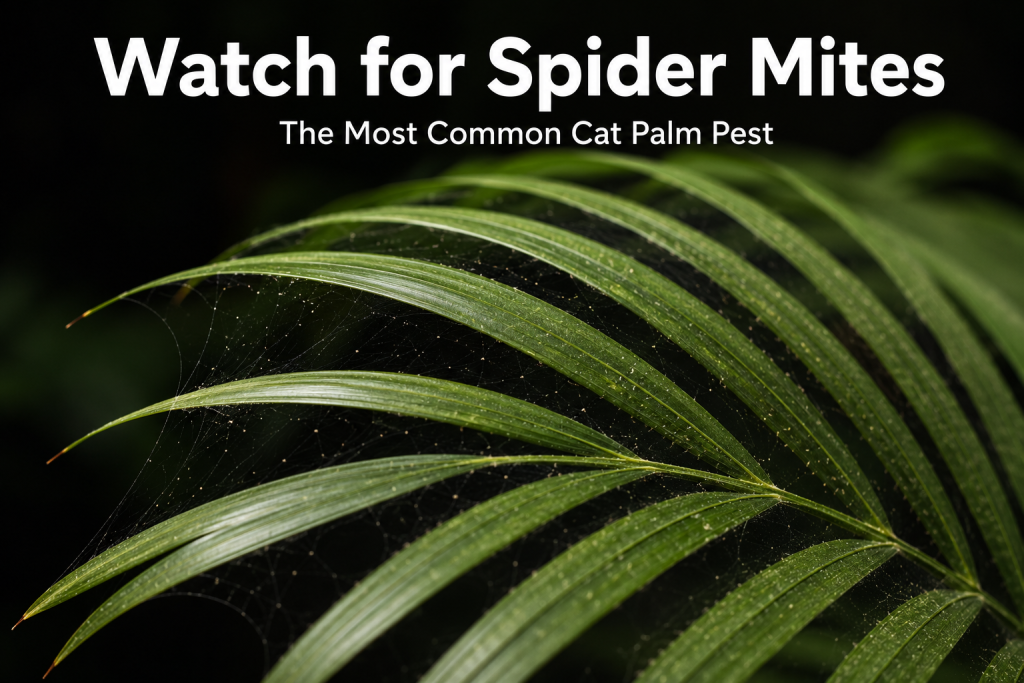
Spider mites. Cat palms are particularly susceptible to spider mite infestations, especially in dry conditions. Look for fine webbing between leaflets and tiny moving specks. Treat with insecticidal soap or neem oil and increase humidity to deter reinfestation.
Slow growth. Cat palms are naturally slow growers, but very slow or no growth usually indicates insufficient light, low temperatures, or a lack of fertilizer during the growing season. Address whichever factor applies.
Drooping fronds. Usually a sign of underwatering or very low humidity. Water the plant thoroughly and assess the humidity level around it.
Is Cat Palm Safe for Pets?
Yes, cat palms are non-toxic to cats and dogs, making them an excellent choice for pet-friendly households. This is one of the reasons they are so popular as indoor plants, since many dramatic tropical plants are unfortunately toxic to pets. The ASPCA lists cat palm as non-toxic to both cats and dogs.
Cat Palm vs Parlor Palm: What Is the Difference?
Cat palms and parlor palms (Chamaedorea elegans) are often confused since they belong to the same genus and have similar care requirements. The main differences are in appearance and size. Cat palms produce denser, more bushy growth with longer fronds and a fuller, more dramatic silhouette. Parlor palms tend to be more compact and slender, with more widely spaced leaflets and a lighter, airier look.
In terms of care, parlor palms are slightly more tolerant of low light and lower humidity than cat palms, making them a slightly easier option for challenging indoor environments. Cat palms reward a bit more attention with a more impressive visual impact.
Conclusion
Cat palm care comes down to a few consistent habits: bright indirect light, even watering with quality water, good humidity, and protection from cold and direct sun. Get those right, and this beautiful, pet-safe palm will reward you with lush, tropical foliage that brings a genuine sense of indoor jungle to any space it occupies.
FAQs
Why does my cat’s palm have brown tips?
Brown tips are almost always caused by a combination of low humidity, tap water minerals, and inconsistent watering. Increase humidity, switch to filtered water, and maintain even soil moisture going forward. Existing brown tips will not turn green again, but new growth should come in healthy.
How fast does a cat palm grow indoors?
Cat palms are relatively slow growers indoors, typically adding a few new fronds per year under good conditions. Bright indirect light, regular fertilizing during the growing season, and adequate humidity support the best growth rate.
Can cat palms tolerate low light?
They can survive in moderate indirect light but are not true low-light palms. In low light, growth slows dramatically and the plant may gradually decline. Bright indirect light near a window produces the healthiest, most vigorous plants.
Are cat palms toxic to cats?
No, cat palms are non-toxic to cats and dogs, according to the ASPCA. They are a safe choice for homes with pets.
How often should I water my cat palm?
Water when the top inch of soil feels dry, typically every five to seven days in warmer months and less frequently in cooler conditions. Always water thoroughly and allow excess to drain, and never let the pot sit in standing water.