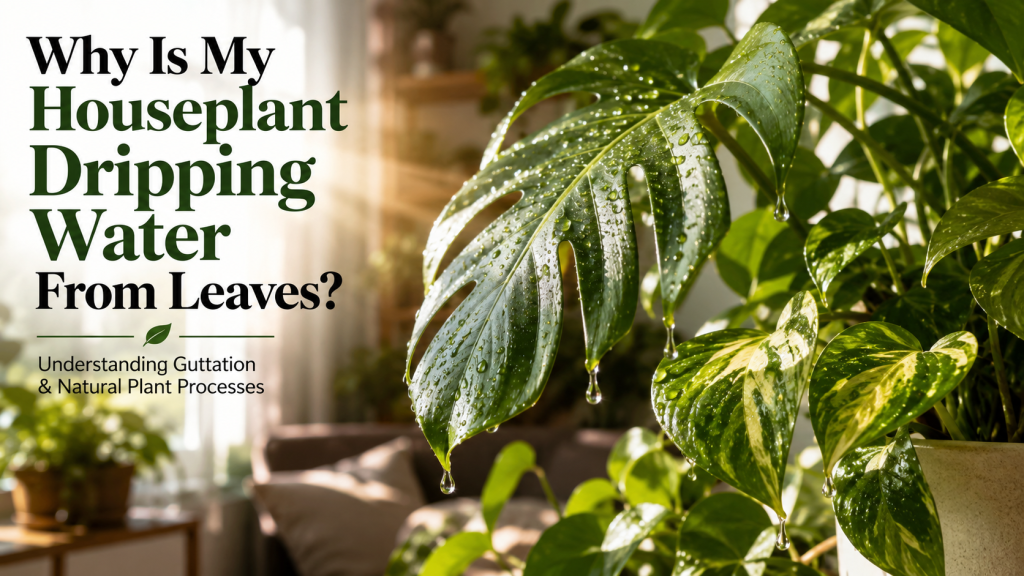
Why is my houseplant dripping water from leaves first thing in the morning? Finding tiny, clear droplets of liquid perfectly balanced on the tips or edges of your beautiful indoor foliage can be incredibly alarming. For many indoor gardeners, the immediate gut reaction is to panic, assuming the plant is either riddled with a mysterious disease or practically drowning from severe overwatering.
However, seeing your greenery shed liquid is actually a highly specific, fascinating biological phenomenon. Unlike regular leaf damage like dry brown tips or curling edges due to environmental stress, water droplets on the leaf surface usually point to a completely natural cellular process happening beneath the soil line.
While it is generally a sign of a healthy, active plant system, ignoring the core environmental conditions that trigger this sweating can occasionally set the stage for mold issues or root rot down the line. To put your mind at ease and help you optimize your care routine, here are the essential facts about why your houseplant is dripping water and how to manage it flawlessly.
The Biological Truth: What Is Guttation?
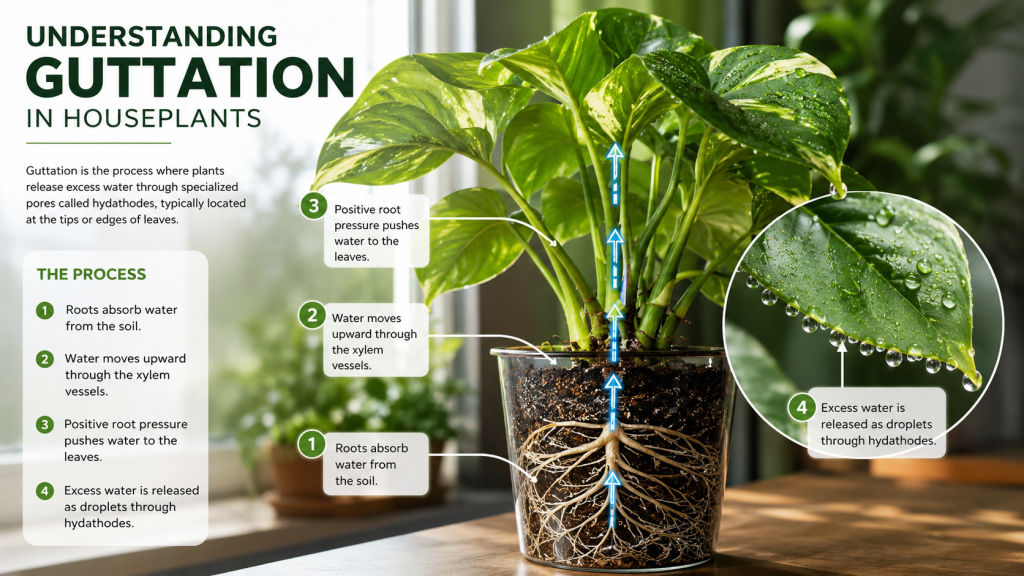
When you see clear moisture droplets on your houseplant’s foliage, you are witnessing a process called guttation. Guttation occurs when a plant has absorbed maximum moisture from the soil, but the surrounding indoor air is too humid or cool for that water to escape naturally through evaporation.
During the daytime, plants breathe and release moisture through small pores called stomata in a process known as transpiration. At night, these stomata close to conserve energy. However, if the soil is quite moist, the plant’s roots continue to actively pull water up into the stems and leaves via root pressure.
Because the water has nowhere to escape through evaporation, the internal pressure builds up. To prevent its plant cells from bursting, the houseplant safely vents this excess water through specialized, open pores located specifically at the leaf margins and tips, known as hydathodes.
1. It Is Usually a Positive Sign of a Healthy, Well-Watered Plant
The absolute best news about finding clear liquid on your plant’s leaves is that it typically means your houseplant is operating exactly how nature intended. Guttation is proof that your plant’s root system is incredibly healthy, vibrant, and strong enough to create the internal hydraulic pressure needed to push water all the way from the soil up to the very tips of the highest canopy leaves.
The Positive Side
- It demonstrates that your plant is perfectly hydrated and actively absorbing nutrients from the potting medium.
- It shows that the plant’s internal cellular defense mechanism is successfully managing its own water balance overnight.
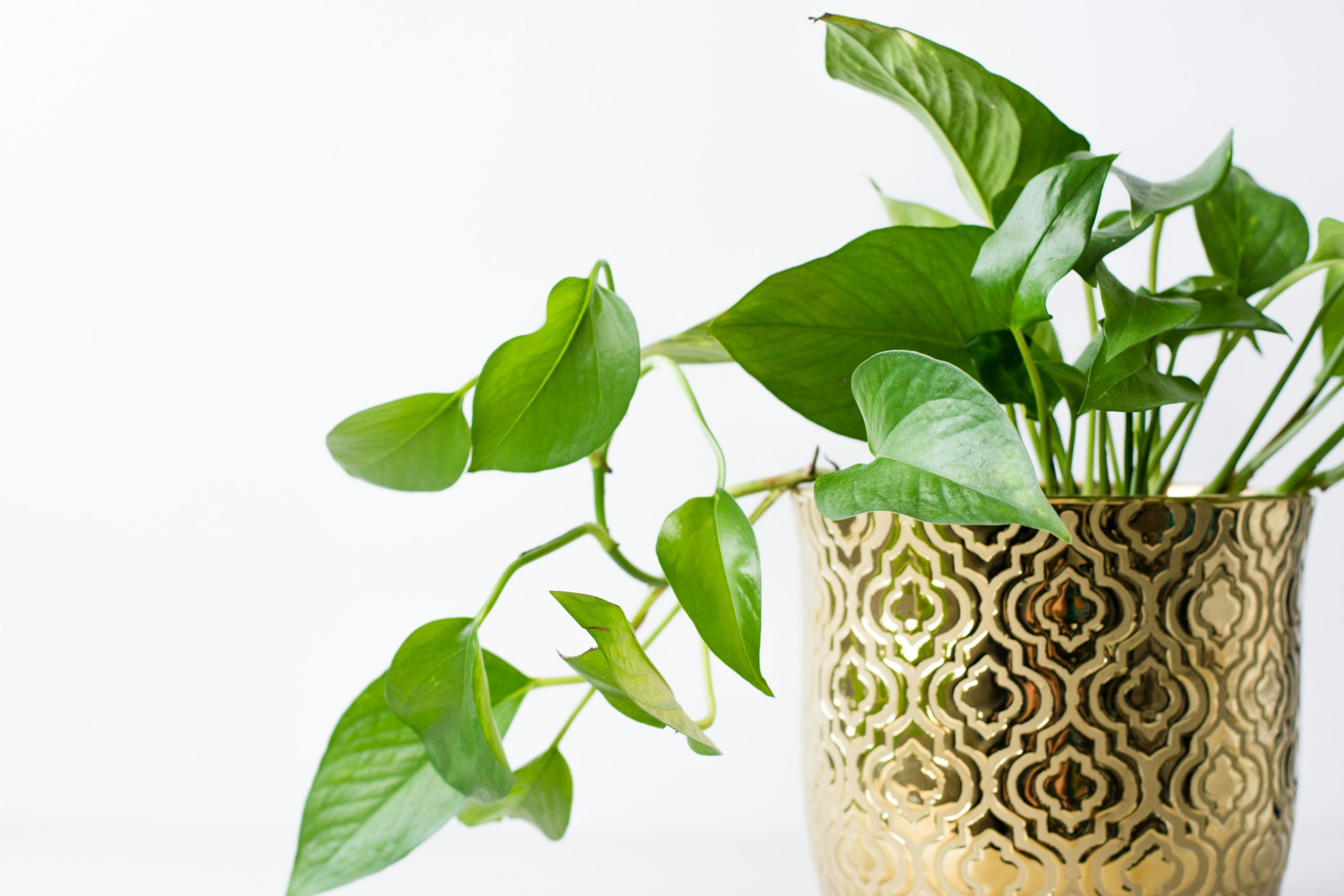
- It is incredibly common in fast-growing, tropical monsteras, pothos, dieffenbachias, and Alocasias.
2. It Is Not the Same as Dew or Condensation
It is very easy to mistake guttation for morning dew or standard room condensation, but the two are completely different. Dew forms externally when moisture from the ambient room air condenses onto a cold surface, like grass outside or a cold glass window pane. Guttation, on the other hand, comes entirely from inside the plant’s internal vascular system.
Why the Difference Matters
- Pure Water vs. Sap: Dew is purely evaporated water from the air. Guttation fluid is a cocktail of water mixed with plant sugars, mineral salts, and nutrients that were picked up while traveling through the plant’s roots.
- The Stain Factor: Because guttation fluid contains dissolved minerals and natural sugars, if the droplets fall off the leaf tips onto your hardwood floors, delicate furniture, or carpets, they can leave behind a stubborn, white, crusty residue or sticky spots.
3. Excessive Dripping Can Be an Early Warning for Overwatering
While mild guttation is perfectly normal, a plant that is constantly crying or dripping so heavily that it creates small puddles beneath the pot is trying to send you a crucial warning. It means the soil mix is consistently saturated, and the roots are working overtime to expel an overwhelming amount of water.
The Negative Warning Signs
- The potting soil feels dense, soggy, or smells slightly sour when you put your nose close to the container.
- The leaves are not only dripping water, but they are also starting to turn a pale yellow or feel soft and limp.
- The dripping persists for several consecutive days even though you haven’t watered the pot recently.
How to Fix the Balance
- Hold the Watering Can: Let the top two inches of the potting soil dry out completely before you even think about adding more water.
- Improve Drainage: Ensure your pot has structural drainage holes at the bottom, and empty the catch saucer beneath it so the roots never sit in stagnant water.
4. High Room Humidity and Cool Nights Trigger the Sweat
Guttation does not happen randomly; it is directly dictated by your indoor room environment. It most frequently occurs during late spring and early summer when the days are incredibly warm, but the night temperatures drop significantly.
When the indoor air cools down after dark, its capacity to hold moisture decreases, causing the relative humidity in your room to spike. Because the humid air is already saturated with water vapor, the moisture sitting inside the plant’s leaves cannot evaporate into the room, forcing the hydathodes to open up and excrete the liquid physically.
Environmental Checklist
- Look at your room’s setup; placing plants too close to a humid bathroom or a cool air conditioning vent can drastically increase morning dripping.
- Running a small fan to keep ambient air circulating gently around your indoor garden shelves at night can help reduce excessive guttation naturally.
5. You Should Clean the Foliage to Prevent Secondary Issues
Many plant owners ask if they should simply ignore the moisture or wipe it away. While the clear liquid itself will not hurt the leaf tissue immediately, leaving those nutrient-rich, sugary droplets sitting permanently on the leaf margins can invite secondary structural issues.
The Hidden Risks
- Fungal Spores: The sugary, moist surface left behind by guttation is the absolute perfect breeding ground for airborne fungal spores like powdery mildew or black sooty mold.
- Fertilizer Burn: As the water portion of the droplet slowly evaporates during the day, high concentrations of salts and fertilizer minerals are left behind on the delicate leaf tips, which can cause localized fertilizer burn, leaving the very tips of your leaves looking crisp and brown.
Easy Maintenance
- Take a soft, clean microfiber cloth dampened with room-temperature distilled water and gently wipe down the leaf tips in the morning to remove the sticky residue.
- Avoid heavy nighttime misting, as adding external water to a plant that is already struggling to transpire will only amplify the dripping issue.
Conclusion
Understanding why your houseplant is dripping water from its leaves comes down to recognizing that your indoor garden is simply breathing and balancing its internal pressure. Guttation is a completely natural, safe response to moist soil and humid night air. By keeping a close eye on your watering frequency, ensuring your room has decent air circulation, and wiping away the morning droplets to protect your furniture and foliage, you can easily ensure your indoor jungle remains clean, perfectly balanced, and beautifully green.
Frequently Asked Questions
1. Is the water dripping from my plant’s leaves safe for pets to drink?
While the clear liquid is mostly water, it does contain trace amounts of minerals, natural sugars, and plant compounds. If you have a highly toxic plant like a Dieffenbachia (dumb cane) or an Alocasia, the dripping fluid can contain calcium oxalate crystals, which can cause mild mouth irritation in curious cats or dogs. It is best to wipe it away.
2. Can I use a humidifier if my plants are dripping water constantly?
If your houseplants are heavily dripping every single morning, your room’s ambient humidity is already exceptionally high. You should temporarily turn down your humidifier or move it further away from those specific plants to allow their leaves to transpire naturally during the night.
3. Why does my Monstera drip water more than my succulents?
Tropical plants like monsteras have large leaves with specialized hydathode pores designed to thrive in high-moisture jungle environments. Succulents and cacti are native to arid deserts; they are anatomically engineered to trap and store every single drop of water inside their fleshy tissues, so they almost never undergo guttation.
4. Will chemical fertilizers increase the amount of water my plant drips?
Heavy chemical fertilization won’t necessarily increase the physical amount of water expelled, but it will significantly increase the concentration of mineral salts within that fluid. This increases the risk of the leaf tips getting scorched and turning brown once the water evaporates.
5. Should I cut off the leaf tips if they are constantly wet?
No, absolutely not. The hydathodes at the leaf tips are natural, necessary escape valves for your houseplant. Cutting them off will permanently mutilate the leaf structure, scar the foliage, and force the plant to try and vent pressure from other areas, potentially stressing the plant.