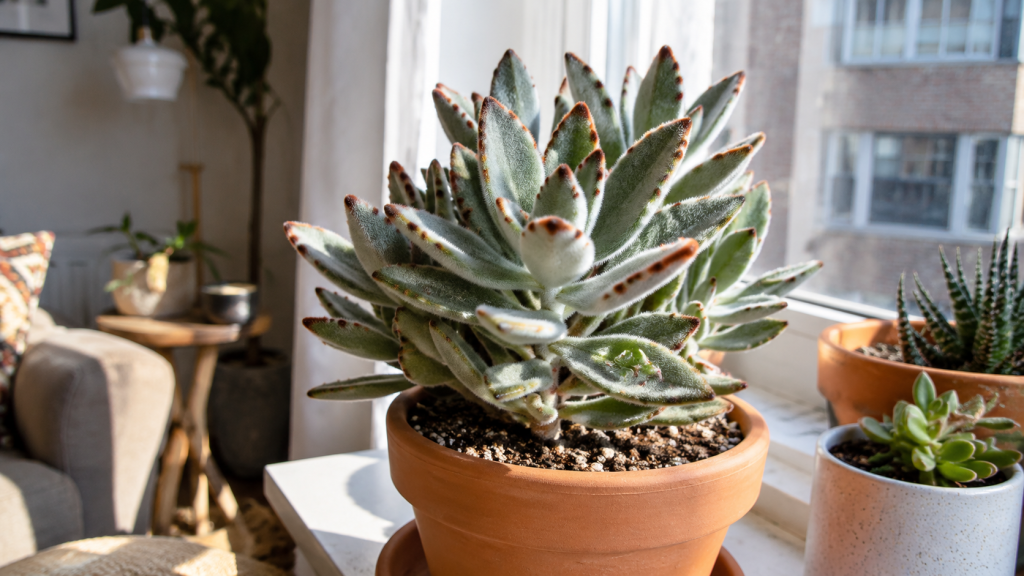
Panda plant (Kalanchoe tomentosa) care is highly rewarding for apartment dwellers and small-space homeowners looking to bring the outdoors inside. This Madagascar native, famed for its thick, velvety, silver-blue leaves and contrasting chocolate-brown margins, is an exceptional solution for compact spaces. This succulent thrives in typical indoor environments, offering both visual texture and structural form without demanding excessive maintenance.
Understanding the unique physiological adaptations of this species is the secret to keeping it vibrant and healthy over the long term. Because it is native to arid, rocky regions, its care requirements differ significantly from standard tropical houseplants. This comprehensive guide details everything required to successfully grow, maintain, and troubleshoot this popular succulent indoors, ensuring it remains a standout feature in any indoor garden space.
Quick Care Answer Box
How do you care for a panda plant indoors?
To keep a panda plant thriving, provide 6+ hours of bright, indirect sunlight daily (with some direct morning sun) and plant it in a sharply draining cactus and succulent mix. Water deeply only when the potting medium has dried out completely, which is typically every 2 to 3 weeks during the spring and summer, and significantly less frequently in winter. Maintain typical indoor temperatures between 60°F and 75°F, keep humidity levels low, and protect the plant from freezing drafts.
Essential Growing Conditions for Kalanchoe tomentosa
Replicating the arid, sunny habitat of Madagascar is essential for maintaining the compact growth and signature coloration of Kalanchoe tomentosa. Indoors, this comes down to managing four fundamental environmental pillars: light, moisture, substrate, and temperature.
Lighting Requirements
Bright, indirect light is the foundation of successful cultivation. Ideally, place the container near an east- or south-facing window where it can receive several hours of direct morning sun followed by bright, filtered light for the rest of the day. If the location lacks sufficient natural light, the stems will begin to stretch out or “etiolate,” causing the dense leaf nodes to separate and ruining the plant’s naturally compact silhouette. For homes with limited windows, supplementing with a full-spectrum LED grow light positioned 6 to 12 inches above the foliage for 12 to 14 hours daily will prevent this leggy growth.
Watering and Substrate
The single most common mistake with this species is overwatering. The thick, trichome-covered leaves are highly adapted to storing water, meaning the root system requires prolonged periods of dryness to breathe. Implement a strict “soak and dry” routine: pour water thoroughly over the soil until it runs out of the bottom drainage holes, then empty the collection saucer immediately. Do not water again until a moisture meter or a finger inserted deep into the pot confirms the medium is entirely bone-dry.
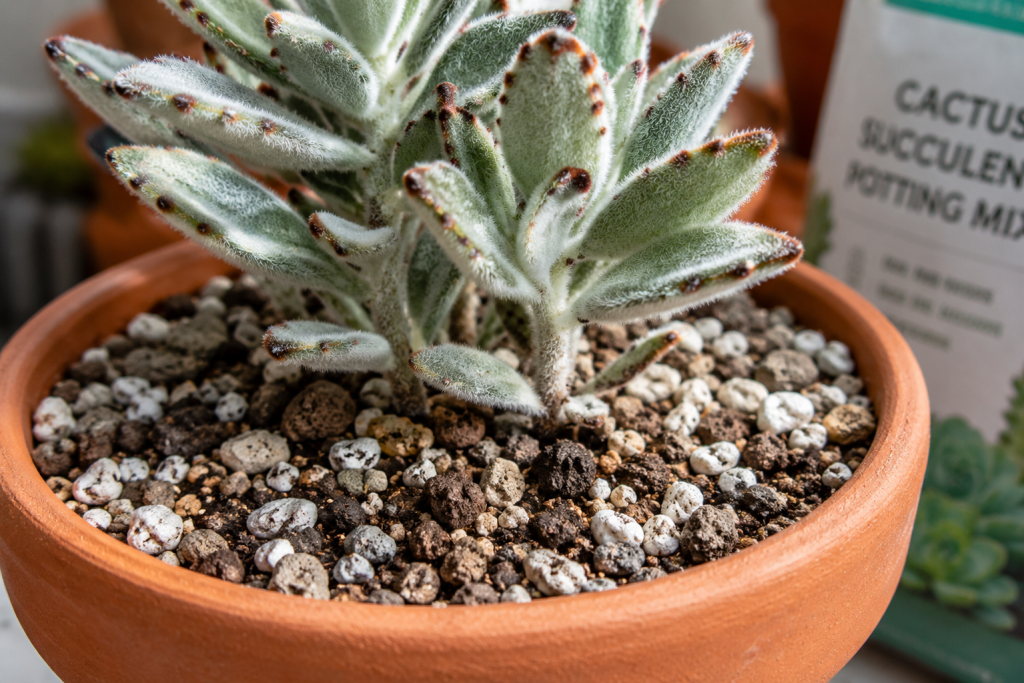
To facilitate this rapid drying cycle, use a porous, sharply draining potting mix. A standard commercial potting soil retains far too much water and will rapidly suffocate the roots. Instead, combine two parts standard succulent soil with one part perlite or coarse chicken grit to maximize aeration and drainage.
[PHOTO: Close-up of a panda plant growing in a well-aerated potting mix containing visible bits of perlite and pumice, highlighting the ideal chunky soil texture.]
Temperature and Humidity
Comfortable indoor living conditions are perfect for this plant. It thrives in temperatures ranging from 60°F to 75°F (15°C to 24°C). Take care during winter to keep the foliage away from drafty windows or heating vents, as sharp temperature fluctuations can cause sudden leaf drop. Because it is an arid-dwelling succulent, average household humidity (30% to 40%) is ideal; avoid placing it in inherently humid spaces like bathrooms or kitchens where lingering moisture can settle on the velvety leaves and invite fungal pathogens.
| Environmental Factor | Ideal Indoor Range | Potential Signs of Stress |
| Light | 6+ hours of bright, indirect light; morning sun | Elongated stems, loss of brown margins, pale leaves |
| Water | Soak completely, then allow soil to dry 100% | Mushy yellow leaves (overwatering); wrinkled leaves (underwatering) |
| Substrate | Cactus/succulent mix amended with perlite or grit | Slow drying times, mold on soil surface, root rot |
| Temperature | 60°F to 75°F (15°C to 24°C) | Leaf drop from cold drafts; scorch marks from extreme heat |
What Most Guides Get Wrong About Panda Plant Care
Many generic plant guides lump all succulents into a single category, leading to advice that can inadvertently harm your Kalanchoe tomentosa.
The Misconception of Mist Spraying
A widespread recommendation online is to mist houseplants to boost humidity or clean leaves. Misting a panda plant is highly detrimental. The fine, felt-like hairs (trichomes) covering the leaves are designed to trap micro-droplets of dew in the wild, but in a stagnant indoor environment, trapped water creates a persistent microclimate of dampness. This frequently triggers powdery mildew or localized leaf rot. To clean away dust, use a soft, dry makeup brush or a small compressed air canister rather than water.
Over-Fertilization
Another common error is applying heavy fertilizers during the growing season. In their native habitats, these succulents subsist in nutrient-poor, rocky soils. Forcing rapid growth with high-nitrogen chemical fertilizers results in weak, structurally unstable stems and bloated leaves that are highly susceptible to pests. A single application of a balanced, low-nitrogen succulent fertilizer diluted to half-strength in the late spring is all the nutritional support the plant requires for the entire year.
Step-by-Step Propagation Guide
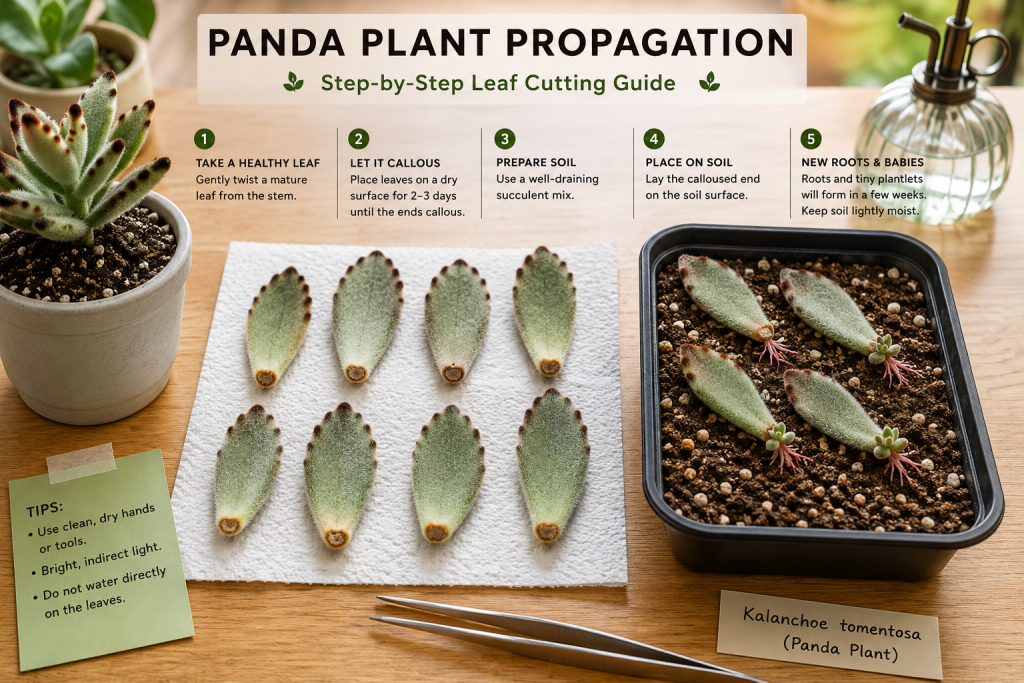
Propagating a panda plant is remarkably straightforward, making it an excellent project for expanding an indoor collection or sharing with friends. The most reliable method is utilizing individual leaf cuttings, though stem cuttings can also be used if you are pruning a leggy specimen.
1. Remove a Healthy Leaf
Select a plump, fully mature leaf near the base of the plant. Gently grasp the leaf and twist it clean off the main stem. It is critical to achieve a “clean break” meaning the entire base of the leaf detached cleanly from the stem without tearing. Damaged or partial leaves will rot rather than root.
2. Allow the Wound to Callous
Place the detached leaf on a dry paper towel in a spot with bright, indirect light but out of direct sun. Leave it undisturbed for 2 to 3 days until the raw, broken edge dries out and forms a firm, unpigmented callous. This protective barrier prevents bacteria and fungi from invading the tissue once it comes into contact with soil.
3. Place on Proper Substrate
Fill a shallow tray or small pot with a damp mix of sand and perlite or a standard succulent mix. Lay the calloused leaf flat on top of the soil surface. Do not bury the broken end; simply resting it on top encourages natural root seeking.
4. Provide Minimal Moisture and Patient Care
Position the propagation tray in a warm area with bright, indirect light. Resist the urge to water at this stage, as the leaf has no roots to absorb it. After 2 to 3 weeks, tiny pink roots and a miniature cluster of fuzzy leaves will begin to emerge from the calloused base. At this point, lightly mist only the soil surface around the new roots once a week. Over time, the original mother leaf will wither, turn brown, and fall away naturally, leaving behind a perfectly formed independent succulent.
Troubleshooting Common Growth Problems
While inherently resilient, a panda plant will exhibit distinct physical signs when its cultural conditions are misaligned. Acting quickly at the first sign of stress prevents long-term structural damage.
Mushy, Yellowing Leaves (Root Rot)
If lower leaves turn translucent, yellow, and feel soft or mushy to the touch, the root system is suffocating in waterlogged soil.
- Solution: Stop watering immediately. Remove the specimen from its container and inspect the root ball. Healthy roots are firm and tan; rotted roots are black, slimy, and foul-smelling. Snip away any rotted roots with sterilized shears, let the plant dry bare-root for 48 hours, and repot it into a clean vessel filled with fresh, dry succulent mix.
Wrinkled, Puckered Foliage (Underwatering)
When the potting medium remains dry for too long, the plant draws upon the water reserves stored within its foliage. The leaves lose their turgidity, becoming pliable, thin, and noticeably wrinkled.
- Solution: Give the potting mix a thorough, deep watering, ensuring the root zone is completely saturated. Within 24 to 48 hours, the leaves should absorb the moisture, plumping back up and regaining their firm texture.
Elongation and Loss of Color (Etiolation)
When an indoor space provides inadequate light, the succulent prioritizes upward growth to find light. The distance between leaves increases dramatically, the stem becomes thin and weak, and the vibrant chocolate margins fade to a dull greenish-white.
- Solution: Gradually transition the container to a significantly brighter location over the course of a week to avoid shocking the tissues. To fix the existing leggy growth, prune the top rosette off with a sterile blade, callous it, and root it as a new stem cutting. The remaining bare stem will produce new, compact offsets along its sides.
| Visual Symptom | Root Cause | Immediate Corrective Action |
| Translucent, squishy bottom leaves | Overwatering / Poor drainage | Cease watering, check roots for rot, repot in gritty soil. |
| Thin, wrinkled, dropping leaves | Severe underwatering | Give a thorough, deep watering; check weekly. |
| Long, weak stems with sparse leaves | Low light levels (Etiolation) | Move closer to a south/east window or add a grow light. |
| White, cottony webs in leaf joints | Mealybug infestation | Dab pests with a cotton swab dipped in isopropyl alcohol. |
Pro Tips for Advanced Succulent Care
For indoor gardeners looking to elevate their specimen from healthy to exceptional, implementing these advanced techniques can make a significant difference.
- Utilize Terracotta Vessels: While plastic or glazed ceramic pots hold water for extended periods, unglazed clay or terracotta pots are highly porous. They allow water to evaporate through the container walls, rapidly drying out the soil and significantly reducing the risk of root rot.
- Maintain Seasonal Cycles: Replicate natural weather patterns by reducing your watering frequency even further during the late autumn and winter months. As indoor light levels drop and the plant enters a semi-dormant phase, it requires only a fraction of its summer water intake.
- Ensure Regular Air Circulation: Running a small household fan on low nearby prevents pockets of stagnant, humid air from settling around the dense foliage. Improved air movement encourages sturdier stem growth and dramatically lowers the risk of fungal infections like powdery mildew.
Conclusion
Successfully cultivating a panda plant indoors comes down to balancing bright light with minimal watering. By providing this Madagascar native with a coarse, sharply draining substrate, plenty of bright indirect sunlight, and an environment free from excess moisture, you can enjoy its unique, velvety texture and striking chocolate-brown margins for years to come. The single most valuable takeaway is to always err on the side of underwatering; when in doubt, wait another week before reaching for the watering can. Your next step should be evaluating your indoor lighting and ensuring your plant is housed in an unglazed terracotta pot to set it up for long-term health.
Frequently Asked Questions
1. Is the panda plant toxic to household pets?
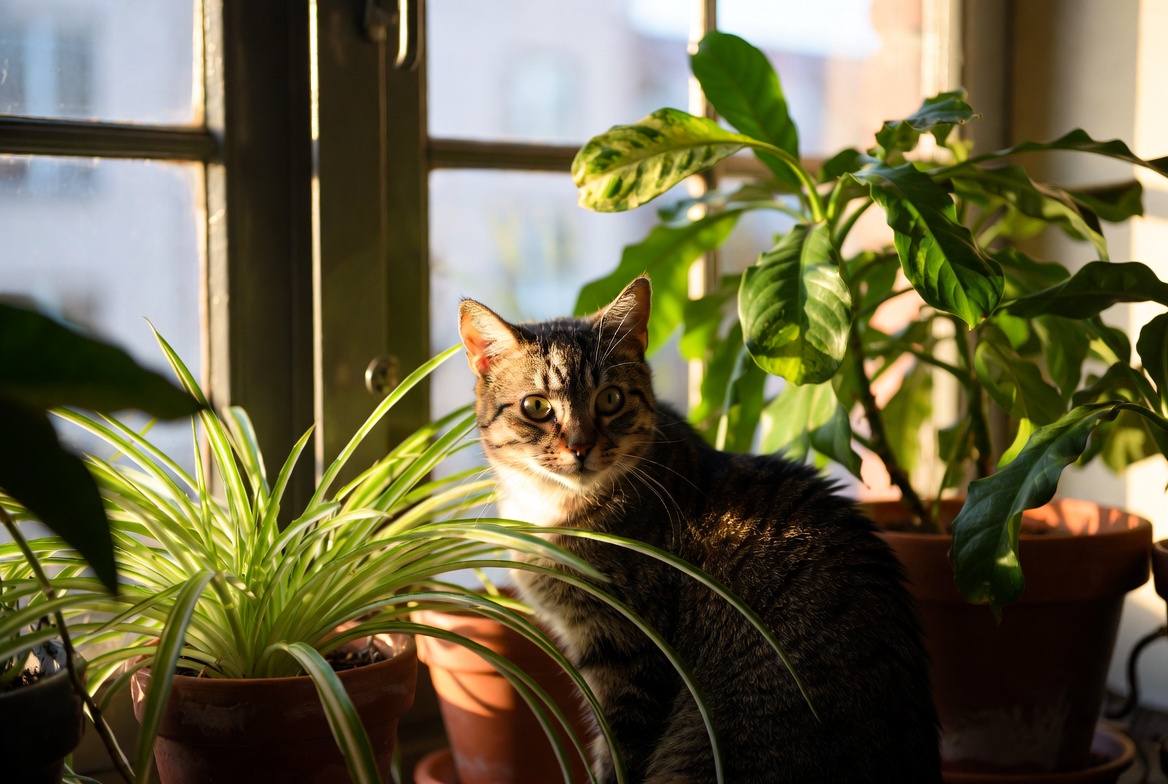
Yes, the panda plant contains naturally occurring cardiac glycosides, which are toxic to dogs, cats, and horses. If ingested, even in small quantities, it can cause symptoms such as oral irritation, drooling, vomiting, diarrhea, and in severe cases, abnormal heart rhythms. It is highly recommended to place this succulent on high shelves, hanging planters, or inside dedicated plant cabinets completely out of reach of curious pets.
2. Why are the lower leaves of my succulent falling off?
If the lowest leaves are drying out entirely, turning crisp, and falling away one by one while the rest of the growth looks healthy, this is a completely natural aging process. The plant systematically sheds its oldest foliage to redirect energy toward producing fresh, new growth at the top growth tip. However, if the falling leaves are yellow, soft, or dropping off rapidly while still plump, it is a warning sign of overwatering or exposure to cold drafts.
3. How often should I fertilize my Kalanchoe tomentosa?
This species has very low nutritional demands and does not require frequent feeding. Apply a balanced succulent-specific liquid fertilizer diluted to half-strength just once or twice during the active growing season, ideally in late spring and mid-summer. Avoid fertilizing entirely during the fall and winter months when the plant’s metabolic activity slows down significantly, as excess nutrients will accumulate in the soil and cause chemical root burn.
4. Does a panda plant ever produce flowers indoors?
While mature specimens bloom reliably in the wild producing small, bell-shaped, fuzzy flowers with chartreuse and purple hues it is exceptionally rare for them to flower inside an apartment or home. Indoor environments simply lack the intense, sustained UV light intensity and distinct seasonal temperature shifts required to trigger a bloom cycle. Cultivate this plant primarily for its exceptional, velvety foliage rather than its flowers.
5. How large will this succulent grow in an indoor setting?
When grown in typical indoor conditions, a panda plant is a relatively slow grower that generally reaches a maximum height and spread of 12 to 18 inches over several years. Its overall size can easily be managed and restricted by choosing smaller pots or carefully pruning the stem tips in spring. Pruning encourages a bushier, multi-branched growth habit rather than a single tall, upright stalk.