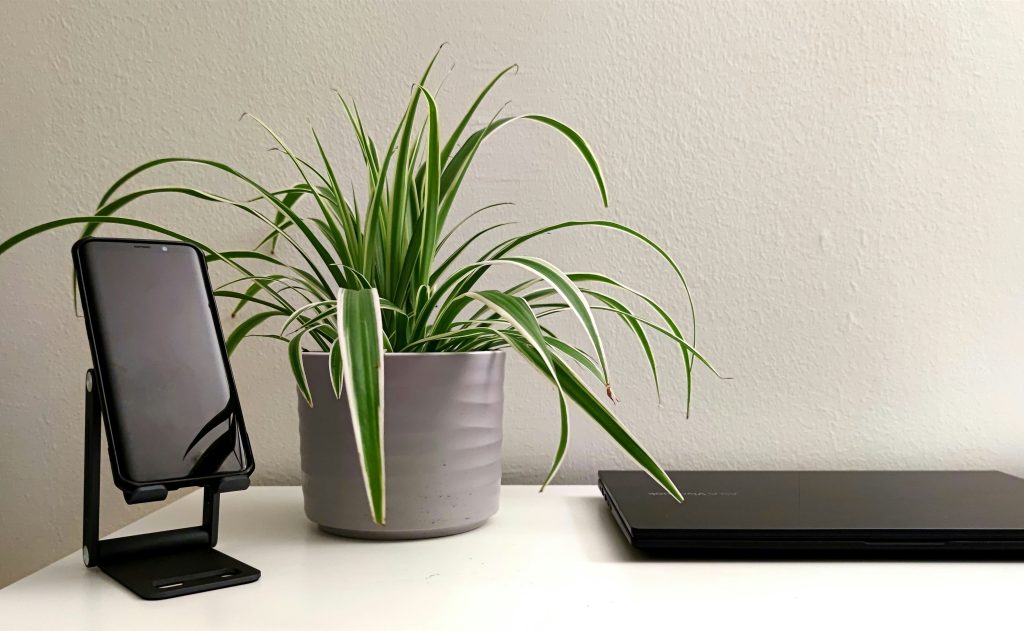
Mastering spider plant care is often the first real obsession for indoor gardening enthusiasts, turning a simple hobby into a mission to grow a massive, cascading botanical empire. We’ve all been there—you start with one tiny, slightly pathetic-looking baby plant (a “pup”) given to you by a coworker or your grandma, and suddenly you’re hooked. But there is a massive difference between a Spider Plant that is merely surviving in a dusty corner and one that is thriving as a lush, exploding firework of green and white, looking like it’s about to take over your living room.
If you want to master spider plant care, you have to stop treating it like a piece of furniture and start treating it like the biological marvel it is. These plants are the ultimate “survivors” from South Africa’s coastlines, and they have a few hidden tricks up their sleeves. My goal today isn’t to give you a boring list of rules; I want to give you the “secret sauce” to growing a specimen-grade plant that actually cleans your air while looking like a million bucks.
The Anatomy of a Survivor: Why Spider Plants Are Built Differently
To get the most out of your spider plant care routine, you need to understand what’s happening beneath the soil. Most people think roots are just for sucking up water, but the Spider Plant is an overachiever. If you were to pull one out of its pot right now, you’d see these thick, white, fleshy tubers that look almost like ginger roots.
These are the plant’s internal batteries. They store water and nutrients for “lean times.” This is exactly why a Spider Plant can handle you going on a two-week vacation without a babysitter. But it’s also why they hate being over-managed. If you hover over them and water them every single day, those internal batteries will literally “leak” and rot. Understanding this balance—trusting the plant’s own storage—is the first step to becoming a pro.
1. The Light Hack: It’s Not About the Sun, It’s About the “Vibe.”
I see this mistake all the time: people think “indoor plant” means “basement plant.” Or worse, they think “tropical” means “desert sun.”
- The Goldilocks Zone: Your Spider Plant wants “bright, indirect light.” In human terms? If you can sit in that spot and read a physical book without a lamp, but you don’t feel the sun burning your skin, your plant is in heaven.
- The Color Indicator: If the white stripes on your plant are starting to look dull or muddy-green, your plant is literally “sun-starved.” It’s producing more chlorophyll to try to survive. Move it closer to a window, and you’ll see those stripes pop back to a crisp, clean white in no time.
- The Midday Threat: Direct afternoon sun is like a laser beam to these thin leaves. It will bleach them out and leave “paper-skin” spots that never go away. Stick to morning light or filtered light through a sheer curtain.
2. Watering Like a Professional (and Avoiding the “Frizz”)
We need to talk about the “frizz,” those annoying, crispy brown tips that make your plant look like it’s had a rough night.
- Forget the Schedule: Throw your “Watering Wednesday” calendar in the trash. Your home’s humidity changes with the weather and your heater. Instead, use the “finger test.” If the soil feels dry two inches down, give it a soak. If it’s damp, leave it alone.
- The Chemical Sensitivity: This is the most “human” thing about Spider Plants—they are picky about their drinks. They absolutely despise fluoride and chlorine. If you use tap water straight from the sink, those chemicals get stuck in the tips of the leaves, causing them to turn brown.
- The Pro Move: Use a filtered water pitcher, or just fill a gallon jug with tap water and leave the cap off for 24 hours. The chlorine will evaporate, and your plant won’t get those “frizzy” ends. It’s a 5-second fix that changes the whole look of the plant.
3. Soil and Drainage: Don’t Let Them Get “Soggy Socks.”
Imagine spending the entire day in damp socks. That’s what a Spider Plant feels like in a pot with no drainage.
- The “Fluff” Factor: You want an airy potting mix. If the soil is too dense, it packs down around those thick roots and suffocates them. Mix in some perlite or coco coir to keep things “fluffy.”
- Drainage is Non-Negotiable: If your pot doesn’t have a hole in the bottom, it’s not a pot; it’s a slow-motion drowning machine. Always use a pot with drainage, or keep the plant in its plastic nursery liner and drop that into your fancy decorative container. This way, you can take it to the sink, let it drain completely, and never worry about root rot.
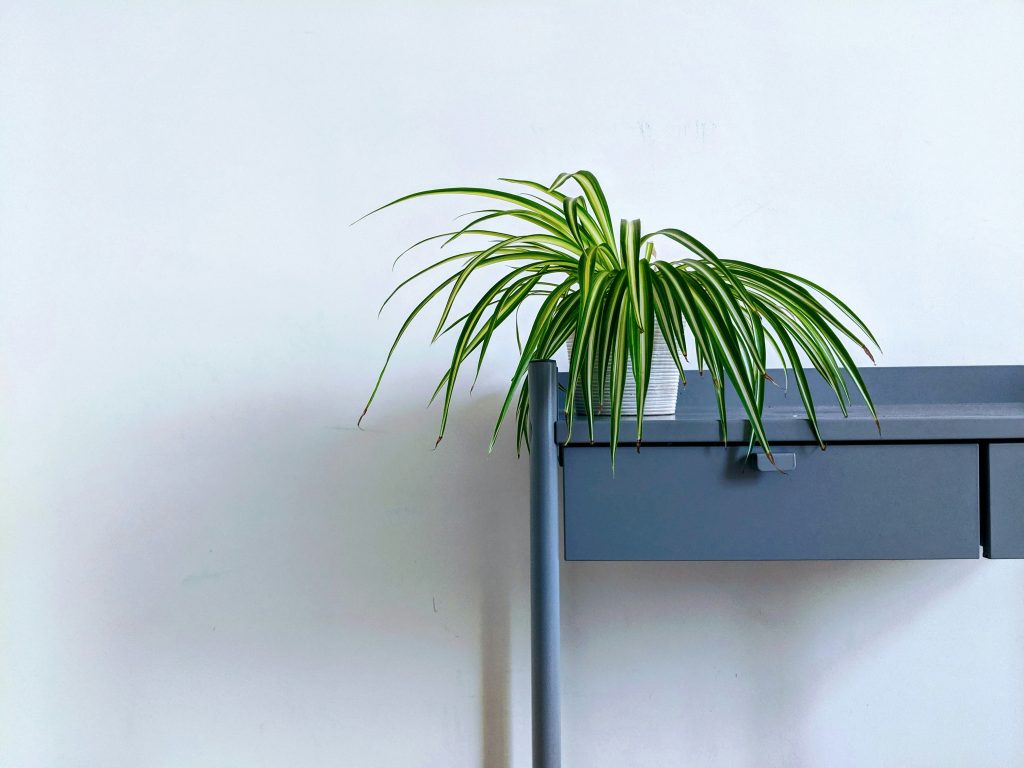
4. Humidity: The Invisible Nutrient
Because they come from coastal areas, Spider Plants love a bit of “juice” in the air.
- Winter Woes: When the heater kicks on in the winter, the air in our homes gets as dry as a desert. The second most common reason for dark tips is this.
- The “Huddle” Trick: You don’t need a fancy humidifier. Just put your plants close together. They naturally “breathe” out moisture (transpiration), so they create a little bubble of humidity for each other. It’s like a botanical group hug.
5. Fertilizing: Don’t Over-Egg the Pudding
A lot of people think that more fertilizer equals more babies. In reality, too much “food” can actually stop a Spider Plant from producing those long stems.
- The Growth Season: Only feed them in the spring and summer. Use a basic houseplant liquid at half the strength the bottle suggests.
- The “Stress” Signal: Spider Plants actually produce more “spiderettes” (babies) when they feel a little bit stressed or crowded in their pot. If you over-feed them, they get “lazy” and just grow big green leaves instead of making pups.
6. The Baby-Making Business: Propagating Your Empire
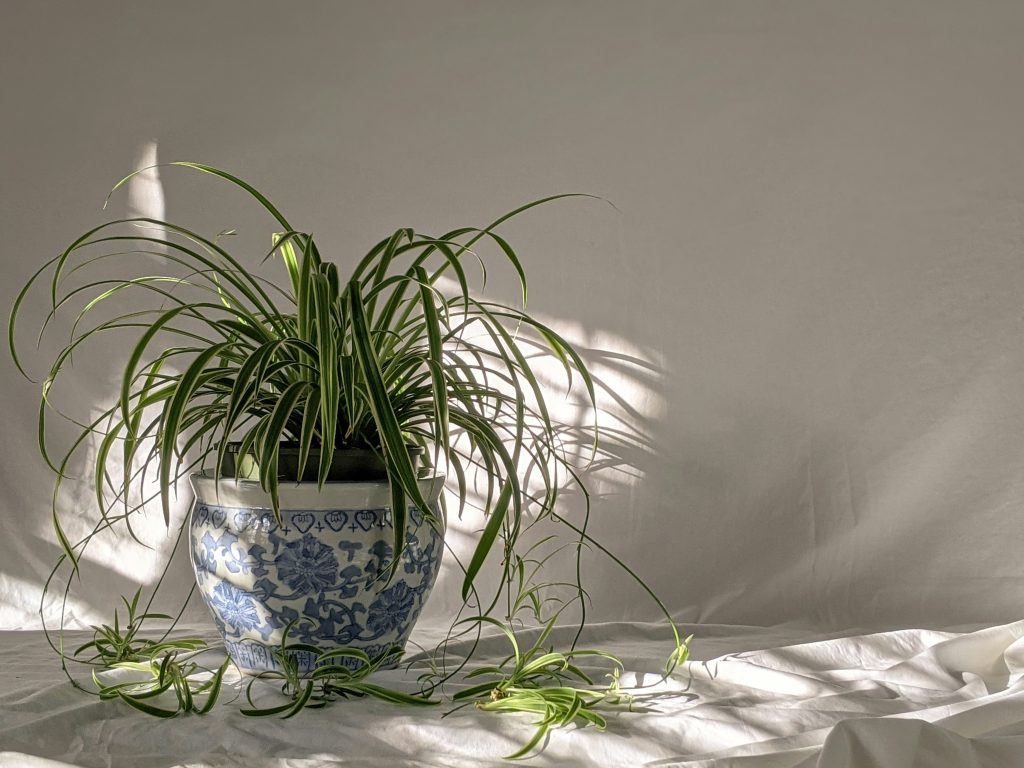
This is the most satisfying part of spider plant care. Once your plant feels established, it will send out these long, yellowish, wiry stems. Those aren’t just for show—those are the “umbilical cords” for your next generation of plants.
- When to Snip: Wait until the baby plant has those little “nubs” (aerial roots) on the bottom.
- Water vs. Soil: You can put the baby in a jar of water (it looks cool on a windowsill) or just tuck it into a tiny pot of dirt while it’s still attached to the mother. Once it feels “anchored” in the new dirt, snip the cord. You’ve just successfully cloned your plant. Congratulations, you’re now a botanical architect.
7. The Repotting Myth: When to Wait
A lot of people freak out when they see a root on the surface and think they need to repot immediately.
- Wait for the Signal: Spider Plants actually love being a little bit cramped. It makes them feel secure. I only repot when the plant is literally pushing itself up out of the soil or the pot looks like it’s about to crack.
- The Size Up: When you do move it, don’t go from a tiny pot to a massive one. Only go up 2 inches in diameter. Too much extra soil holds too much water, and we’re back to the “soggy socks” problem.
8. Pests and Problems: Keeping the Vultures Away
Spider Plants are tough, but they aren’t bulletproof. Sometimes, Mealybugs (those white fuzzy things) or Spider Mites try to move in.
- The “Shower” Solution: Honestly? Most pests can be fixed by taking the plant into the bathroom and giving it a lukewarm shower. It washes the bugs away and cleans the dust off the leaves so the plant can breathe.
- Neem Oil: If things get serious, use a bit of Neem oil. Just don’t do it while the sun is hitting the plant, or the oil will “cook” the leaves. Do it in the evening.
9. Styling Your Jungle: More Than Just a Table Plant
The way a Spider Plant grows (up and then out) makes it perfect for vertical styling.
- The High Ground: Put them on top of your kitchen cabinets. They’ll trail down and soften the hard lines of your kitchen.
- Macrame Vibes: There’s a reason these were the stars of the 1970s. Hanging them in a macrame holder lets the babies dangle in the air, creating a 3D green effect that fills a room better than any painting ever could.
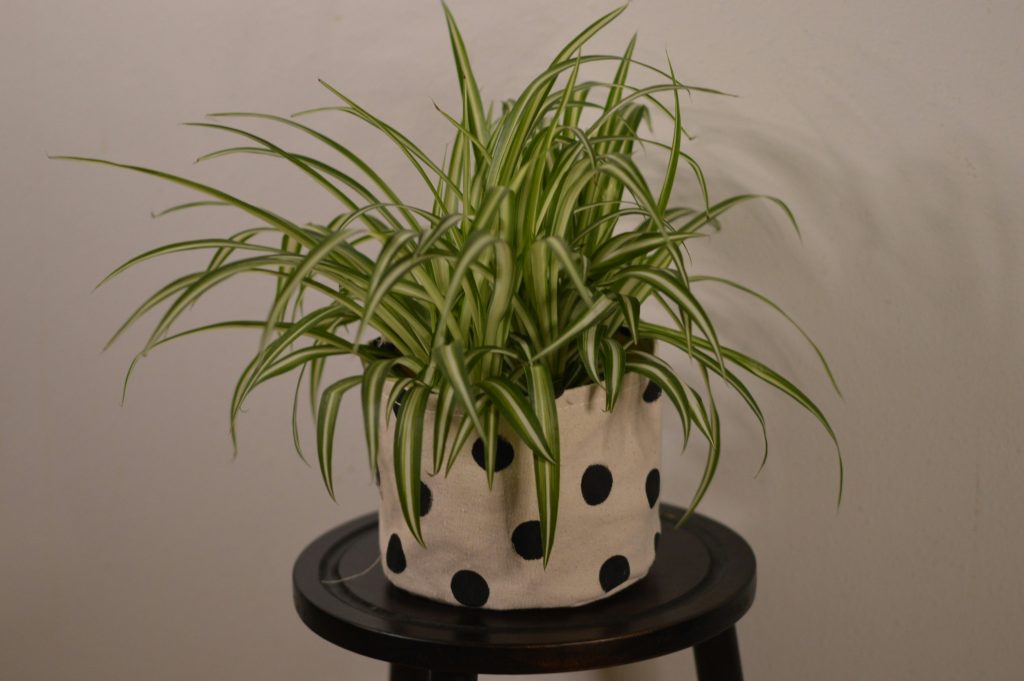
10. The Cat Situation: The “High” Reality
Here is something most “manuals” won’t tell you: your cat is probably going to try to get high on your Spider Plant.
- The Truth: Spider Plants contain a compound that is mildly hallucinogenic to cats (like catnip). It won’t kill them, but it’s not exactly “good” for them either, and it’ll leave your plant looking like it went through a paper shredder.
- The Solution: Hang them! It’s the only way to save the plant and keep your cat from becoming a botanical addict.
11. Seasonal Shifts: The “Winter Nap.”
In the winter, your plant is going to slow down. It might look a little “flat” or pale.
- Leave it alone: Don’t try to “fix” it by watering more or feeding it. It’s just resting. Water it half as much as you did in the summer, and wait for the spring sun to wake it up.
12. Final Advice: Don’t Aim for Perfection
The most important part of spider plant care is to just enjoy the plant. If a leaf turns brown, snip it off. If a pup dies, don’t worry—the plant will make ten more. These plants are built to survive us, and they are one of the most rewarding companions you can have in a home. They clean your air, they multiply like crazy, and they bring a sense of wildness into our boring, square rooms.
Conclusion: Mastering the Green Explosion
At the end of the day, a Spider Plant is a reflection of your home’s energy. When you nail the balance of light and water, and you stop stressing over every little brown tip, you’ll find that this plant is one of the most generous things you can own. It starts as a tiny “pup” on someone else’s plant and ends as a massive, cascading empire in your living room. Embrace the process, trust the “internal batteries” of those roots, and enjoy the air-purifying, baby-making machine you’ve brought into your life.
FAQs
1. How do I stop the brown tips for good?
Use filtered water or rainwater, and keep the plant away from dry air vents. If you already have brown tips, just trim them with scissors at an angle so they look natural again.
2. My plant is growing, but there are no babies. Why?
It probably has “too much” room and “too much” food. Stop fertilizing for a bit and wait for it to get a little more root-bound. It also needs bright light to have the energy to make pups.
3. Is it okay to cut off the “umbilical cord” stems?
Totally. If you don’t want babies and you want the plant to look “cleaner,” just snip them off at the base. It won’t hurt the plant at all.
4. Can I grow a Spider Plant in a dark office?
It will survive, but it won’t be happy. It’ll turn a dull, dark green and won’t grow many new leaves. Try to get it near a window or put a small LED grow light above it.
5. How often should I fertilize?
Once a month in the spring and summer is plenty. Any more than that and you’re just risking salt buildup in the soil.
6. Why is my plant “paling out” and looking limp?
It’s either very thirsty or it’s getting “cooked” by too much direct sun. Check the soil first; if it’s bone dry, give it a soak.
7. Can I put my Spider Plant in the bathroom?
Yes! They love the humidity from the shower. Just make sure there’s at least a small window so they get some light.
8. What kind of pot is best?
Terracotta is great because it “breathes” and helps prevent root rot, but any pot with a drainage hole will do the job.
9. How do I propagate the babies?
Wait until they have little root nubs, then either stick them in a jar of water or directly into a small pot of moist soil. They root very quickly!
10. Do Spider Plants really clean the air?
Yes! NASA proved they are experts at removing common household toxins like formaldehyde and carbon monoxide. They are basically a living air filter.