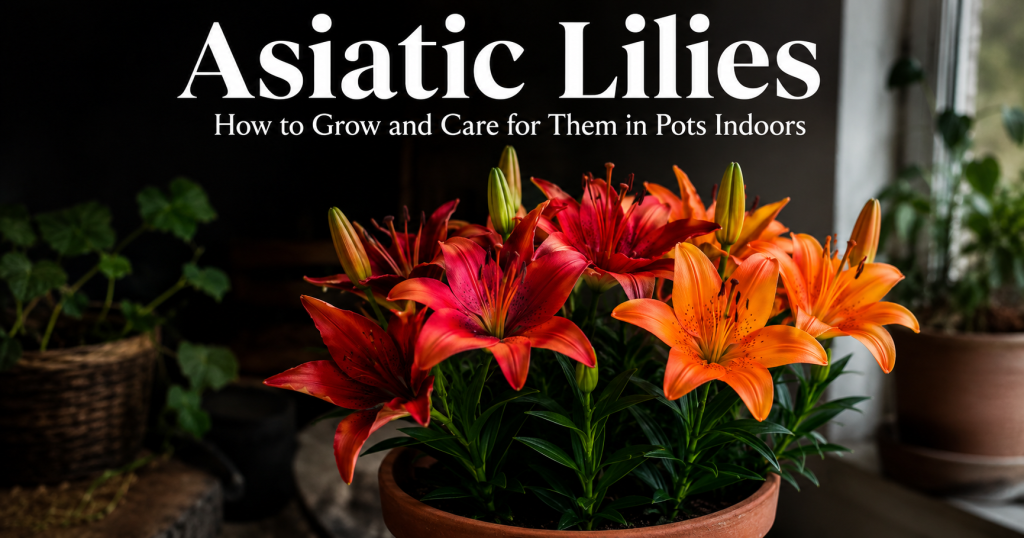
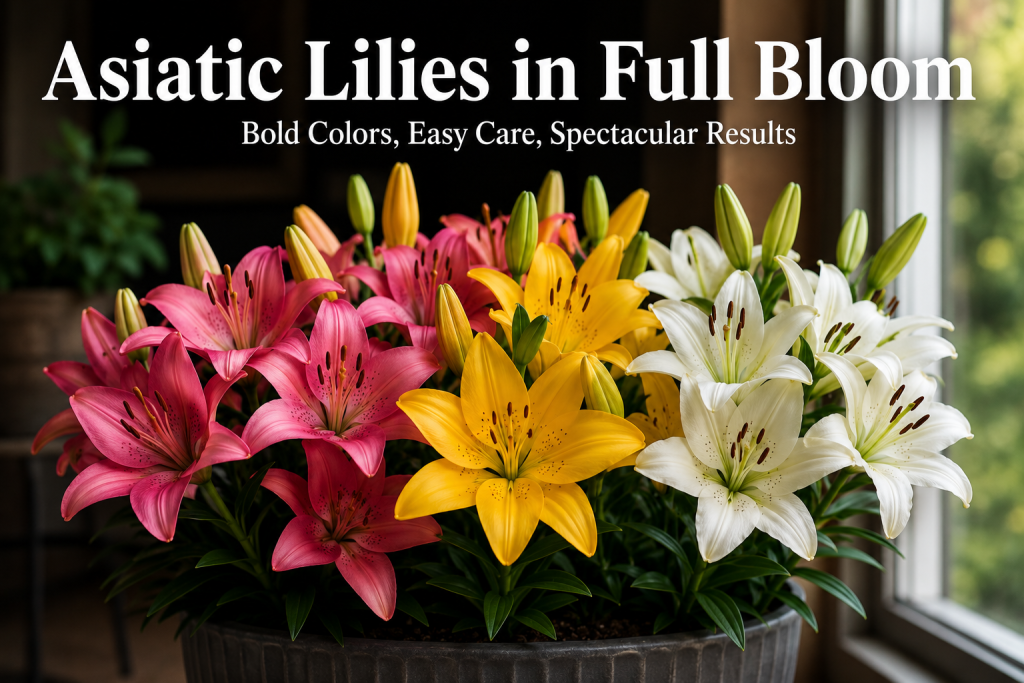
Asiatic lilies are among the most striking flowering plants you can grow, with their bold, upward-facing blooms in vivid shades of red, orange, yellow, pink, and white. While they are most commonly associated with outdoor garden beds, asiatic lilies grow beautifully in pots and containers, making them a fantastic choice for indoor spaces, balconies, and patios. Here is everything you need to know about growing and caring for asiatic lilies successfully.
What Are Asiatic Lilies?
Asiatic lilies are hybrid lilies derived from species native to Asia, hence the name. They are the earliest blooming of all the lily groups and among the easiest to grow, which is why they are so widely popular with both beginner and experienced gardeners. The flowers are typically unscented (unlike Oriental lilies, which have a strong fragrance), face upward, and come in an extraordinarily wide range of colors.
Asiatic lilies grow from bulbs and are perennials, meaning the same bulb will produce flowers year after year if properly cared for. In containers, they typically reach between one and four feet in height, depending on the variety, and each stem can produce several blooms over a few weeks in late spring and early summer.
Growing Asiatic Lilies in Pots Indoors
Asiatic lilies can be grown successfully in pots both indoors and outdoors, though they do have specific needs that must be met for flowering to occur.
Choose the right pot. Use a deep container at least 12 inches deep and 12 inches wide for a grouping of three to five bulbs. Good drainage is essential, so make sure the pot has drainage holes. Terra cotta or ceramic pots work well since they are heavy enough to support tall stems without tipping.
Use the right soil. A well-draining potting mix is important, since asiatic lily bulbs will rot in waterlogged conditions. Mix standard potting soil with perlite or grit to improve drainage. Avoid heavy, clay-based mixes.
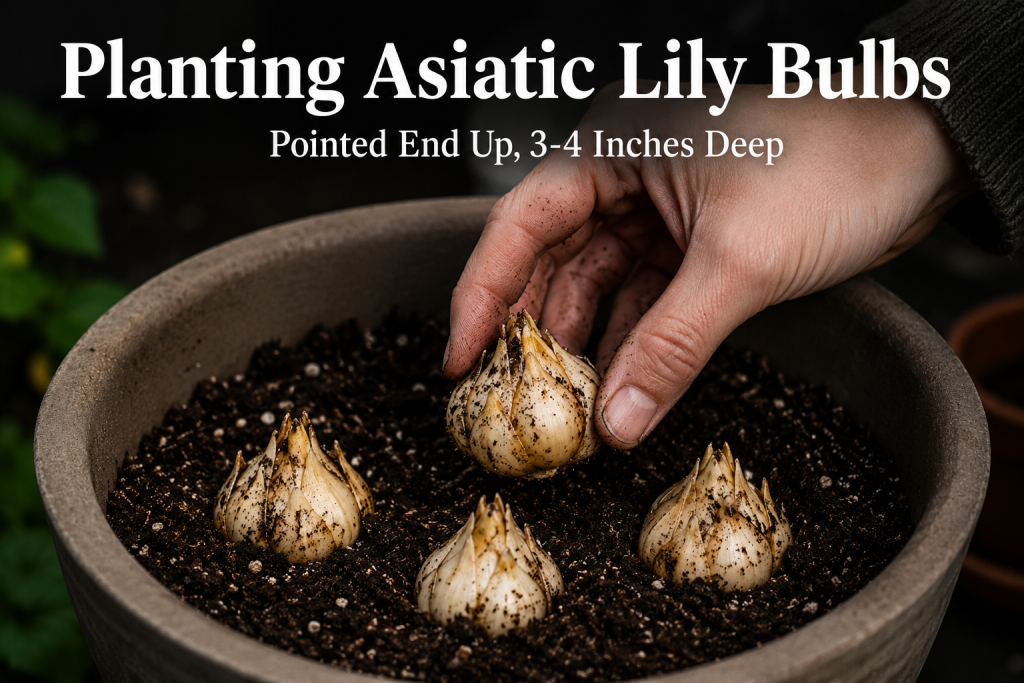
Plant bulbs correctly. Plant bulbs with the pointed end facing up at a depth of about three times the height of the bulb, typically around three to four inches deep. Space bulbs a few inches apart in the container.
Light Requirements
Asiatic lilies are sun-loving plants and need at least six hours of bright light per day. Indoors, a south or west-facing window that gets strong, direct sunlight is ideal. If your indoor space doesn’t provide adequate natural light, a full-spectrum LED grow light used for twelve to fourteen hours per day will support healthy growth and flowering.
Without sufficient light, asiatic lily stems become tall and weak (a condition called etiolation), and the plant may fail to produce flowers or produce fewer blooms than expected.
Watering
Water asiatic lilies when the top inch of soil feels dry. They need consistent moisture during their active growing period but are sensitive to overwatering and soggy soil, which causes bulb rot. Always water at the base of the plant rather than over the flowers and foliage, since wet petals and leaves can encourage fungal problems.
During and after flowering, continue watering regularly to support the bulb as it stores energy for next year’s growth. Once the foliage dies back naturally in late summer or autumn, reduce watering significantly.
Temperature and Humidity
Asiatic lilies prefer cool to moderate temperatures, ideally between 60 and 75°F (15 and 24°C). They can tolerate warmer temperatures but may not flower as prolifically in very hot conditions. Indoors, keep them away from heating vents and radiators, which can dry out the foliage and shorten bloom time.
Average household humidity is generally fine for asiatic lilies, and they don’t require any special humidity setup.
Fertilizing
Feed asiatic lilies with a balanced liquid fertilizer every two weeks during the growing season, from when the shoots emerge in spring through to the end of flowering. Once flowering is complete, switch to a low-nitrogen, high-potassium fertilizer to help the bulb build up energy reserves for the following year.
Stop fertilizing once the foliage begins to die back naturally in autumn.
Supporting Tall Stems
Taller asiatic lily varieties may need staking to keep them upright, particularly indoors where air movement is limited. Insert a thin bamboo stake next to each stem and tie it loosely with soft ties or garden twine. This is especially important once the heavy flower buds begin to develop.
What to Do After Flowering
Once the flowers fade, deadhead them by removing the spent blooms but leave the stems and foliage intact. The leaves continue to photosynthesize and send energy back to the bulb for next year. Only cut the stems down once the foliage has turned fully yellow and died back naturally, usually in late summer or autumn.
If growing in pots, you have two options after the foliage dies back. You can leave the bulbs in the pot and store them somewhere cool and dry over winter, and they will regrow the following spring. Alternatively, you can dig up the bulbs, store them in a cool, dry location in peat or vermiculite, and replant them in fresh potting mix the following spring.
Are Asiatic Lilies Toxic to Cats?
Yes, and this is critically important to know. All true lilies, including asiatic lilies, are extremely toxic to cats. Even small amounts of pollen, petals, leaves, or water from the vase can cause severe kidney failure in cats, which can be fatal without immediate veterinary treatment. If you have cats in your home, do not grow asiatic lilies indoors. There are no exceptions to this rule.
Asiatic lilies are generally considered non-toxic to dogs and humans, though ingestion in large quantities can cause digestive upset.
Common Problems
No flowers. The most common cause is insufficient light. Asiatic lilies need strong, bright light to bloom. Another cause is planting bulbs that are too small or damaged, or failing to allow the foliage to die back naturally after the previous year’s flowering.
Yellowing leaves. Overwatering and poor drainage are the most frequent causes of yellowing leaves on asiatic lilies. Check that the pot drains freely and that you are not watering before the top inch of soil has dried.
Tall, weak, flopping stems. A sign of insufficient light or a lack of staking for taller varieties. Move the plant to a brighter spot and add support stakes.
Brown leaf tips. Usually caused by dry air, underwatering, or fluoride in tap water. Use filtered or distilled water and ensure the plant is not near a heating vent.
Pests. Red lily beetles are a common outdoor pest but less of an issue indoors. Aphids can occasionally appear on indoor-grown lilies. Treat with insecticidal soap or neem oil if spotted.
Seasonal Care Calendar
Knowing what to do in each season takes the guesswork out of asiatic lily care and ensures the bulbs stay healthy year after year.
Spring: As temperatures warm and days lengthen, bulbs will begin sending up shoots. This is the time to start watering regularly and begin a fertilizing schedule. If growing indoors, move pots to the brightest available spot. Watch for pests as new growth emerges.
Early Summer: Peak flowering season for most asiatic lily varieties. Deadhead spent blooms as they fade to keep the plant looking tidy and to prevent energy being wasted on seed production. Continue watering and fertilizing through the flowering period.
Late Summer: After flowering ends, the plant enters a period of storing energy in the bulb for the following year. Keep the foliage intact and continue watering and feeding until the leaves begin to yellow naturally. Do not cut the stems down early.
Autumn: Once the foliage has turned fully yellow and died back, cut the stems down to soil level. Reduce watering significantly. If storing pots over winter indoors, move them to a cool, dark location. If the bulbs are in the ground or left in outdoor pots, they can usually tolerate light frost.
Winter: Bulbs are dormant. Keep soil barely moist, not completely dry. Store pots in a cool location between 35 and 50°F (2 and 10°C). Bulbs stored indoors in a cool garage or shed will be ready to start growing again in early spring.
Propagation: Growing More Asiatic Lilies From Bulbs
One of the great advantages of growing asiatic lilies is how easily they multiply over time. Mature bulbs naturally produce smaller offset bulbs called bulblets or bulb scales, which can be separated and grown on into full-sized flowering bulbs.
Bulb division: The simplest method. When repotting in autumn or early spring, you will often find that the original bulb has produced several smaller offsets around its base. Gently separate these, making sure each has some roots attached, and plant them individually in fresh potting mix. Smaller offsets may take one to two years to reach flowering size.
Bulbils: Some asiatic lily varieties produce small, dark bulbils along the stem above the soil surface. These can be carefully removed when they are plump and firm, then planted about an inch deep in moist potting mix. They will grow into full plants over one to two seasons.
Bulb scaling: A more involved method where individual scales are removed from the outer layers of a healthy bulb and placed in a bag of moist perlite or sphagnum moss in a warm location. Over several weeks, small bulblets will develop at the base of each scale, which can then be potted up individually.
Indoor vs Outdoor Growing: Key Differences
Many people wonder whether it is better to grow asiatic lilies indoors or outdoors. Both approaches work well, but there are some important differences to keep in mind.
Light: Outdoors, asiatic lilies typically get the strong, direct sun they need without any intervention. Indoors, you need to position the pot carefully near the brightest window available or supplement with a grow light. This is the biggest challenge of indoor growing.
Temperature: Outdoors, lilies experience the natural temperature fluctuations that help trigger dormancy and the following year’s flowering cycle. Indoors, you need to deliberately replicate this by moving pots to a cool location in winter.
Pest and disease pressure: Outdoors, red lily beetles and aphids are common problems. Indoors, pest pressure is generally lower, though aphids can still appear on indoor plants.
Watering control: Indoors, you have complete control over watering, which makes it easier to avoid overwatering and bulb rot than in outdoor situations where rain can be unpredictable.
Convenience: Indoor growing lets you enjoy the flowers up close and protects blooms from wind and rain damage, which can shorten the lifespan of outdoor flowers significantly.
Best Asiatic Lily Varieties for Containers
Some varieties are better suited to pot growing than others. Here are some of the best asiatic lily varieties for containers and indoor growing:
Tiny Sensation: A dwarf variety reaching only 16 inches tall, with deep pink blooms. Excellent for small pots and indoor growing where space is limited.
Matrix: A compact variety with large, upward-facing blooms in rich red and yellow bicolor. Stays under two feet tall and is well suited to container growing.
Lollypop: One of the most popular container varieties, with white petals edged in bright pink. Compact, sturdy stems that rarely need staking.
Tiny Padhye: A dwarf hybrid with soft peach-orange blooms, reaching around 18 inches. Ideal for small indoor pots.
Connecticut King: A classic yellow asiatic lily with bright, cheerful blooms. Grows to around two to three feet and is reliable and easy to grow.
Tiny Todd: A compact dwarf variety with deep orange flowers, perfect for windowsill pots and small containers.
Gran Paradiso: A deep red variety with velvety blooms, growing to around two feet. One of the most striking red asiatic lilies available for pot growing.
As a general rule, look for varieties described as “dwarf,” “patio,” or “container” on the label, since these have been specifically selected for compact growth that suits pot cultivation.
Conclusion
Asiatic lilies are one of the most rewarding flowering plants you can grow in pots, delivering a spectacular display of color for several weeks with relatively modest care requirements. Bright light, well-draining soil, consistent but not excessive watering, and allowing the foliage to die back naturally after flowering are the keys to keeping the bulbs healthy and ensuring they come back to flower again year after year. Just remember to keep them well away from cats, for whom they are seriously dangerous.
Frequently Asked Questions
Can asiatic lilies grow indoors?
Yes, asiatic lilies grow well in pots indoors as long as they receive at least six hours of bright, direct light per day. A south or west-facing window or a full-spectrum grow light are the best options for indoor growing.
How long do asiatic lilies bloom?
Each individual flower typically lasts one to two weeks, but a single stem can carry multiple buds that open in succession, extending the overall blooming period to three to four weeks per stem. The exact timing depends on temperature and light levels.
Do asiatic lilies come back every year?
Yes, asiatic lilies are perennials that grow from bulbs. With proper care, including allowing the foliage to die back naturally after flowering, the same bulbs will produce flowers year after year.
Are asiatic lilies fragrant?
No, Asiatic lilies are not fragrant, which distinguishes them from Oriental lilies and some other lily types. If you want a scented lily, Oriental or Orienpet hybrids are better choices.
When should I plant asiatic lily bulbs?
For spring and early summer flowering, plant bulbs in early spring as soon as the risk of hard frost has passed. For indoor container growing, bulbs can also be planted in autumn and kept cool over winter for earlier spring flowering.