Natural light is a luxury that many apartment dwellers, renters, and small-space gardeners do not have. When your windows face a brick wall, or north-facing views leave your tropical collection dropping leaves, choosing the best grow lights for indoor plants is the single most effective way to save your garden. Supplemental lighting bridges the gap between survival and vibrant growth, allowing you to cultivate everything from delicate microgreens to towering monsteras in any corner of your home.
Navigating the world of horticultural lighting can feel overwhelming due to confusing technical jargon like PAR, lumens, and kelvins. This guide strips away the marketing hype to explain the actual science of indoor plant lighting. You will learn how to read light spectrums, calculate coverage areas, and select the exact fixture that matches both your plant collection and your living space aesthetic.
Quick Summary: Choosing the Right Grow Light
The best grow lights for indoor plants balance energy efficiency, light output, and appropriate color spectrums. For most home gardeners, LED (Light Emitting Diode) fixtures are the superior choice over older fluorescent (T5) or incandescent options because they emit minimal heat, use less electricity, and last for years.
- For Leafy Tropicals & Herbs: Look for a “full-spectrum” or “daylight” LED fixture balanced around 5000K to 6500K.
- For Flowering & Fruiting Plants: Prioritize fixtures with added red wavelengths (3000K or dedicated 660 nm red diodes).
What Most Grow Light Guides Get Wrong
Standard internet advice frequently tells readers to look at lumens or lux when buying plant lights. This is a fundamental mistake. Lumens and lux measure brightness based on how the human eye perceives light, which is most sensitive to green and yellow wavelengths. Plants, however, utilize light for photosynthesis through specific pigments (mainly chlorophyll A and B), which primarily absorb blue and red light.
Instead of lumens, experienced growers look for PAR (Photosynthetic Active Radiation) and PPFD (Photosynthetic Photon Flux Density). PAR defines the band of light wavelengths (400 to 700 nanometers) that plants actually use. PPFD measures how many of those useful light particles hit a specific square meter of your plant canopy every second. When evaluating fixtures, always look for PPFD data at specific hanging heights rather than raw wattage or lumen ratings.
Understanding Light Spectrums: Blue vs. Red vs. Full Spectrum
Plants require different wavelengths of light to trigger distinct developmental stages. While sunlight appears white to us, it contains a full blend of all colors. Grow lights mimic this by adjusting the color temperature, measured in Kelvin (K), or by utilizing targeted monochromatic-colored diodes.
The Role of Blue Light (400–500 nm)
Blue light is responsible for vegetative growth, structural integrity, and leaf development. High-blue light keeps plants compact, preventing the leggy, stretched stems commonly seen in light-deprived environments. It regulates stomatal opening, which controls gas exchange and transpiration. If you are growing leafy greens or herbs or maintaining non-flowering houseplants, a blue-skewed spectrum (often labeled as “cool white” or 6500K) is highly effective.
The Role of Red Light (600–700 nm)
Red light is the primary driver of photosynthesis and is essential for flowering, fruit production, and seed germination. When combined with far-red wavelengths, it triggers the photoperiodic responses that tell a plant it is time to bloom. A spectrum heavy in red (often labeled as “warm white” or 3000K) encourages elongated stems and large, expansive leaves, which can lead to floppiness if not balanced with enough blue light.
The Shift to Full-Spectrum LEDs
Early LED grow lights relied on a combination of purely red and blue diodes, resulting in a harsh pink or purple glow often called “blurple.” While functional, these lights make it incredibly difficult to spot pests, diseases, or nutrient deficiencies in a living space.
Modern indoor gardening favors white full-spectrum LEDs. These use broad-spectrum phosphor-converted white diodes that mimic natural sunlight. They look clean and natural to the human eye while providing the entire spectrum of PAR wavelengths your plants require.
Types of Grow Lights Compared
Selecting the right physical form factor depends entirely on your setup, space limitations, and budget. The market is primarily split between three major technologies.
1. LED (Light Emitting Diodes)
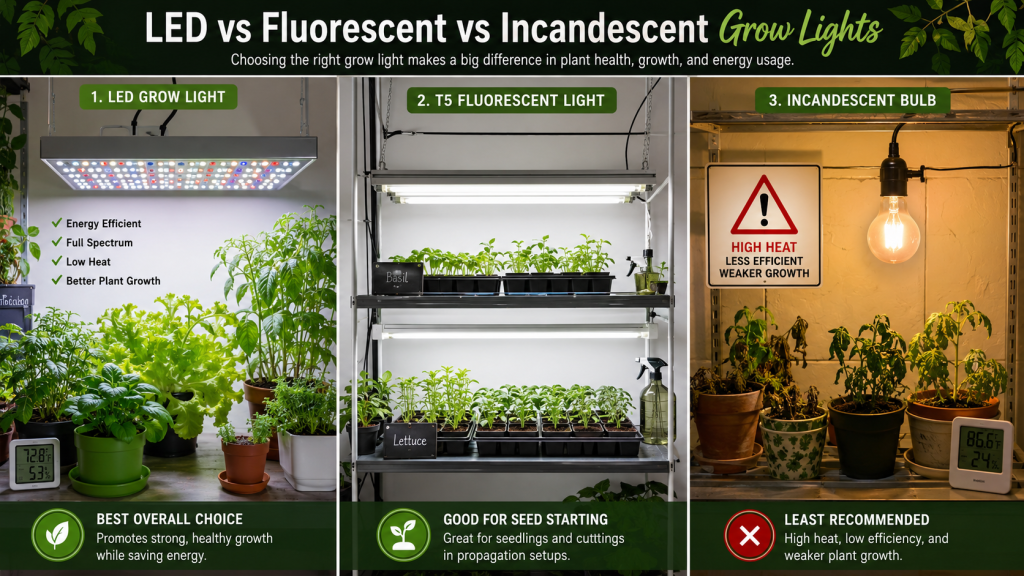
LEDs represent the current gold standard for indoor plant cultivation. They convert electricity into light with incredible efficiency, producing significantly less heat than traditional bulbs. This allows you to mount them closer to your plants without risking leaf scorch—a major benefit in tight apartment setups or vertical shelving units. While the upfront purchase price can be higher, their low operational cost and long lifespan (often rated for 50,000 hours or more) make them the most economical long-term investment.
2. Fluorescent Lights (T5, T8, and CFLs)
Fluorescent tubes, particularly high-output T5 bulbs, have been a reliable choice for seed starting and propagation for decades. They offer a very even distribution of light over a long, narrow footprint, making them excellent for wire shelving units. However, they are less energy-efficient than LEDs, contain small amounts of mercury, and their light output degrades significantly after about a year of regular use, requiring periodic bulb replacements.
3. Incandescent and Halogen Bulbs
Standard household incandescent bulbs are entirely unsuitable for growing plants. They convert roughly 90% of their energy into heat rather than light, creating a severe burn risk for foliage while providing a poor, inefficient spectrum. Even specialized “grow bulb” incandescents are highly inefficient and should generally be avoided in favor of modern LED screw-in replacements.
| Light Type | Energy Efficiency | Heat Output | Lifespan | Best Used For |
| LED Panel / Bar | Excellent | Very Low | 50,000+ hours | All plant types, vertical shelves, large collections |
| LED Screw-in Bulb | Excellent | Low | 25,000+ hours | Single plants, accent lighting, floor lamps |
| T5 Fluorescent | Moderate | Medium-Low | 10,000–15,000 hours | Seedlings, microgreens, propagation, low succulents |
| Incandescent | Very Poor | High | 1,000 hours | Emergency use only; not recommended |
Matching Your Light to Your Plant Types
Different plant species have evolved to thrive under specific light intensities. Grouping your plants by their light requirements prevents you from burning low-light species or starving high-light varieties.
Low-Light Plants (PPFD: 50–100 $\mu mol/m^2/s$)
Plants that naturally grow on shaded forest floors require minimal light intensity to maintain their health. Over-lighting these species can quickly lead to bleached foliage or crisp, brown leaf margins.
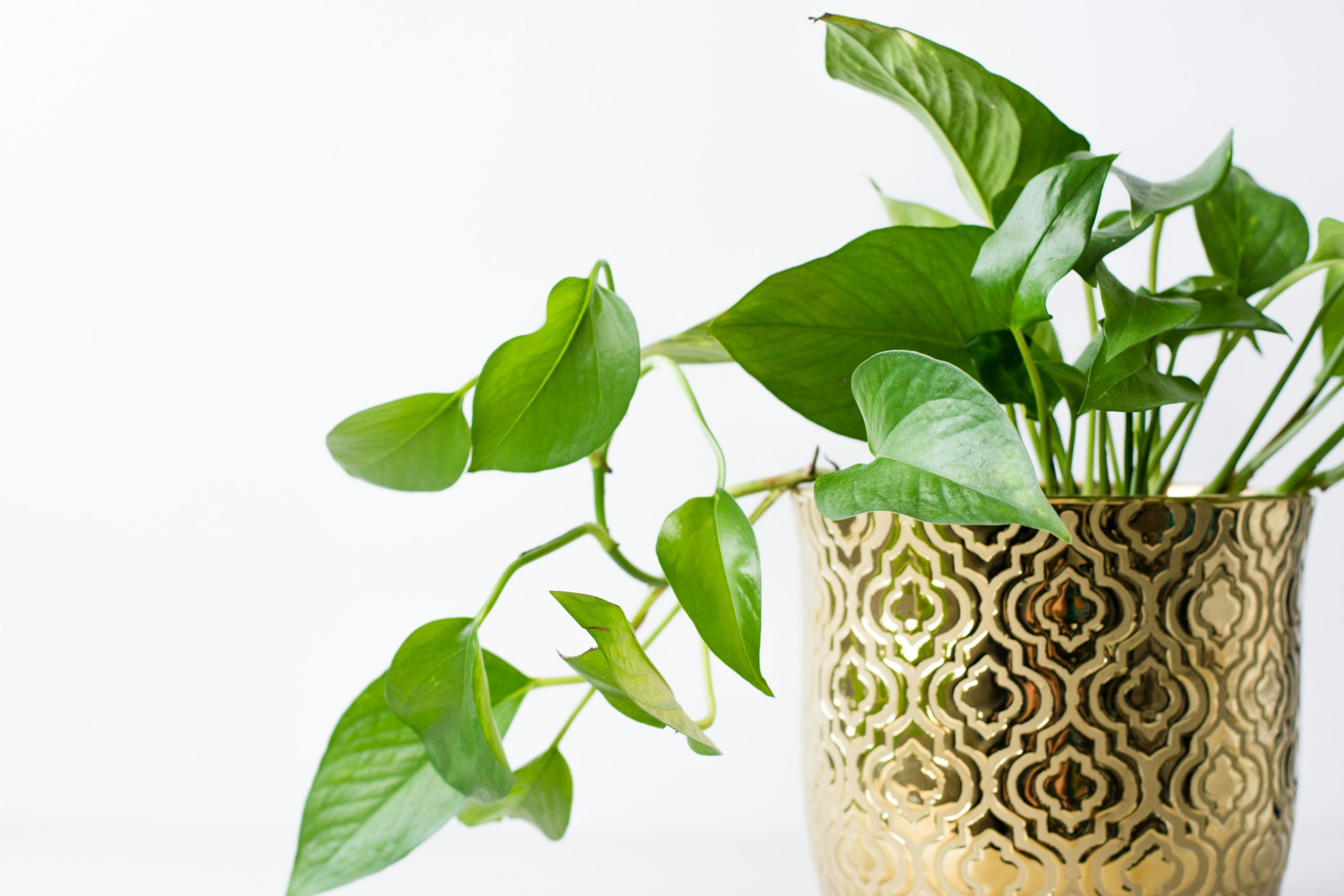
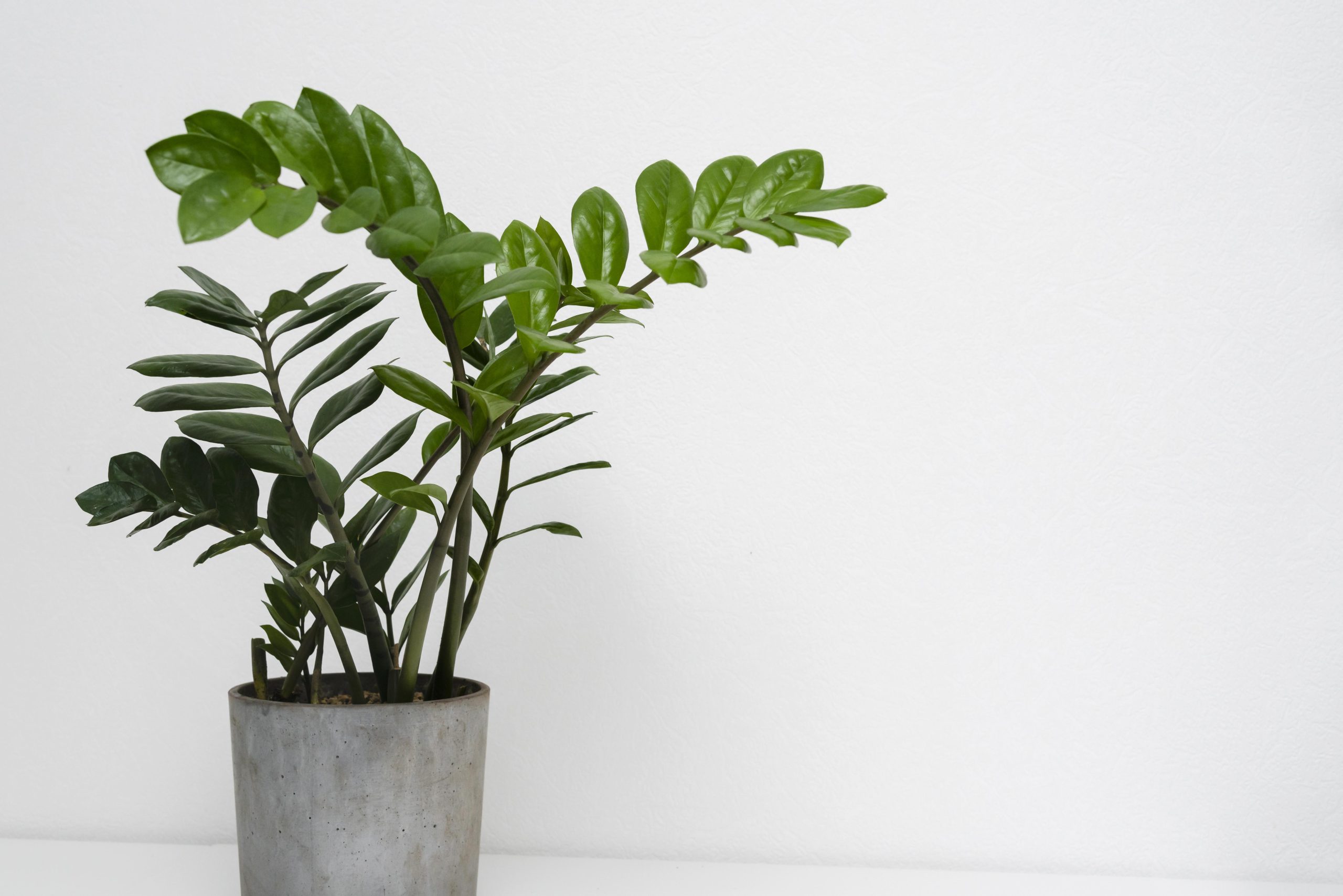
- Species: Pothos, ZZ plants, snake plants, cast iron plants, and peace lilies.
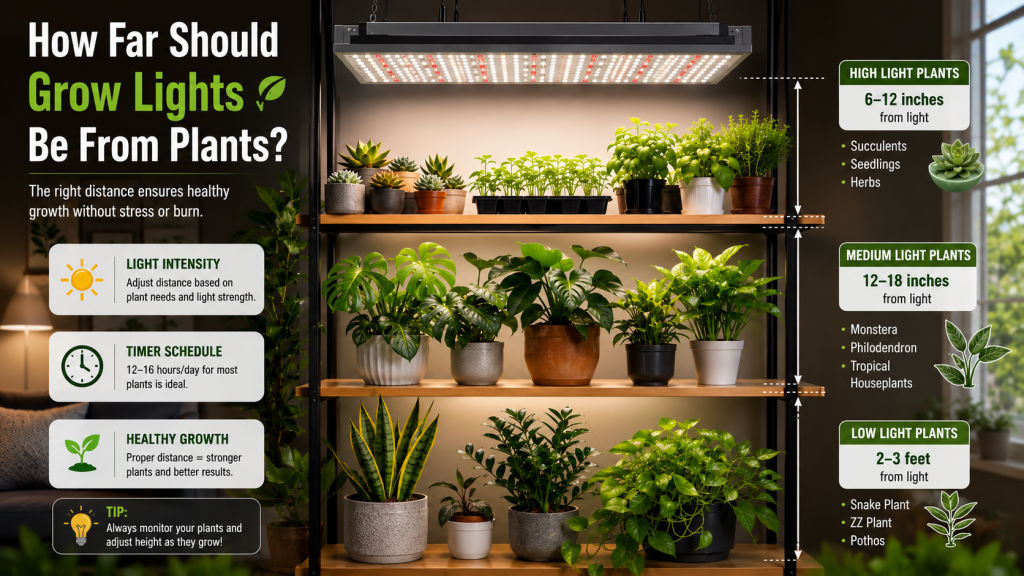
- Lighting Strategy: Low-wattage LED screw-in bulbs or placing fixtures at a significant distance (2 to 3 feet) above the canopy.
Medium-Light Plants (PPFD: 100–250 $ \mu mol/m^2/s $)
The majority of popular tropical houseplants fall into this category. They need bright, indirect light to produce split leaves, variegation, and robust growth patterns.
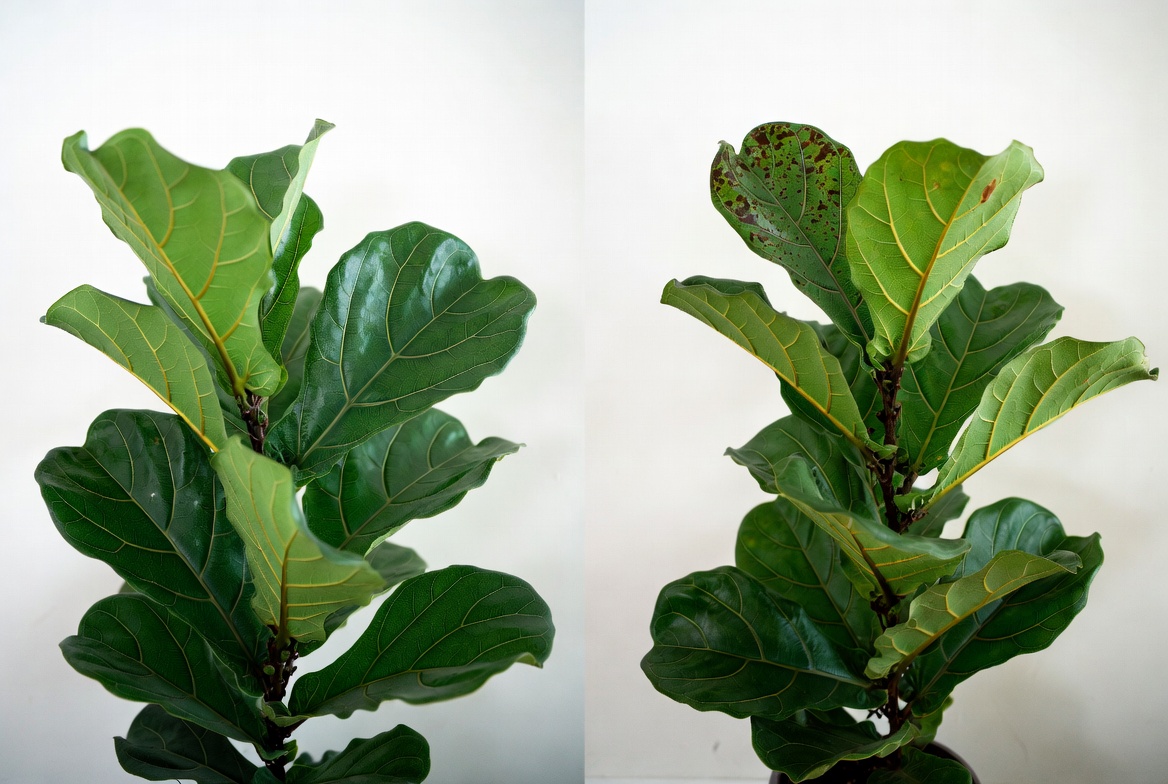
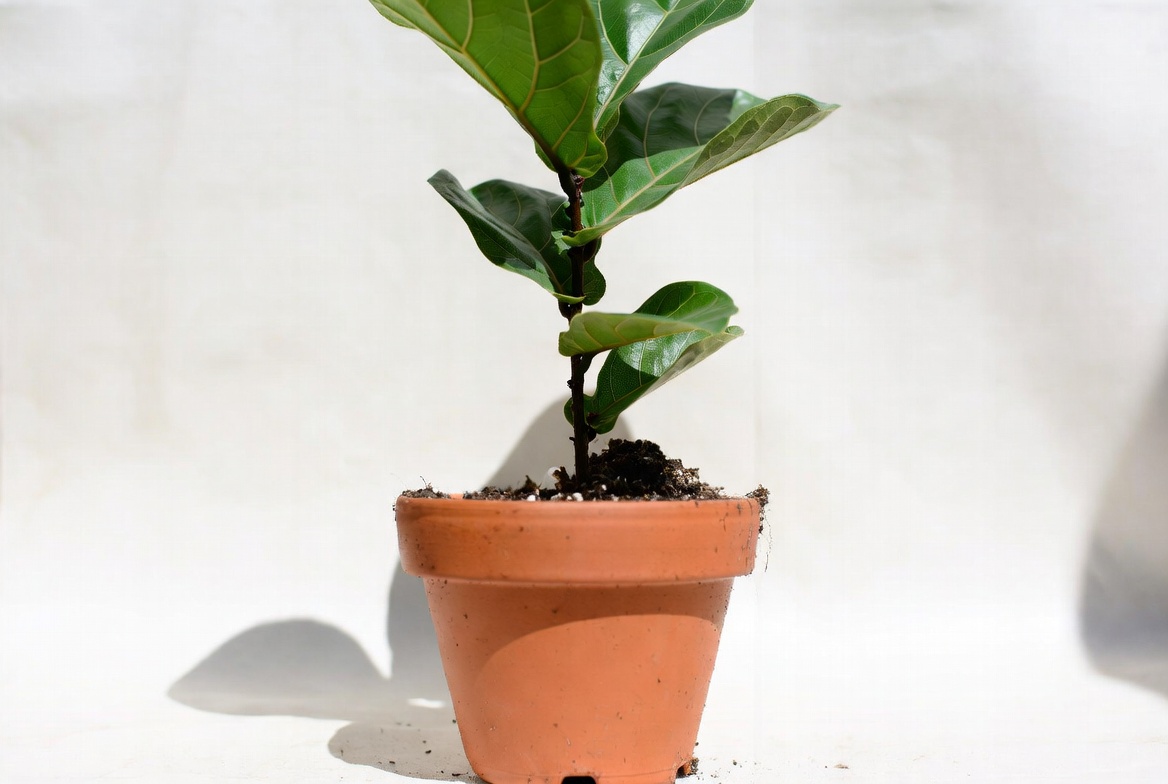
- Species: Monsteras, Philodendrons, Ficus (fiddle leaf fig, rubber tree), Calatheas, and Alocasias.
- Lighting Strategy: Broad-spectrum LED bars mounted 12 to 18 inches above the plants, or medium-output panel lights.
High-Light Plants (PPFD: 250–600+ $\mu mol/m^2/s$)
Plants originating from arid deserts or open, sun-drenched fields require intense, concentrated light. Without supplemental fixtures, these plants will quickly stretch out, lose their compact shapes, or drop lower leaves.
- Species: Succulents, Cacti, Echeverias, Citrus Trees, Indoor Tomatoes, Mediterranean Herbs (Rosemary, Thyme).
- Lighting Strategy: High-output LED panels or dedicated grow lights positioned closely (6 to 12 inches) above the canopy, running for extended photoperiods.
Step-by-Step Guide to Setting Up Your Grow Light System
Achieving optimal results requires proper placement, security, and timing. Follow this systematic process to install your new lighting array safely and effectively.
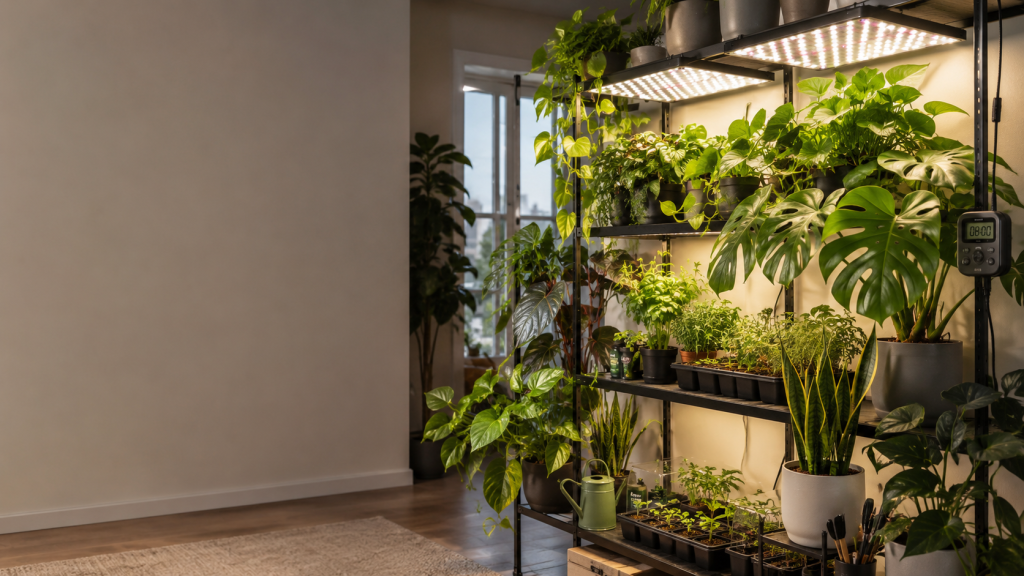
- Calculate the Coverage Footprint: Measure the total surface area occupied by your plants. A single standard 2-foot LED bar will effectively illuminate a footprint of roughly 24 inches by 12 inches. For wider shelves or deeper tables, you will need to hang multiple bars parallel to one another to eliminate dark zones.
- Select an Appropriate Mounting Method: Determine how you will physically support the light fixture. For wire storage shelving, heavy-duty zip ties or adjustable metal S-hooks work perfectly. For living rooms or decorative spaces, consider utilizing an adjustable floor lamp with a heavy base or discrete ceiling hooks paired with adjustable rope ratchets.
- Establish the Initial Hanging Height: As a baseline rule for modern full-spectrum LEDs, position the fixture 12 to 18 inches above the top leaves of medium-light plants and 6 to 12 inches above high-light succulents or seedlings. Never let foliage physically touch the light surface, as localized heat can still cause tissue damage over time.
- Connect a Programmable Timer: Consistency is vital for plant biological clocks. Plug your grow lights into a mechanical or digital 24-hour timer. Set the timer to run for 12 to 16 hours per day. Running lights 24 hours non-stop prevents plants from entering their dark respiration phase, where they break down sugars and rest, leading to stunted or stressed growth.
- Observe and Adjust Over Two Weeks: Monitor your plants daily after installation. If you notice leaves bleaching, turning yellow, or developing crisp brown patches directly under the light, raise the fixture by 3 to 4 inches. Conversely, if the stems continue to stretch rapidly toward the light source, lower the fixture slightly or increase the daily duration.
Common Misconceptions About Indoor Plant Lighting
“Any standard LED bulb from the hardware store works as a grow light.”
While regular household LED bulbs can provide basic illumination that helps low-light plants survive, they are not optimized for long-term growth. Standard bulbs are engineered for human visual comfort, meaning they heavily prioritize green wavelengths while skimping on the specific red and deep-blue peaks required for robust photosynthesis. Specialized horticultural lights feature diodes intentionally selected to deliver a dense concentration of usable PAR photons.
“More light is always better for faster growth.”
Plants hit a biological saturation point known as the Light Saturation Point (LSP). Past this threshold, a plant cannot process any additional light photons. Forcing excess light onto a plant without proportionally increasing humidity, ambient carbon dioxide, and structural nutrients will cause severe photo-oxidative stress, effectively destroying chlorophyll molecules and bleaching the foliage.
Troubleshooting Light Issues
When adapting your indoor garden to artificial fixtures, you will likely encounter structural signals that require immediate adjustment. Use this diagnostic matrix to quickly identify and correct environmental imbalances.
| Symptom | Primary Cause | Immediate Correction | Long-Term Prevention |
| Stems stretching, long internodes, pale green new growth | Light intensity is too low (etiolation). | Lower the fixture closer to the canopy or increase run time to 16 hours. | Group high-light plants directly under the center beam of your fixture. |
| Foliage turning white, crispy brown spots on top leaves | Light intensity is too high (photobleaching/scorch). | Raise the fixture by 4–6 inches or dim the unit if a controller is available. | Always introduce plants to high-output lights gradually over a 7-day period. |
| Lower leaves dropping off while top growth looks healthy | Poor light penetration through dense canopy | Thin out dense upper foliage or install side-directed supplemental lighting bars. | Space your plants further apart to allow light to reach the lower stems. |
| Soil drying out rapidly, puckered leaf edges | Excess ambient heat from fixture or lack of airflow | Improve ventilation with a small USB fan; check distance from light. | Switch to high-efficiency LEDs that naturally emit minimal ambient heat. |
Pro Horticultural Lighting Tips
- Utilize Vertical Reflection: In small spaces or enclosed shelving units, line the back and sides with reflective materials like Mylar sheeting or flat white foam board. This redirects scattered photons back into the lower and side canopy areas, increasing total light efficiency by up to 30% without drawing more electricity.
- Keep Diode Covers Clean: Over time, misting, humidity, and floating dust create a thin, cloudy film over your grow light lenses. This subtle barrier can reduce total photon output by 10% or more. Unplug your fixtures once every two months and gently wipe down the covers with a dry microfiber cloth to maintain peak performance.
- Account for Seasonal Adjustments: Remember that ambient light from windows changes throughout the year. In the dark winter months, you may need to extend your grow light run times from 12 hours up to 15 hours to offset the complete loss of natural supplemental daylight.
Final Review & Checklist
Before purchasing or setting up a new indoor horticultural lighting system, run through this final checklist to ensure optimal performance and safety:
- Fixture choice is based on PAR/PPFD metrics rather than misleading lumen ratings.
- Light spectrum matches plant growth goals (full-spectrum white or daylight spectrum for general foliage maintenance).
- Physical dimensions of the fixture align cleanly with the plant arrangement or shelf footprint.
- Adjustable mounting system allows you to easily raise or lower the light as plants grow.
- An automated 24-hour timer is integrated to guarantee a dedicated dark rest period.
- Electrical cords are routed with a safe “drip loop” to prevent moisture from reaching outlets.
Summary
Selecting the best grow lights for indoor plants does not require an advanced degree in physics, but it does require moving past basic household standards. By prioritizing modern full-spectrum LED systems, understanding the unique PAR requirements of your specific plant collection, and establishing a consistent daily photoperiod via automated timers, you can successfully maintain a thriving, verdant urban jungle inside any dark room or compact apartment.
If you are still comparing your options, our guide to choosing grow lights walks through the key points in plain language. Herb growers have their own shortlist, and our roundup of LED lights for herbs picks out the best fixtures for kitchen herb gardens. If you would rather grow without soil, our guide to beginner hydroponics systems shows you how to get your first setup running.
Frequently Asked Questions
Can I leave my grow lights on 24 hours a day to speed up plant growth?
No, you should never leave grow lights running for 24 hours straight. Plants require a consistent period of darkness every day to perform respiration, a vital metabolic process where they break down stored sugars produced during the day into usable energy. Continuous illumination causes chronic biological stress, leading to brittle leaves, stunted growth, and systemic decline over time. Restrict your photoperiod to 12 to 16 hours maximum.
How far away from my houseplants should I hang an LED grow light?
For standard full-spectrum LED fixtures, hang the light 12 to 18 inches away from the top canopy of medium-light tropical houseplants. High-light succulents and vegetable seedlings can be positioned closer, roughly 6 to 12 inches away, to capture maximum photon intensity. Always monitor the uppermost leaves for the first two weeks; if you spot crisp margins or fading color, simply raise the fixture a few inches.
Do purple “blurple” grow lights work better than white full-spectrum lights?
No, modern white full-spectrum LED lights generally outperform older purple fixtures. While plants do heavily absorb isolated red and blue wavelengths, broad-spectrum white light includes vital green and far-red bands that penetrate deeper into dense plant canopies. Furthermore, white light is completely natural to the human eye, making it much easier for home gardeners to monitor their plants for early signs of pests, mold, or nutritional deficiencies.
How do I know if my indoor plants are getting too much light from a fixture?
Plants receiving excessive light intensity will display distinct stress markers. Look for foliage bleaching or turning pale yellow, particularly on the leaves closest to the fixture. You may also observe crisp, paper-thin brown patches developing directly under the light source or notice leaves curling downward or folding inward to reduce their exposed surface area.
Do I need a different type of grow light for starting seeds vs. maintaining mature houseplants?
While you can use the same broad-spectrum LED fixture for both stages, you will need to adjust the placement height. Seedlings require very intense light to prevent them from growing tall, thin, and weak (leggy), so lights must be kept low and close to the tray. For general houseplant maintenance, you can raise the same light significantly higher to spread out a more gentle, wider footprint across your collection.