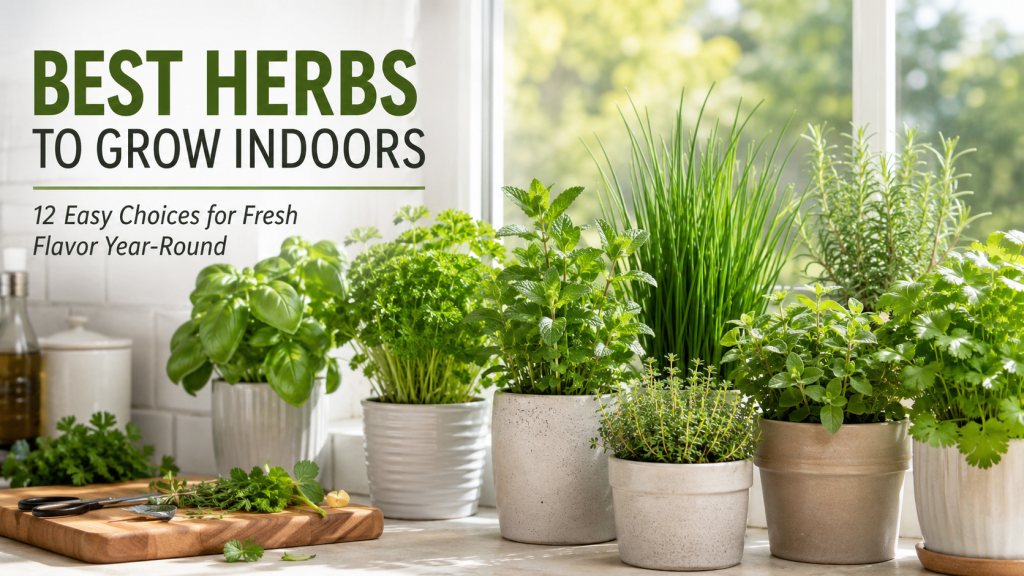
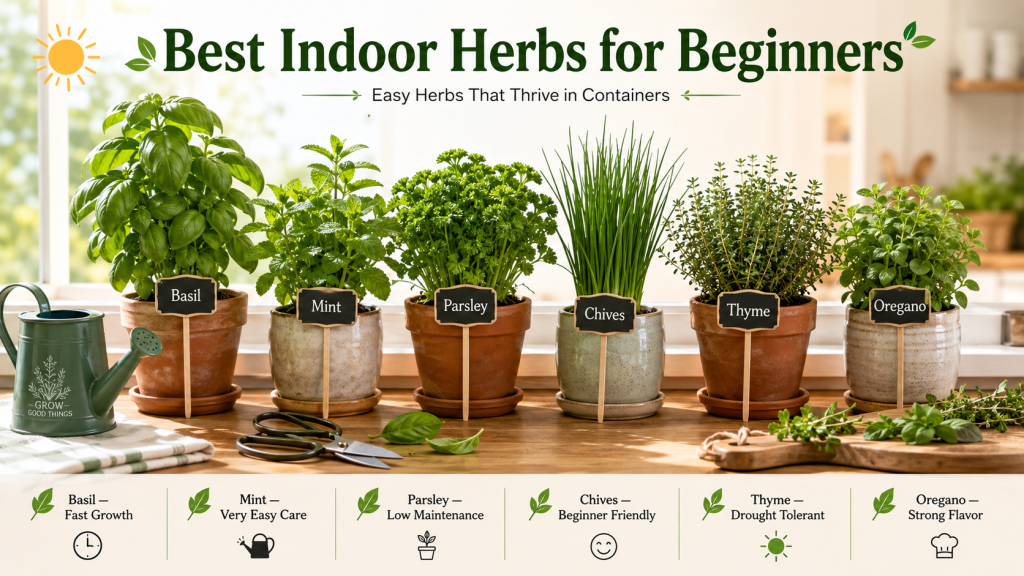
The best herbs to grow indoors are those that adapt well to containers, tolerate typical household conditions, and provide frequent harvests without demanding constant attention. For most homes, basil, parsley, chives, mint, thyme, oregano, and rosemary consistently outperform more demanding herbs.
Indoor herb gardening offers a practical way to keep fresh ingredients within reach throughout the year, even if you live in an apartment or have limited outdoor space. A sunny window, a few containers, and the right herb selection are often enough to produce a steady supply of flavorful leaves for cooking.
The challenge isn’t usually keeping herbs alive—it’s choosing varieties that match your indoor environment. Some herbs thrive in average household conditions, while others struggle without intense light or careful watering. This guide covers the best options, how to grow them successfully, common mistakes to avoid, and what most gardening guides fail to explain about indoor herb production.
Quick Answer Box
What are the best herbs to grow indoors?
The easiest and most reliable herbs for indoor growing are:
- Basil
- Parsley
- Chives
- Mint
- Thyme
- Oregano
- Rosemary
- Cilantro
- Lemon Balm
- Sage
- Dill
- Bay Laurel
Most indoor herbs need at least 6 hours of bright light daily, temperatures between 65°F and 75°F, containers with drainage holes, and well-draining potting mix. If natural light is limited, a grow light running 12–16 hours daily often produces better results than a windowsill alone.
What Makes the Best Herbs to Grow Indoors?
The best indoor herbs share several characteristics. They remain relatively compact, tolerate container growing, and can produce usable harvests under moderate indoor conditions.
Successful indoor herbs generally have:
- Moderate root systems
- Consistent leaf production
- Adaptability to container culture
- Tolerance for indoor humidity levels
- Ability to recover after harvesting
Herbs that naturally grow in Mediterranean climates, such as thyme and oregano, often perform exceptionally well indoors because they prefer conditions similar to those found in many homes. Others, like basil and parsley, thrive as long as they receive adequate light and regular watering.
A common mistake gardeners make is choosing herbs based solely on culinary preferences without considering available light. Even the easiest herb will struggle in a dark room.
The 12 Best Herbs to Grow Indoors
1. Basil
Basil remains one of the most productive indoor herbs when given sufficient light. It grows quickly, responds well to regular harvesting, and provides a continuous supply of fresh leaves.
Keep basil in a south-facing window or under grow lights. Pinch growing tips frequently to encourage branching and prevent flowering.
2. Parsley
Parsley tolerates indoor conditions better than many gardeners expect. Both flat-leaf and curly varieties adapt well to containers.
Unlike basil, parsley can handle slightly lower light levels, making it useful for apartments with limited sun exposure.
3. Chives
Chives are among the most beginner-friendly herbs available. They require minimal maintenance and quickly regrow after cutting.
Harvest leaves by snipping near the base rather than trimming only the tips.
4. Mint
Mint grows vigorously indoors and adapts well to containers. Always keep it in its own pot because its aggressive roots can outcompete neighboring plants.
5. Thyme
Thyme prefers bright light and slightly drier soil. Overwatering causes more problems than underwatering.
6. Oregano
Oregano thrives in containers and develops stronger flavor when grown under bright light.
7. Rosemary
Rosemary is slightly more challenging but highly rewarding. Excellent drainage and strong light are essential.
8. Cilantro
Cilantro grows quickly but has a shorter lifespan than many herbs. Success often comes from sowing fresh seeds every few weeks.
9. Lemon Balm
This mint relative produces fragrant leaves and adapts well to indoor conditions.
10. Sage
Sage prefers bright conditions and moderate watering. Its attractive foliage adds ornamental value indoors.
11. Dill
Dill grows best in deep containers due to its taproot. Regular succession planting helps maintain harvests.
12. Bay Laurel
Although slower growing, bay laurel can live for years indoors and provides fresh bay leaves when needed.
Indoor Herb Growing Conditions at a Glance
| Herb | Light Needs | Water Needs | Growth Difficulty |
|---|---|---|---|
| Basil | High | Moderate | Easy |
| Parsley | Medium-High | Moderate | Easy |
| Chives | Medium | Moderate | Very Easy |
| Mint | Medium | High | Very Easy |
| Thyme | High | Low | Easy |
| Oregano | High | Low | Easy |
| Rosemary | High | Low | Moderate |
| Cilantro | Medium-High | Moderate | Moderate |
| Sage | High | Low | Easy |
| Dill | High | Moderate | Moderate |
| Lemon Balm | Medium | Moderate | Easy |
| Bay Laurel | High | Low | Moderate |
How to Start an Indoor Herb Garden
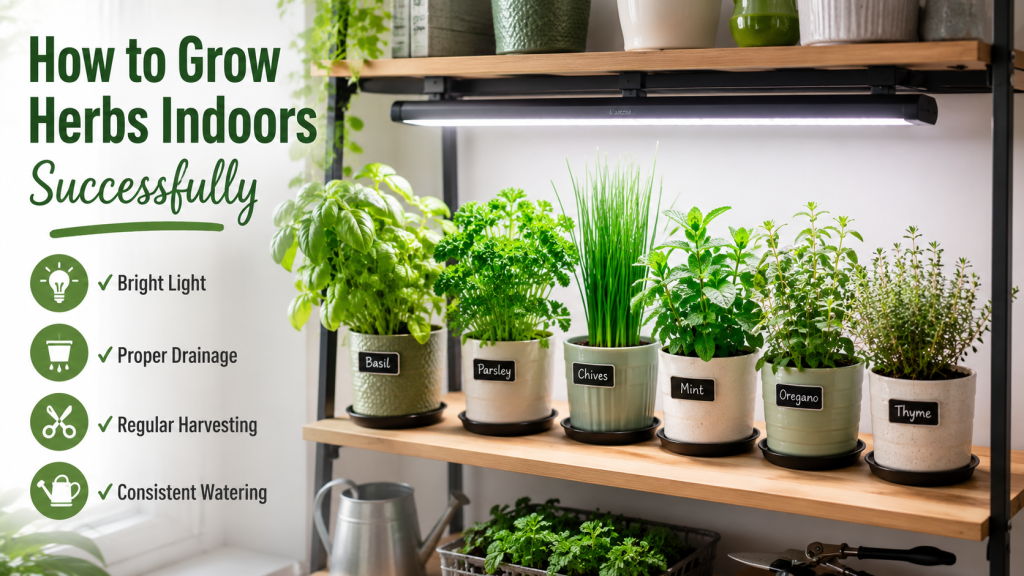
Starting an indoor herb garden is simpler than many people assume. The key is matching the right setup to your available light.
Step 1: Evaluate Your Light
Observe your brightest window for several days. South-facing windows usually provide the strongest natural light in most US homes.
Step 2: Choose Suitable Containers
Select pots with drainage holes. Herbs dislike sitting in waterlogged soil.
Step 3: Use Quality Potting Mix
Avoid garden soil. Indoor containers need lightweight, well-draining potting mix designed for container growing.
Step 4: Plant Carefully
Position herbs at the same depth they were growing previously. Planting too deeply can increase the risk of stem rot.
Step 5: Establish a Watering Routine
Water thoroughly when the top inch of soil becomes dry, then allow excess water to drain away completely.
What Most Guides Get Wrong About Indoor Herbs
Many guides suggest that any sunny window is enough for every herb. In reality, indoor light levels are often significantly weaker than outdoor sunlight.
A basil plant receiving six hours of filtered window light may still struggle compared to one grown under supplemental grow lights.
Another misconception is that frequent watering equals healthy growth. Most indoor herb failures stem from excess moisture rather than drought. Constantly wet soil reduces oxygen around roots and creates conditions favorable to root rot.
Many gardeners also underestimate the importance of harvesting. Regular trimming encourages branching, increases production, and prevents herbs from becoming leggy.
Common Problems and Solutions
Indoor herbs face a handful of recurring challenges. Most can be corrected quickly when identified early.
| Symptom | Likely Cause | Solution |
|---|---|---|
| Yellow leaves | Overwatering | Allow soil to dry slightly before watering |
| Long, weak stems | Insufficient light | Move closer to window or add grow lights |
| Brown leaf tips | Low humidity or inconsistent watering | Improve watering consistency |
| Mold on soil | Poor airflow | Increase ventilation and reduce watering |
| Slow growth | Nutrient deficiency or low light | Fertilize lightly and improve lighting |
If you notice several symptoms at once, examine watering habits first. Overwatering frequently triggers multiple problems simultaneously.
Best Herbs to Grow Indoors Under Grow Lights
Grow lights often outperform windowsills, especially during winter.
The best herbs to grow indoors under artificial lighting include:
- Basil
- Parsley
- Chives
- Cilantro
- Dill
- Mint
LED grow lights generate less heat than older systems and use less electricity. Position lights approximately 6–12 inches above the plants and run them for 12–16 hours daily.
Growers often see more compact growth, stronger stems, and better leaf production under properly positioned grow lights than under natural light alone.
Expert Tips for Bigger Harvests
Harvest Little and Often
Frequent harvesting stimulates new growth. Removing small amounts regularly is usually better than taking large harvests occasionally.
Rotate Pots Weekly
Plants naturally lean toward light sources. Rotating containers helps maintain balanced growth.
Avoid Oversized Containers
Large pots hold excess moisture. Choosing appropriately sized containers reduces the risk of root problems.
Feed Lightly
Most herbs need only occasional fertilization. Excess fertilizer often reduces flavor intensity, especially in culinary herbs.
Seasonal Indoor Herb Care Checklist
Spring
- Increase harvesting frequency
- Begin fertilizing lightly
- Repot overcrowded herbs
Summer
- Monitor moisture more frequently
- Watch for overheating near windows
Fall
- Reduce fertilizer applications
- Prepare supplemental lighting if needed
Winter
- Maximize available light
- Avoid overwatering during slower growth periods
- Increase humidity if indoor air becomes very dry
Conclusion
The most important factor in growing the best herbs to grow indoors is matching your herb selection to the amount of light available in your home. Basil, parsley, chives, mint, thyme, and oregano consistently provide the best combination of productivity, flavor, and ease of care for indoor gardeners.
Focus on bright light, proper drainage, and careful watering before worrying about advanced techniques. Most indoor herb problems can be traced back to those three fundamentals. Start with two or three reliable varieties, establish a simple care routine, and expand your collection as you gain confidence. A small indoor herb garden can provide fresh harvests throughout the year while taking up surprisingly little space.
If you are starting an herb garden for the first time, our beginner guide walks you through the whole setup step by step. For windowsills that do not get enough sun, our guide to grow lights for herbs explains which fixtures work best. And if your basil ever struggles, our troubleshooting guide explains what causes basil leaves turning black and how to fix it.
Frequently Asked Questions
What are the absolute best herbs to grow indoors for beginners?
The best herbs to grow indoors for beginners are chives, parsley, mint, basil, and oregano. These herbs adapt well to containers, recover quickly from harvesting, and tolerate minor care mistakes better than more demanding options like rosemary or lavender.
Can herbs grow indoors year-round?
Yes, most culinary herbs can grow indoors year-round when they receive sufficient light, proper watering, and temperatures between 65°F and 75°F. Supplemental grow lights are often necessary during winter, particularly in northern regions where daylight hours are limited.
How much sunlight do indoor herbs need?
Most indoor herbs require at least six hours of bright light daily. Basil, rosemary, oregano, and thyme generally need the strongest light, while parsley, mint, and chives can tolerate slightly lower light levels. Grow lights can compensate when natural sunlight is inadequate.
Should I grow herbs from seeds or starter plants indoors?
Starter plants provide faster results and are often easier for beginners. Seeds are more economical and offer greater variety but require additional time and attention during germination. Fast-growing herbs such as basil, cilantro, and dill are commonly started from seed indoors.
Why do my indoor herbs keep dying after a few weeks?
Indoor herbs commonly decline because of insufficient light, overwatering, poor drainage, or overcrowded containers. The most frequent issue is overwatering, which can lead to root rot and yellowing leaves. Improving light levels and allowing soil to dry slightly between waterings usually resolves many problems.