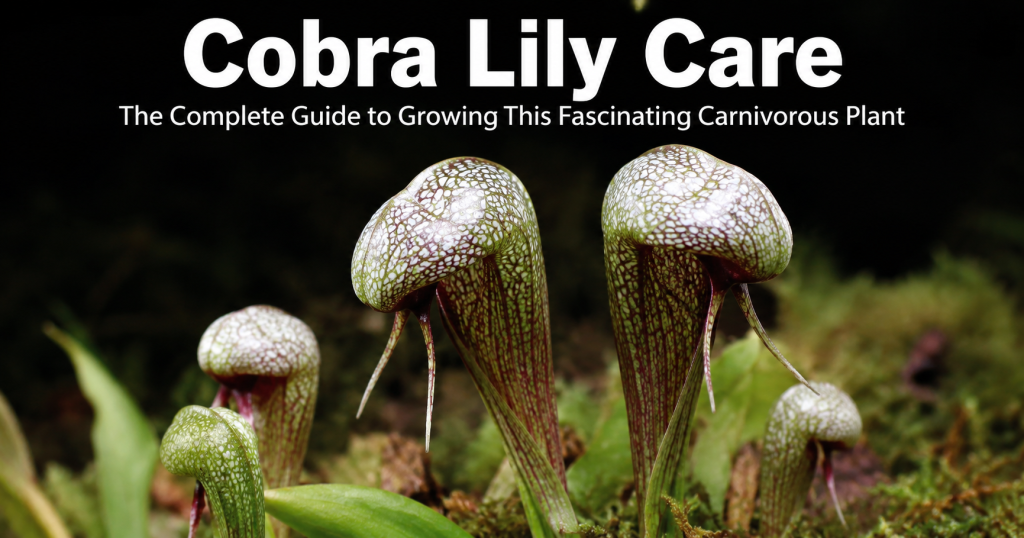
If you are looking for a houseplant that genuinely stops people in their tracks, the cobra lily is one of the most extraordinary options available. With its hooded, translucent pitchers that resemble the raised head of a cobra, this carnivorous plant is unlike anything else you can grow indoors. Cobra lily care is demanding compared to most houseplants, but for those willing to meet its specific needs, it is one of the most rewarding and visually spectacular plants in existence. Here is everything you need to know.
What Is a Cobra Lily?
The cobra lily (Darlingtonia californica) is a carnivorous pitcher plant native to northern California and southern Oregon in the United States, where it grows naturally in cold, fast-moving mountain streams and bogs with very pure, nutrient-poor water. It is the only species in the genus Darlingtonia.
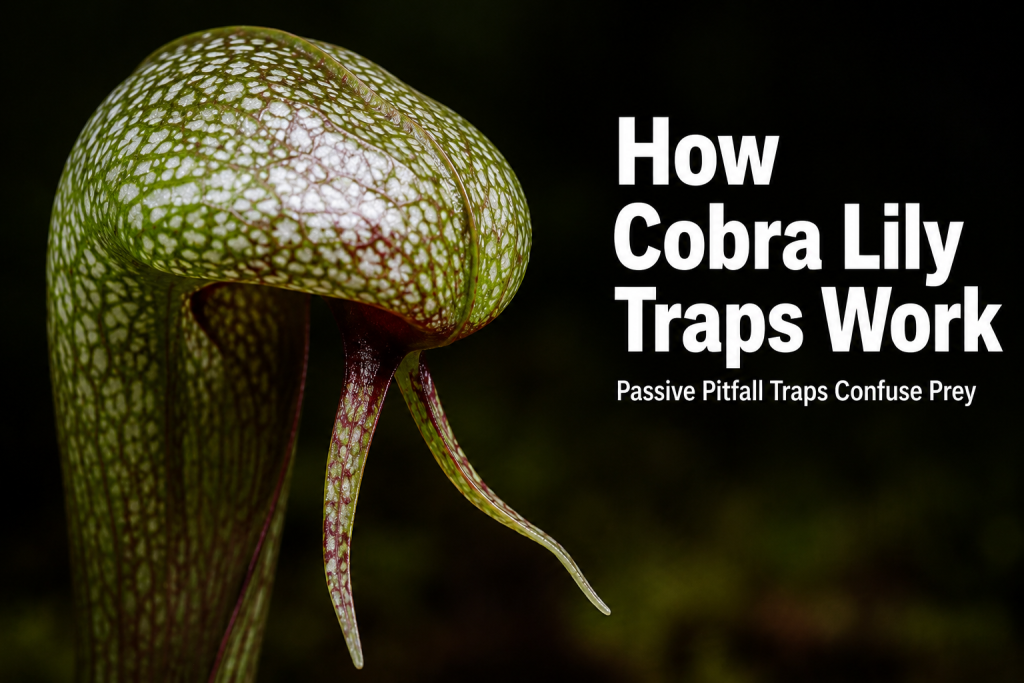
The plant gets its common name from its distinctive pitchers, which are modified leaves that form hollow, hooded tubes with a forked appendage at the opening that resembles a snake’s tongue. The hood is translucent with white patches called “areolae,” and insects that enter the pitcher become confused by the false exits created by these translucent spots, eventually falling into the digestive fluid below where they are dissolved and absorbed.
Unlike many other carnivorous plants, cobra lilies do not have the ability to actively move their traps. Instead, they rely on the confusing internal structure of the pitcher to trap insects passively.
Is Cobra Lily Difficult to Grow Indoors?
Honestly, yes. Cobra lilies are among the more challenging carnivorous plants to grow indoors because of their specific requirements for cold roots, pure water, and cool temperatures. They are not ideal beginner plants, but they are not impossible to grow indoors if you can meet their key needs.
The most critical factor is keeping the root zone cool while the rest of the plant can tolerate warmer temperatures. In their natural habitat, cobra lilies grow with their roots bathed in cold mountain stream water even when summer temperatures above ground are warm. Replicating this indoors takes some creativity.
Light Requirements
Cobra lilies prefer full sun to partial shade, with bright, direct light producing the best growth and most vivid pitcher coloration. A south or east-facing window with several hours of direct sun per day is ideal indoors.
Good light encourages the development of the distinctive white areolae on the pitcher hoods, which are one of the most visually striking features of this plant. In lower light, the pitchers tend to be greener and less dramatic in appearance.
If natural light is limited, a full-spectrum LED grow light used for twelve to fourteen hours per day can supplement or replace natural light effectively.
Watering
Watering is the most critical and most specific aspect of cobra lily care, and getting it wrong is the most common cause of failure with this plant.
Use only pure, cold water. Tap water is not suitable for cobra lilies under any circumstances. Use distilled water, reverse osmosis water, or collected rainwater only. Even filtered water can contain too many dissolved minerals for this plant.
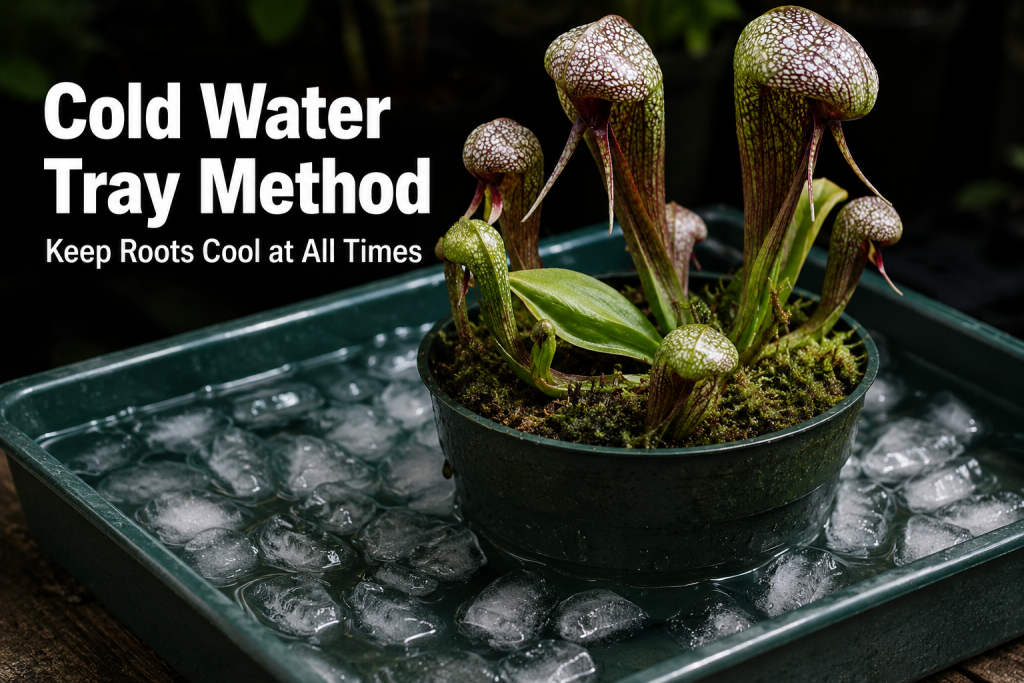
Keep the roots cool. The most important technique for growing cobra lilies indoors is the cold water tray method. Place the pot in a tray of cold water and regularly add ice cubes or very cold water to keep the root zone temperature low, ideally below 60°F (15°C) at the roots even if the air temperature above is warmer. This mimics the cold stream water the plant evolved in and is essential for long-term health.
Use the tray method. Keep the pot sitting in a shallow tray with an inch or two of cold, pure water at all times during the growing season. The plant should never dry out. In winter during dormancy, reduce watering but do not allow the plant to dry out completely.
Soil
Cobra lilies require nutrient-poor, acidic growing media that do not fertilize the plant in any way. Suitable options include:
Pure live or dried sphagnum moss A mix of pure peat moss and perlite or coarse sand in roughly equal parts Pure sphagnum moss mixed with perlite
Never use standard potting mix, garden soil, or any enriched or fertilized media. The presence of nutrients in the soil will kill a cobra lily relatively quickly by burning the sensitive roots adapted to near-pure growing conditions.
Temperature
Temperature management is where cobra lily care becomes particularly challenging indoors. These plants need:
Cool root temperatures, ideally below 60°F (15°C) at the root level, year-round Moderate air temperatures during the growing season, ideally between 60 and 80°F (15 and 27°C) Cool to cold temperatures during winter dormancy, ideally between 35 and 50°F (2 and 10°C)
The roots are the critical factor. Even if air temperatures are warm, keeping the root zone cool with ice water in the tray goes a long way toward keeping the plant healthy. During hot summer periods, you may need to add ice to the water tray daily.
Dormancy
Like Venus flytraps, cobra lilies require a winter dormancy period to stay healthy long-term. In autumn, as days shorten and temperatures drop, the plant will slow its growth, and some pitchers may die back. This is normal and healthy.
During dormancy, move the plant to a cool location between 35 and 50°F (2 and 10°C), such as an unheated garage, cool basement, or refrigerator. Keep the soil slightly moist but water much less frequently. The plant will remain dormant for approximately three to five months before resuming active growth in spring.
Skipping dormancy weakens the plant gradually and will eventually cause it to decline and die.
Feeding
Like all carnivorous plants, cobra lilies obtain nutrients by digesting insects. Indoors, they will catch whatever small insects are available. You can supplement by occasionally placing a small live or dead insect into one of the pitchers every few weeks during the growing season.
Never feed cobra lilies: Human food, meat, or cheese Fertilizer of any kind, either in the soil or as a foliar spray Large insects that are bigger than about one third of the pitcher size
The plant can survive without being fed if it is getting adequate light but will grow more vigorously with occasional insect feeding.
Common Problems
Pitchers turning brown and dying. Individual pitchers naturally die after several months. This is normal aging and not a sign of illness if new pitchers are continuing to grow. If all pitchers are dying simultaneously without new growth, check water quality, root temperature, and light levels.
Slow or no new growth. Usually caused by insufficient light, root temperatures that are too warm, or improper water quality. Address whichever factor is most likely in your situation.
Root rot. Surprisingly rare in cobra lilies given how wet they are kept, but it can occur if the water in the tray becomes stagnant. Change the water in the tray regularly and ensure good air circulation around the plant.
Plant declining after repotting. Usually caused by using incorrect soil media or handling the roots roughly. Cobra lily roots are sensitive to disturbance. Only repot when absolutely necessary and handle roots as gently as possible.
Propagation
Cobra lilies can be propagated by division of offsets that mature plants occasionally produce from the base. These can be carefully separated and potted individually in fresh sphagnum moss. Seed propagation is also possible but is slow and technically demanding, with seeds requiring cold stratification before they will germinate.
Cobra Lily vs Venus Fly Trap: Key Differences
Both are carnivorous plants with specific care requirements, but there are important differences. Venus fly traps use active snap traps triggered by touch, while cobra lilies use passive pitfall traps that confuse prey with false exits. Venus fly traps are generally considered slightly easier to grow indoors. Both require pure water and nutrient-poor soil, but cobra lilies have the additional challenge of requiring cold root temperatures that Venus flytraps do not.
Conclusion
Cobra lily care is genuinely demanding, and this is not a plant for someone looking for a low-maintenance addition to their collection. But for plant enthusiasts willing to provide pure cold water, cool root temperatures, nutrient-poor soil, and winter dormancy, the cobra lily rewards that effort with one of the most visually extraordinary displays in the entire plant kingdom. Those hooded, translucent pitchers with their forked tongues are unlike anything else you will ever grow indoors.
Frequently Asked Questions
Can cobra lilies grow indoors?
Yes, but they require specific conditions, including pure cold water, cool root temperatures, nutrient-poor soil, and a winter dormancy period. They are among the more challenging carnivorous plants to grow indoors successfully.
What water should I use for a cobra lily?
Use only distilled water, reverse osmosis water, or collected rainwater. Tap water and even most filtered water contain too many dissolved minerals for cobra lilies and will eventually kill the plants.
Do cobra lilies need to catch insects?
They benefit from occasional insect feeding during the growing season but can survive without it if receiving adequate light. Indoors, you can place a small live or recently killed insect into a pitcher every two to three weeks.
Why are my cobra lily pitchers dying?
Individual pitchers naturally die after several months, which is normal aging. If all pitchers are dying without new growth, check water quality, root temperature, and light levels, as these are the most common causes of cobra lily decline.
Do cobra lilies need dormancy?
Yes, cobra lilies require a winter dormancy period of approximately three to five months in cool temperatures between 35 and 50°F (2 and 10°C). Without dormancy, the plant gradually weakens and eventually dies.