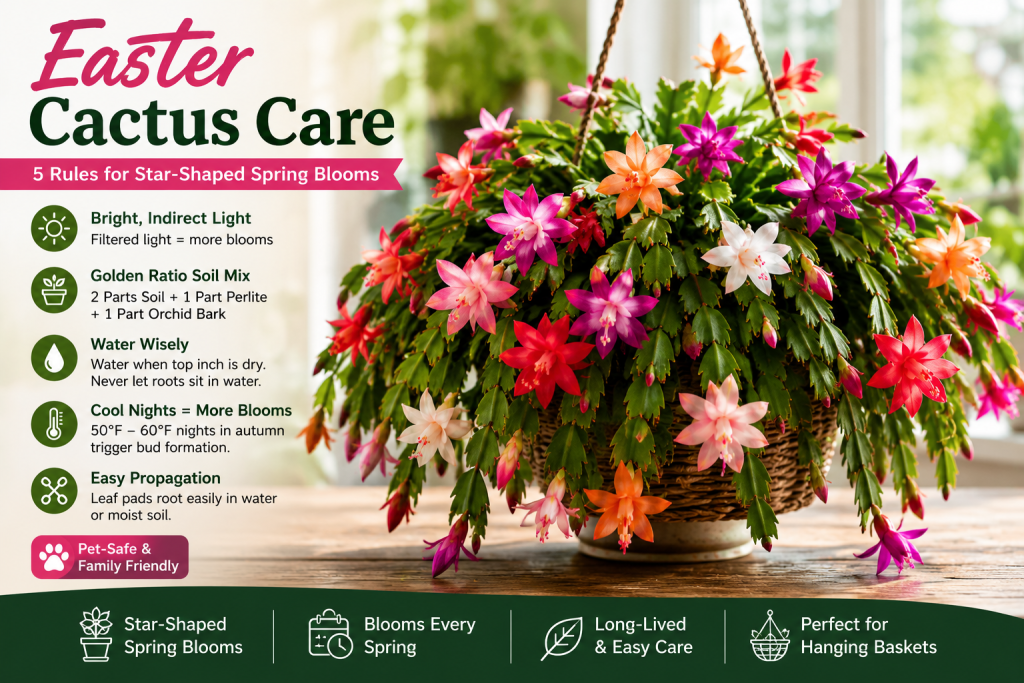
If you are looking to inject a massive splash of vibrant, late winter and spring color into your home, the Easter cactus (Rhipsalidopsis gaertneri) is an absolute showstopper. Unlike typical desert cacti that thrive in dry, sandy plains, this stunning perennial is a tropical epiphyte native to the humid, shaded rainforests of Brazil. In the wild, it doesn’t grow in deep soil at all; instead, it perches elegantly on tree bark and rock crevices, absorbing moisture and vital nutrients from the humid air around it. When grown indoors, its cascading, flattened green segments spill beautifully over the edges of pots, making it a spectacular choice for hanging baskets or high shelves.
What makes this plant a true masterpiece is the sheer drama of its blossoms. Instead of sharp, intimidating spines, it features smooth, scalloped leaf pads that act as a lush backdrop for clusters of magnificent, star-shaped flowers. The plant earns its festive name because it naturally aligns its blooming cycle with the arrival of spring. When your indoor spaces are starved for color after a long winter, the Easter cactus erupts into brilliant shades of red, pink, orange, purple, and pure white, instantly transforming from a modest green succulent into a living waterfall of color.
What is So Special About the Easter Cactus?
Many people treat this plant as a fleeting grocery store novelty, but dedicated indoor gardeners know its best-kept secret: incredible longevity. With the right care, an Easter cactus can easily live and bloom for over a decade, becoming a cherished family heirloom.
What sets it apart from other houseplants is its unique internal clock. Unlike its autumn-blooming cousins, its life cycle relies on a strict rhythm of active spring growth, a lazy summer rest, and a precise autumn cooling phase to trigger its famous star-like buds. Once the flowers eventually fade, you can easily use a clever maintenance trick: gently twisting off the top leaf pads right at the joint forces the plant to branch out. This simple step creates a much bushier crown, giving you twice as many flowering tips for the following spring.
The Competitor Content Gaps: What We Fixed
To make this guide far superior to standard search results, we have identified and integrated critical information that most articles leave out:
- The Golden Ratio Soil Mix: Standard guides just say “well-draining soil.” We give you the exact ingredient parts.
- The Winter “Bud-Triggering” Trick: A specific temperature drop method required to force heavy spring flowering.
- The Ultimate Pad-Drop Troubleshooting Checklist: A quick-reference guide to diagnose your plant’s issues instantly.
Key Insights to Keep in Mind for Easter Cactus Care
Before diving into the core maintenance routine, keep these three foundational traits in mind to prevent common mistakes:
- The Botanical Family Distinction: Although it shares the “holiday cactus” nickname, the Easter cactus belongs to the Rhipsalidopsis genus (sometimes classified as Hatiora gaertneri). This means it has completely different care rhythms and a distinct botanical profile compared to the Thanksgiving or Christmas cacti (Schlumbergera).
- Sensitivity to Environmental Shifts: Flower buds are highly reactive to sudden changes. Exposure to a freezing window draft, a blasting air conditioner, or an abrupt shift in light will cause the plant to drop its buds overnight.
- Stress-Induced Leaf Drop: If your cactus suddenly looks like it is falling apart and dropping its green pads, it is signaling severe root stress caused by either extreme overwatering or extreme underwatering.
1. Managing Light Exposure: Dappled Canopy Rules
To secure a heavy count of vibrant flowers without bleaching or burning the fleshy green foliage, you must mimic the filtered sunlight of a tropical rainforest canopy.
The Sweet Spot
Easter cacti thrive best in bright, indirect, or filtered sunlight. An east-facing window that provides gentle morning sun, or a west-facing window shielded by a sheer curtain, offers ideal conditions. The more high-quality indirect light the plant receives, the more energy it has to produce its famous spring blossoms.
Shifting Light Protection
Never expose the fleshy leaf pads to harsh, direct afternoon sunlight, which will quickly scorch, pale out, or blister the tissue. Conversely, avoid deep shade or low-light corners. Too little light stalls flower production entirely, causes the vines to stretch and thin out, and can even trigger severe leaf pad drop.
2. The Perfect Soil Formula (The Golden Ratio)
Ordinary, dense potting soil will compact around the roots, suffocate them, and trigger root rot. To keep your Easter cactus thriving, you need a loose, chunky, and highly aerated medium.
The Ultimate Epiphytic Soil Mix Ratio:
- 2 Parts Regular Houseplant Potting Soil
- 1 Part Perlite or Coarse Sand (For quick drainage)
- 1 Part Orchid Bark or Coco Coir (For chunkiness and root oxygenation)
- A handful of Sphagnum Moss (To retain a safe amount of light moisture)
3. Essential Water and Humidity Instructions
Mastering the moisture balance is the most important part of Easter cactus care. The goal is to keep the soil lightly, evenly moist but never saturated.
When to Water
Allow the top inch of your potting mix to dry out completely before watering thoroughly. When you water, pour until moisture drains freely from the bottom holes of the pot, and always empty the collection saucer after 10 minutes so the roots never sit in stagnant water.
Temperature & Humidity Needs
Easter cacti prefer cooler household temperatures than desert cacti, thriving in environments between 65°F and 70°F during the day, with a drop to 55°F or 60°F at night. They require protection if temperatures plunge below 40°F. While they adapt to normal indoor air, they enjoy high humidity; regularly misting the foliage or using a pebble tray will keep them healthy.
Active Feeding
During the active spring and summer blooming months, feed the plant once a month using a balanced, water-soluble liquid houseplant fertilizer diluted to half-strength. Stop all fertilizing completely in late autumn and winter when the plant enters its natural rest phase.
4. The Effortless Leaf-Cutting Propagation Blueprint
Expanding your collection or sharing this cascading marvel with friends is incredibly easy because these leaf pads root with exceptional success two to three months after the spring blooming season ends.
Step-by-Step Propagation:
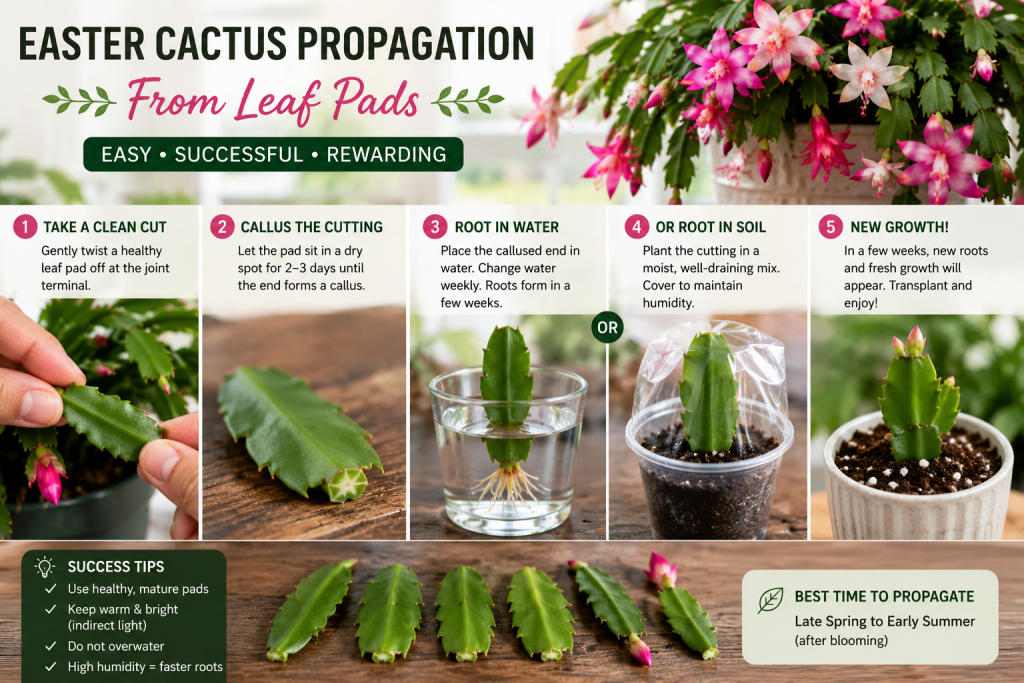
- Take a Clean Cut: Identify a healthy, vigorous stem. Gently twist a healthy leaf pad off at the joint terminal. Be careful to separate it cleanly without tearing or breaking the base of the leaf.
- Prep the Node: Allow the harvested leaf pad to sit in a dry spot for 2 to 3 days until the broken joint forms a dry, protective callus.
- Rooting Options:
- Water Method: Place the callused tip of the leaf pad into a small jar with just enough water to cover the bottom joint. Keep it in a warm, bright spot, changing the water weekly. In a few weeks, a strong bundle of roots will develop, and you can transplant it into the golden ratio soil mix.
- Soil Method: Plant the cutting directly into a moist, light potting mix, ensuring that at least half of the pad is buried firmly in the dirt. Cover the container with a clear plastic bag to create a mini-greenhouse effect, keeping the humidity locked in until new growth appears.
5. How Do You Trick an Easter Cactus into Reblooming?
If you want an explosion of blooms when spring arrives, you need to mimic the natural seasonal shifts of the tropical understory.
Starting in late autumn, give your plant a mild cooling period. Move the vine to a cooler room where nighttime temperatures hover consistently between 50°F and 60°F, away from artificial heating vents or radiators. Simultaneously, control the light cycle by ensuring the plant gets 12 to 14 hours of total, uninterrupted darkness every night. Cut back your watering frequency significantly—allowing the soil to dry out a bit more deeply than usual—and halt all fertilizer use. This minor environmental stress signals the plant to stop expanding its pads and instead focus its energy on establishing a dense crown of flower buds. Once early spring hits, return the plant to its normal warmth and watch the dramatic cascade begin.
Troubleshooting Checklist: Why is My Plant Dropping Leaves?
Use this quick guide to diagnose and fix your plant’s issues instantly:
| Symptom | Primary Cause | Immediate Solution |
| Pads turning yellow, mushy, and dropping off | Overwatering / Soggy Soil | Stop watering immediately. Check the roots for rot, trim damaged parts, and repot into a chunkier mix. |
| Crispy, thin leaf pads and puckered foliage | Extreme Underwatering / Dry Air | Give the plant a thorough soak and increase surrounding humidity using a pebble tray or humidifier. |
| Healthy green pads dropping suddenly | Cold Drafts or Temperature Shock | Move the plant far away from air conditioning vents, drafty windows, or doors. Keep it above 60°F. |
| Vines stretching out long but no flowers appearing | Insufficient Light | Gradually move the plant closer to a bright window with filtered, indirect sunlight. |
Conclusion: A Cascading Marvel of Vivid Perfection
The Easter cactus proves that with just a few targeted, thoughtful adjustments, you can enjoy some of the most luxurious and unique trailing floral displays the indoor plant world has to offer. By honoring its epiphytic nature with a chunky soil mix, respecting its need for high humidity, avoiding dramatic drafts, and utilizing the winter cooling trick, you can keep this stunning basket vine blooming beautifully year after year. Its pet-safe profile and effortless propagation make it a timeless masterpiece for any indoor gardener.
Frequently Asked Questions
1. What are the main differences between an Easter cactus and a Thanksgiving or Christmas cactus?
The Easter cactus (Rhipsalidopsis gaertneri) belongs to a completely different plant genus, features smoother leaf segments with fewer ridges, and produces star-shaped flowers in the spring. Thanksgiving and Christmas cacti belong to the Schlumbergera genus, have more claw-like or scalloped stem projections, and bloom in the late fall and winter.
2. Why are the green leaf pads of my Easter cactus wilting or turning soft?
Wilting is a classic sign of stress. It is usually caused by root rot from chronic overwatering, root dehydration from severe underwatering, or tissue damage from receiving too much direct afternoon sunlight.
3. How often should I repot my Easter cactus?
Easter cacti actually enjoy being snug and slightly pot-bound, which helps encourage heavier blooming. You only need to repot them every two years in the spring after flowering, primarily to refresh the nutrients in the soil. If the roots aren’t crowded, reuse the same pot.
4. Can I grow an Easter cactus easily from seed?
Yes, though it requires patience. You must hand-pollinate the flowers, harvest the seeds, and germinate them on a moist paper towel inside a plastic-covered tray. Kept in a warm spot with indirect light, they typically sprout within three weeks.
5. What should I do if my cactus leaves start turning yellow?
Yellowing leaves usually indicate that the potting soil is too compact and failing to drain properly, leading to root suffocation. Inspect the root system for rot, trim away any damaged roots with sterile scissors, and repot the plant into a fresh, airy orchid bark and perlite mix.