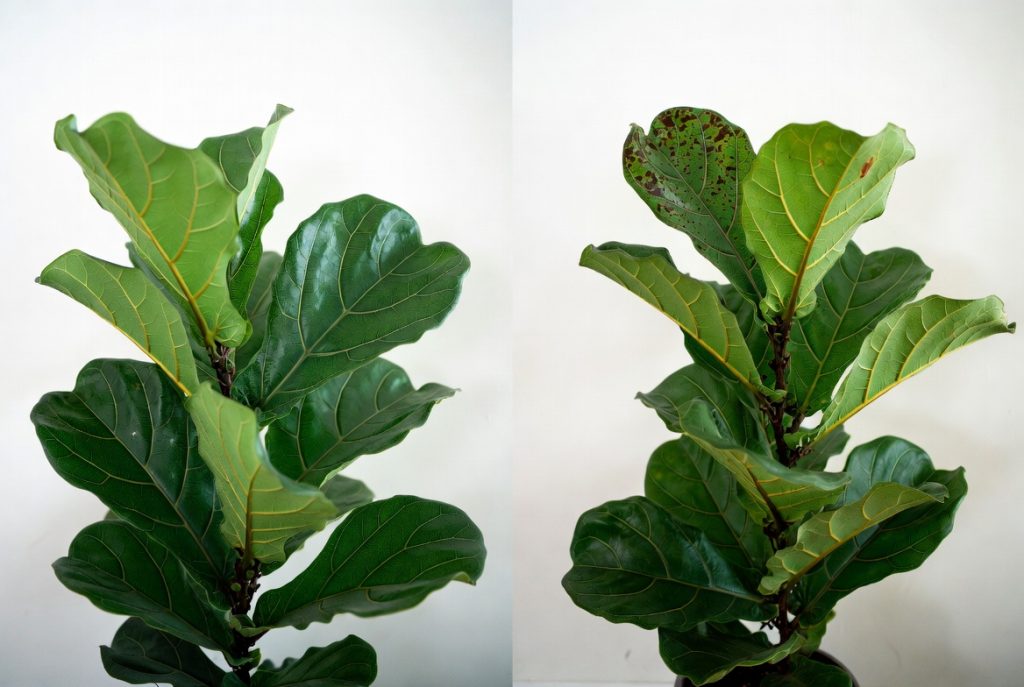
Fiddle leaf fig brown spots are the most common cry for help from indoor gardeners. The Ficus lyrata is a dramatic plant, and when its environment isn’t perfect, it communicates its distress through its massive, violin-shaped leaves. Seeing dark patches appear on your prized statement plant can be heart-wrenching, but these spots are actually a diagnostic tool. By analyzing the color, texture, and placement of the browning, you can pinpoint exactly what is wrong with your plant’s care routine. Whether it is a fungal infection, environmental shock, or a simple watering error, understanding why your fiddle leaf fig is struggling is the first step toward restoring its lush, green glory.
The Anatomy of a Brown Spot
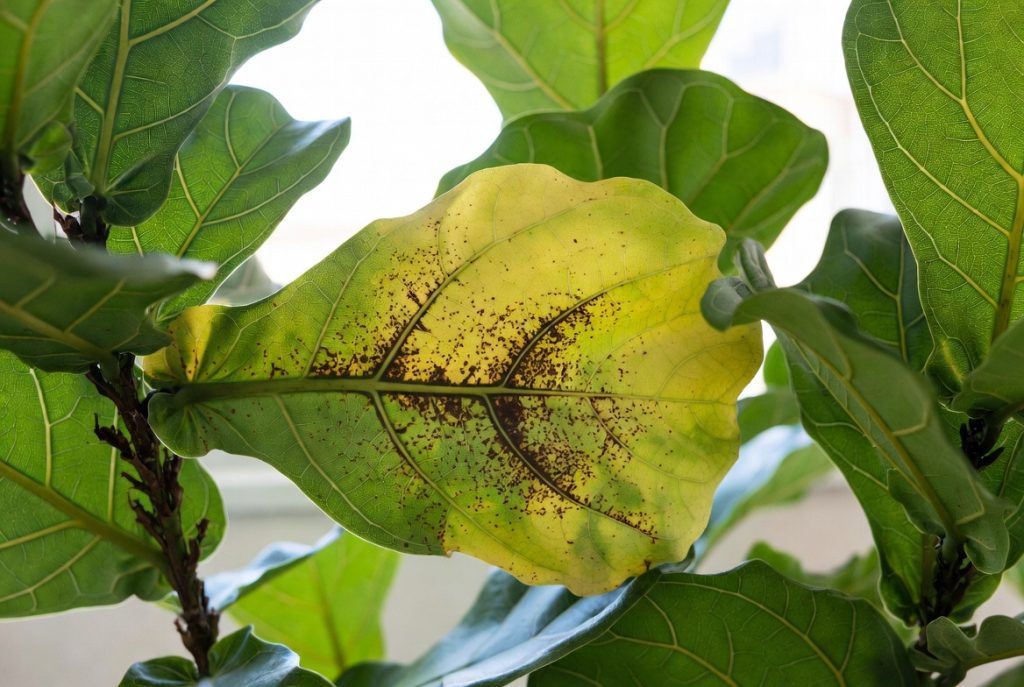
To solve the mystery of fiddle-leaf fig brown spots, you must look closely at the symptoms. Not all brown spots are created equal. Some are dry and crispy, while others are soft and mushy. Some start at the edges, while others radiate from the center. In this guide, we will break down every possible cause and provide a clear roadmap for recovery.
1. Root Rot (The #1 Killer)
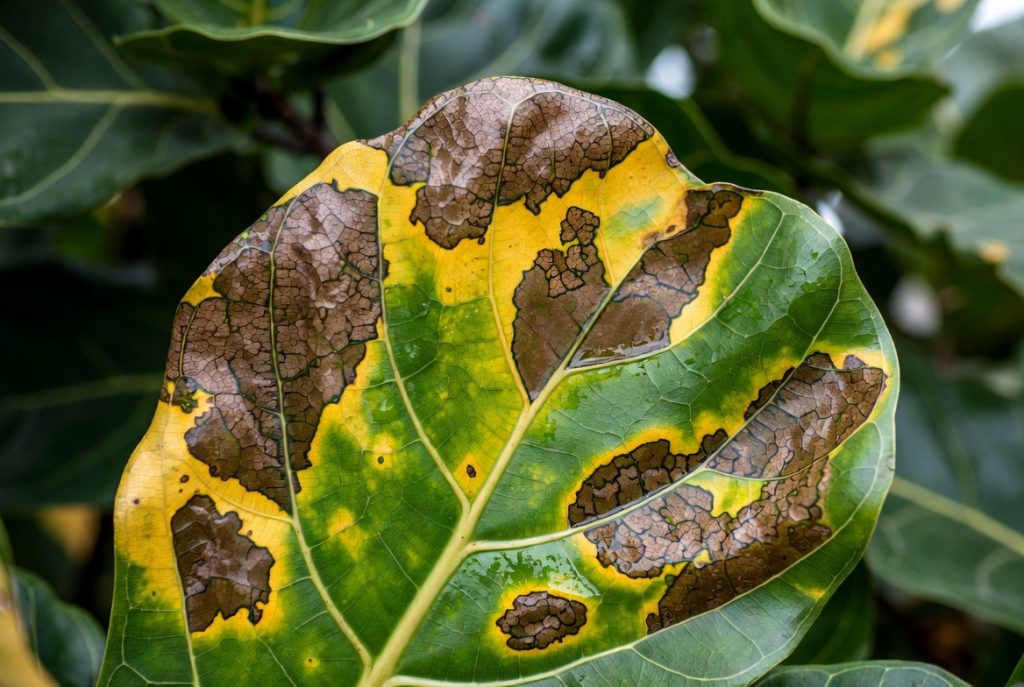
If you see dark brown or black spots appearing in the center of the leaves or spreading from the stem outward, the culprit is almost certainly root rot. This is a fungal infection caused by overwatering or poor drainage. When the roots sit in stagnant water, they suffocate and begin to decay, sending a “death signal” up to the leaves.
The Fix: Immediately stop watering. Check the drainage holes of your pot. If the soil is a swamp, you may need to repot the plant in fresh, dry soil and trim away any slimy, black roots with sterilized shears.
2. Bacterial Infection
Bacterial spots often look different than fungal ones. They typically appear as smaller, more numerous tan or light brown spots across the leaf surface. These spots often have a yellow “halo” around them. Bacterial infections are aggressive and can spread quickly if the plant is stressed or kept in stagnant, humid air without ventilation.
The Fix: Isolate the plant from other indoor plants. Cut off the most affected leaves to stop the spread. Improve air circulation by using a small fan or opening a window.
3. Underwatering (Crispy Edges)
If your fiddle leaf fig’s brown spots are located strictly on the outer edges of the leaves and feel dry or papery to the touch, your plant is likely thirsty. When the plant doesn’t get enough water, it sacrifices the edges of its largest leaves to keep the core alive.
The Fix: Implement a consistent watering schedule. Instead of a “sip” of water, give the plant a deep soak until water runs out the bottom. Use the “finger test” to ensure you water as soon as the top two inches of soil are dry.
4. Low Humidity
Coming from a tropical rainforest, the fiddle leaf fig craves moisture in the air. If your home’s humidity drops below 30% (common in winter), the leaves will develop brittle, brown tips. This is often confused with underwatering, but the spots are usually more uniform and limited to the very tips of the leaves.
The Fix: Place a humidifier near the plant or use a large pebble tray filled with water. Avoid misting, as sitting water on the leaves can actually encourage the bacterial infections mentioned earlier.
5. Sunburn (Bleached Patches)
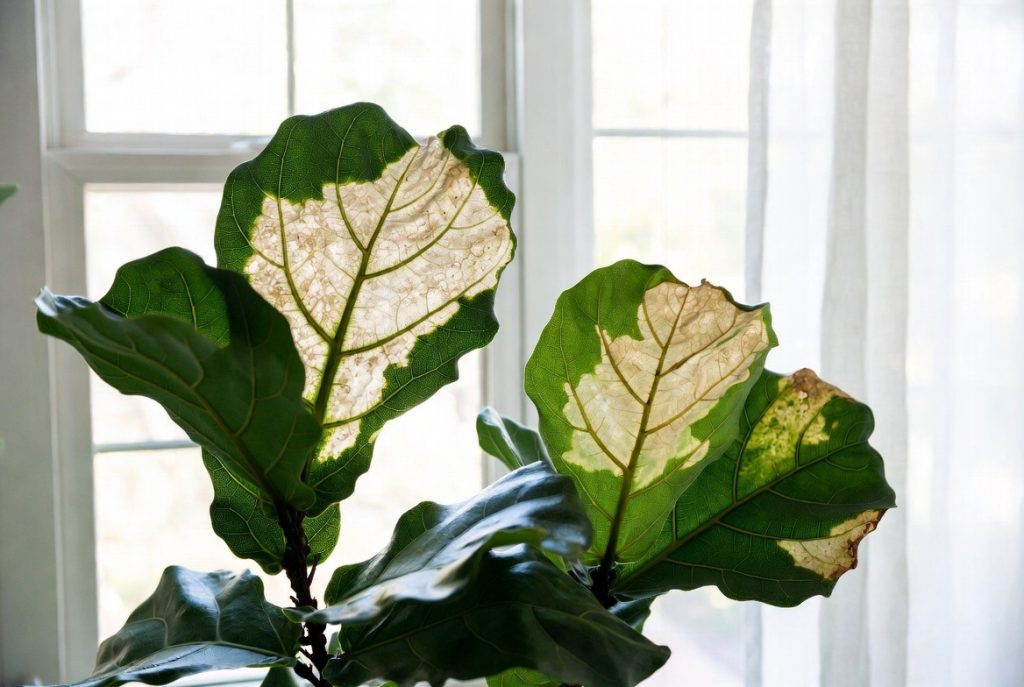
While these plants love bright light, they cannot handle direct, midday sun hitting their leaves for hours. Sunburn typically appears as light brown, tan, or even white “bleached” patches on the top leaves that are closest to the window. These spots will feel very thin and crispy.
The Fix: Move the plant a few feet away from the window or install a sheer curtain. Remember, once a leaf is burnt, it will not turn green again; you will have to wait for new growth.
6. Edema (Red or Tiny Brown Speckles)
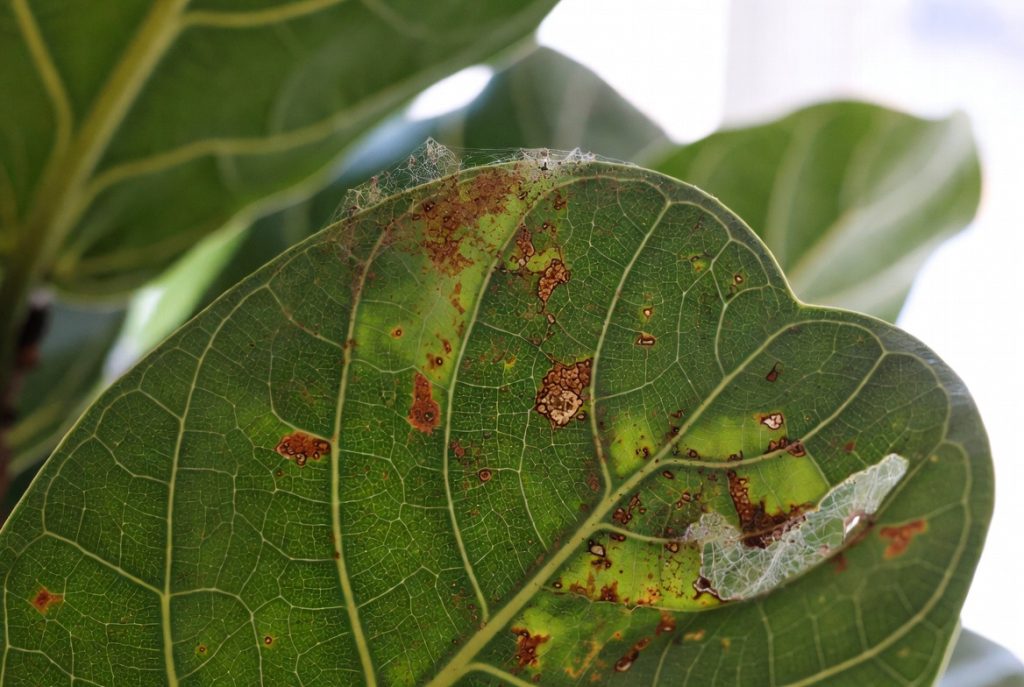
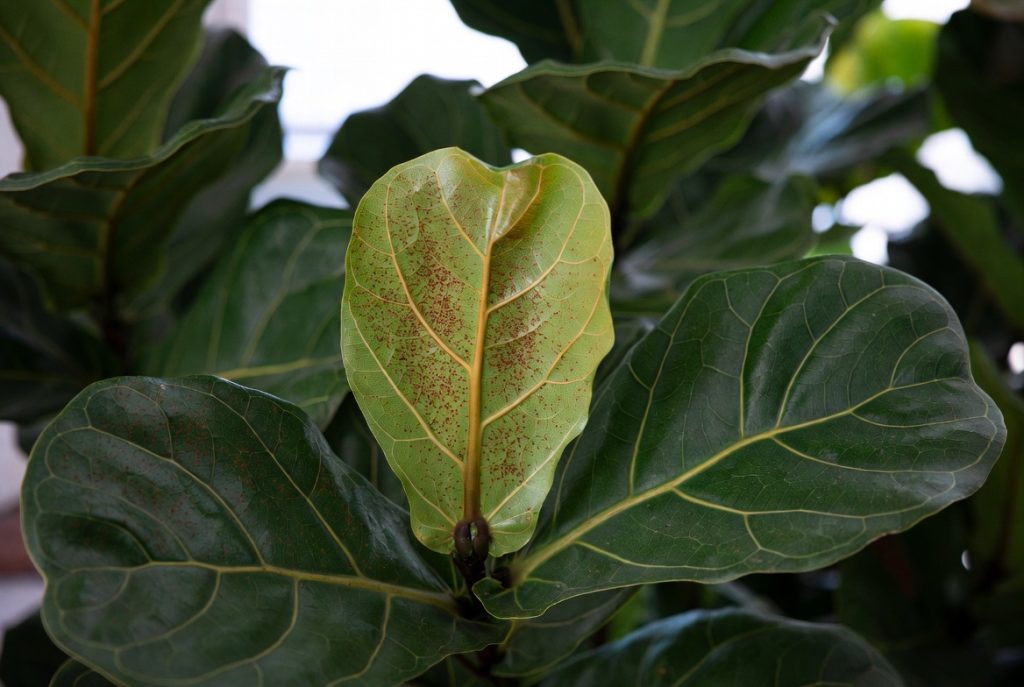
Have you noticed tiny reddish-brown spots on brand-new leaves? This is edema. It occurs when the plant absorbs water faster than the leaf cells can process it, causing the cells to literally burst. It is a sign of inconsistent watering—usually a “flood” after a long dry spell.
The Fix: Focus on consistency. Try to water the plant at the same level of dryness every time, rather than letting it go completely bone-dry and then drowning it.
7. Insect Damage (Spider Mites)
Spider mites are tiny pests that suck the sap out of the leaves, leaving behind tiny, pin-prick brown or yellow spots. If you see fine webbing on the undersides of the leaves or where the leaf meets the stem, you have an infestation.
The Fix: Wipe down the leaves with a mixture of water and mild dish soap or use neem oil. Consistent cleaning of the leaves is the best prevention for pests.
8. Cold Drafts and Shock
The fiddle leaf fig hates temperature swings. If it is sitting near an AC vent or a drafty door in winter, it can develop brown spots as a result of cellular shock. These spots often appear suddenly and may lead to the plant dropping perfectly green leaves alongside the brown ones.
The Fix: Move the plant to a stable environment. Ensure it is not in the direct path of any forced air (heating or cooling).
9. Chemical Burn (Fertilizer)
If you over-fertilize your plant, the excess salts build up in the soil and “burn” the roots. This manifests as brown spots on the tips of the leaves throughout the entire plant.
The Fix: Flush the soil with a large amount of distilled water to wash out the salt buildup. Only fertilize during the growing season (spring and summer) and always dilute the strength.
10. Aging Leaves
Sometimes, fiddle-leaf fig brown spots are just part of the circle of life. If only the oldest, bottom leaves are turning brown and falling off while the rest of the plant looks healthy, the plant is likely just shedding old foliage to focus its energy on new growth.
The Fix: Simply prune away the old leaf once it is more than 50% brown to keep the plant looking tidy.
11. Poor Water Quality
If you use tap water that is high in chlorine or fluoride, these chemicals can accumulate in the leaf tissues over time. This leads to “tip burn” or spotting that looks similar to low humidity.
The Free Fix: Let your tap water sit out in an open container for 24 hours before watering. This allows the chlorine to dissipate. Alternatively, use filtered water or rainwater.
12. Compressed Soil (Lack of Oxygen)
If your soil is old and packed down tight, oxygen cannot reach the roots. This leads to “micro-rotting,” where the roots aren’t fully dead, but they are struggling. This causes random, patchy brown spots that don’t seem to follow a pattern.
The Fix: Use a wooden stick to gently poke holes in the soil (aeration). If the soil is more than two years old, it’s time to repot with a fresh, chunky aroid mix.
Conclusion
Managing fiddle leaf fig brown spots is all about being a “plant detective.” Start by checking the soil moisture; if it’s wet, look for root rot. If it’s dry, look for underwatering. By identifying the specific type of spot and following these 12 tips, you can stop the damage and ensure your Ficus lyrata remains a healthy, vibrant centerpiece for your home. Remember, a few spots are a learning curve, not a failure.
FAQs
1. Should I cut off the brown leaves?
If a leaf is more than 50% brown, it is no longer helping the plant photosynthesize and can be removed. If the spot is small, you can leave it or trim just the brown part off.
2. Can brown spots turn green again?
No. Once the leaf tissue has turned brown, it is dead. Your goal is to stop the spots from spreading and ensure new leaves grow healthily.
3. Why are the spots on my plant black instead of brown?
Black spots usually indicate a more severe fungal or bacterial issue, often linked to extreme overwatering and advanced root rot.
4. How do I know if it’s a fungal infection?
Fungal spots are usually dark, large, and appear on the lower leaves first. They often feel slightly soft or damp compared to dry sunburn spots.
5. Is the fiddle leaf fig hard to care for?
It is “particular.” Once you find the right spot with the right light and a steady watering routine, it becomes much easier to manage.
6. Does cinnamon help with brown spots?
Cinnamon is a natural antifungal. If you prune a leaf, dusting the “wound” with cinnamon can help prevent infection from entering the stem.
7. How often should I check for spots?
Check your leaves every time you water. Early detection is the key to saving the plant.
8. Can I use a moisture meter?
Yes, moisture meters are great for fiddle leaf figs because their large pots can often be dry on top but soaking wet at the bottom.
9. Why does my plant get spots after I move it?
Shock. These plants adapt their cell structure to their specific light source. Moving them forces them to “re-adjust,” which causes stress and spotting.
10. What is the best fertilizer for preventing spots?
Use a 3-1-2 NPK ratio fertilizer. This provides the right balance of nutrients to keep the leaves strong and resistant to disease.