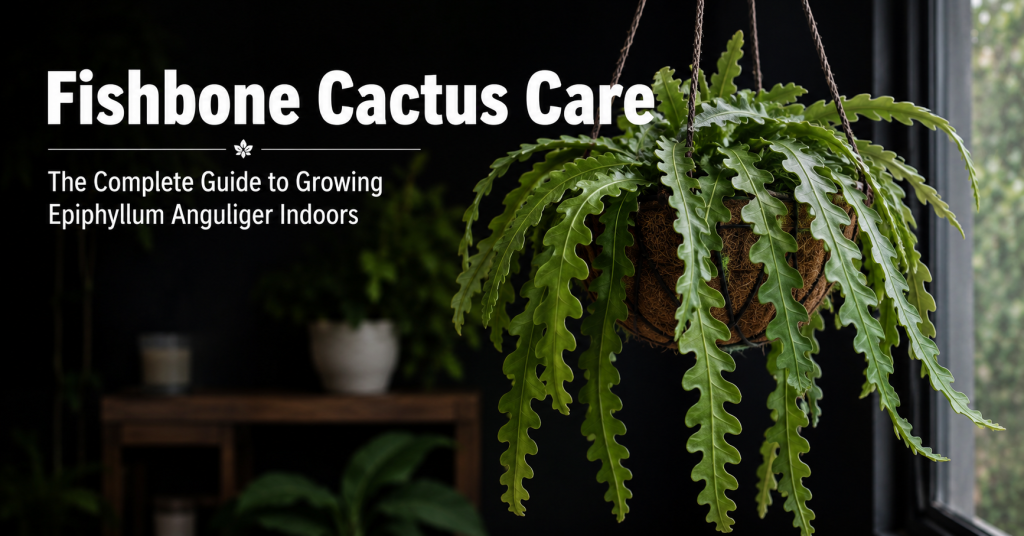
If you are looking for a cactus that breaks every expectation of what a cactus should look like, the fishbone cactus is one of the most surprising and rewarding plants you can grow indoors. With its long, flat, zigzagging stems that resemble a fish skeleton and its reputation for producing spectacular fragrant blooms at night, it is unlike almost anything else in the houseplant world. Fishbone cactus care is genuinely straightforward once you understand that this plant is not a desert cactus at all, and that distinction makes all the difference. Here is everything you need to know.
What Is a Fishbone Cactus?
The fishbone cactus (Epiphyllum anguliger, also commonly known as Disocactus anguliger) is an epiphytic cactus native to the rainforests of Mexico. Unlike the desert cacti most people picture when they hear the word cactus, the fishbone cactus grows naturally in humid forest environments, clinging to the branches of trees and absorbing moisture from the air and rainfall rather than surviving long periods of drought.
This epiphytic origin explains why fishbone cactus care differs so significantly from standard cactus care. It needs more water, higher humidity, and less direct sun than a desert cactus but is still more drought-tolerant than most tropical foliage plants.
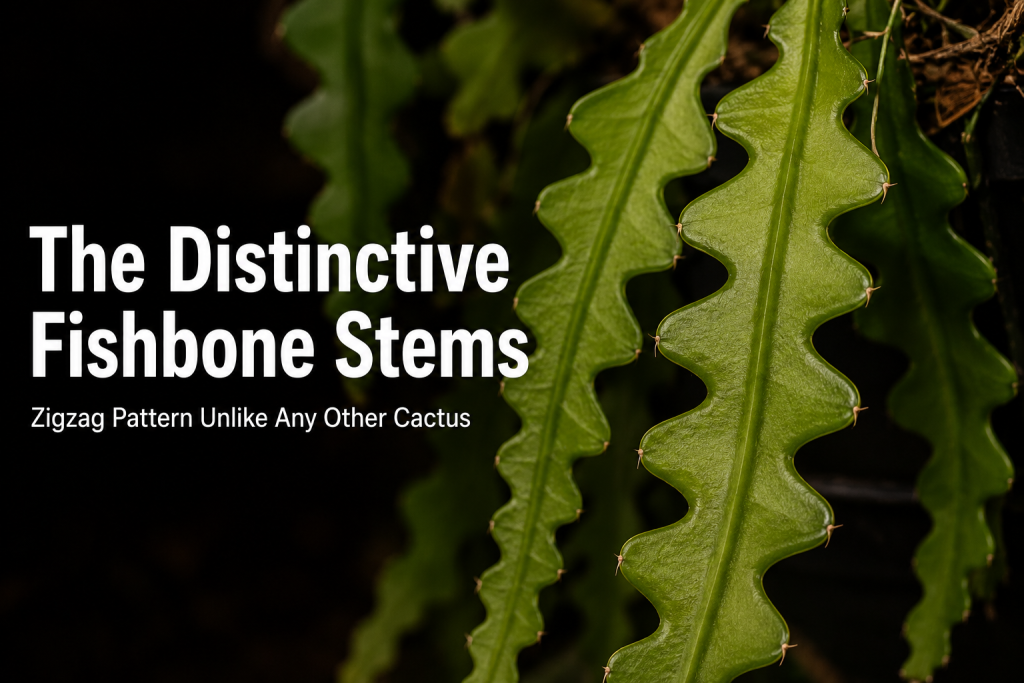
The stems are long, flat, and deeply notched on both sides in a regular zigzag pattern that gives the plant its common name. Mature stems can reach two to three feet long, making this an impressive trailing or hanging plant. In autumn, mature plants produce large, fragrant white or pale yellow flowers that open at night and are truly spectacular, though they last only a day or two.
Light Requirements
Fishbone cactus prefers bright, indirect light. As a rainforest plant that grows beneath a forest canopy, it is adapted to filtered, dappled light rather than the intense direct sun that desert cacti tolerate.
A spot near an east or west-facing window with good indirect light is ideal. Some gentle morning direct sun is tolerated and can actually encourage flowering, but harsh afternoon sun will bleach and damage the flat stems.
In lower light conditions, the fishbone cactus grows more slowly and is less likely to produce flowers. If you want to encourage blooming, providing as much bright indirect light as possible during the growing season is one of the most effective strategies.
Watering
Watering is where understanding the fishbone cactus’s rainforest origins makes the biggest difference. Unlike desert cacti that need to dry out completely between waterings, the fishbone cactus prefers more consistent moisture, though it still needs to dry out partially between waterings to prevent root rot.
Allow the top inch or two of soil to dry out between waterings, then water thoroughly and allow excess to drain completely. In the active growing season of spring and summer, this typically means watering every seven to ten days. In autumn and winter, reduce watering frequency as growth slows.
Overwatering is still a risk with fishbone cactus, since the roots will rot if kept consistently soggy. The key is finding the middle ground between the “completely dry” approach used for desert cacti and the “consistently moist” approach used for tropical foliage plants.
Humidity
Since it comes from humid rainforest environments, the fishbone cactus appreciates higher humidity than desert cacti but is more tolerant of average household humidity than many tropical foliage plants like ferns or calatheas.
Average household humidity of 40-50% is generally sufficient for healthy growth. If your home is very dry, particularly in winter, placing the pot on a pebble tray with water or using a small humidifier nearby can help maintain a more comfortable environment for the plant.
Temperature
The fishbone cactus prefers temperatures between 60 and 80°F (15 and 27°C) and should be protected from temperatures below 50°F (10°C). It is not frost tolerant and should be brought indoors well before any risk of frost if it has been outside during the summer.
One interesting aspect of fishbone cactus care relates to triggering flowering. Exposing the plant to slightly cooler temperatures and reduced watering in late summer and autumn mimics the seasonal changes of its natural environment and helps trigger the spectacular autumn blooming period.
Soil
Soil choice is particularly important for fishbone cactus. Standard cactus mix is too fast-draining for this epiphytic species, while regular potting mix may hold too much moisture. The ideal mix is somewhere between the two.
A combination of standard cactus or succulent mix with added perlite and a small amount of standard potting mix or orchid bark creates good drainage while retaining enough moisture for the plant’s needs. Alternatively, a mix of peat or coco coir with perlite and orchid bark works well and reflects the loose, organic growing medium epiphytic plants cling to in their natural habitat.
Potting
Fishbone cactus does well in hanging baskets, which allow the long trailing stems to cascade naturally and show off the dramatic zigzag pattern to best effect. It also grows well in standard pots placed on a high shelf or plant stand where the stems can hang down.
The plant prefers to be slightly root-bound rather than planted in an oversized container. A smaller pot with good drainage is better than a large pot that holds excess moisture.
Repot every two to three years in spring, moving up only one pot size at a time.
Fertilizing
Feed fishbone cactus with a balanced liquid fertilizer or a fertilizer formulated for cacti and succulents once a month during spring and summer. Reduce feeding in autumn and stop entirely in winter when the plant is resting.
If you want to encourage flowering, switching to a fertilizer higher in potassium and phosphorus in late summer can help support bloom development as the plant moves into its autumn flowering period.
How to Get Fishbone Cactus to Bloom
Flowering is one of the most exciting aspects of growing fishbone cactus, but it requires a mature plant and the right conditions. A few strategies encourage blooming:
Provide bright indirect light throughout the growing season to build up the plant’s energy reserves.
Allow the plant to experience slightly cooler temperatures and reduce watering in late summer and early autumn. This seasonal change mimics the plant’s natural environment and often triggers bud development.
Ensure the plant is mature enough to bloom. Younger plants rarely flower. A plant with long, established stems that has been growing for several years is most likely to produce flowers.
When buds do appear, avoid moving the plant or changing its care routine dramatically, since disruption can cause buds to drop before opening.
The flowers are large, white or pale yellow, and powerfully fragrant, opening in the evening and lasting only one to two days. The experience of a fishbone cactus in full bloom is genuinely unforgettable.

Common Problems
Shriveled or wrinkled stems. The most common sign of underwatering. Water the plant thoroughly and the stems should plump back up within a day or two.
Mushy or brown stems at the base. A sign of overwatering and root rot. Remove the plant from its pot, trim away any rotten roots and affected stem sections, allow it to dry briefly, and repot in a fresh, well-draining mix.
Pale, bleached stems. Caused by too much direct sun. Move the plant to a spot with bright indirect light rather than direct sun exposure.
No flowers despite a healthy plant. Usually caused by insufficient light, a plant that is too young, or the absence of a cooler, drier rest period in late summer and autumn. Address whichever factor applies.
Pests. Mealybugs and scale insects occasionally affect fishbone cactus. Check the stem joints and undersides of flat stems regularly and treat with insecticidal soap or neem oil at the first sign of infestation.
Propagation
Fishbone cactus is very easy to propagate from stem cuttings. Take a cutting of a healthy stem section, allow the cut end to dry for a day or two to form a callus, and then place it in moist potting mix or water. Keep it in a warm, bright spot, and roots should develop within two to four weeks.
This makes fishbone cactus one of the easiest plants to share with friends or multiply within your own collection.
Conclusion
Fishbone cactus care becomes intuitive once you embrace the fact that this is a rainforest plant rather than a desert plant. Bright indirect light, moderate but consistent watering, good drainage, and a cool rest period in autumn to encourage those spectacular fragrant blooms are the foundations of keeping this extraordinary plant at its best. Whether cascading from a hanging basket or trailing from a high shelf, the fishbone cactus is one of the most visually distinctive and rewarding plants you can grow indoors.
Frequently Asked Questions
How often should I water fishbone cactus?
Water when the top inch or two of soil feels dry, typically every seven to ten days in warmer months. Reduce watering in autumn and winter when growth slows. Always allow excess water to drain completely.
Why is my fishbone cactus not blooming? The most common reasons are insufficient light, a plant that is not yet mature enough, or the absence of a cooler, drier rest period in late summer and autumn that triggers bud development. Provide bright indirect light and allow the plant to experience slightly cooler temperatures and reduced watering in late summer to encourage flowering.
Is fishbone cactus the same as a regular cactus?
No, fishbone cactus is an epiphytic rainforest cactus, not a desert cactus. It needs more water, higher humidity, and less direct sun than desert cacti, and its care requirements are closer to tropical foliage plants than to standard cacti.
Can fishbone cactus grow in low light?
It tolerates moderate indirect light but grows best and is most likely to flower in bright indirect light. In low light, growth slows significantly and flowering rarely occurs.
How do I propagate fishbone cactus?
Take a stem cutting, allow the cut end to dry for one to two days, and then place it in moist potting mix or water. Roots typically develop within two to four weeks in warm, bright conditions.