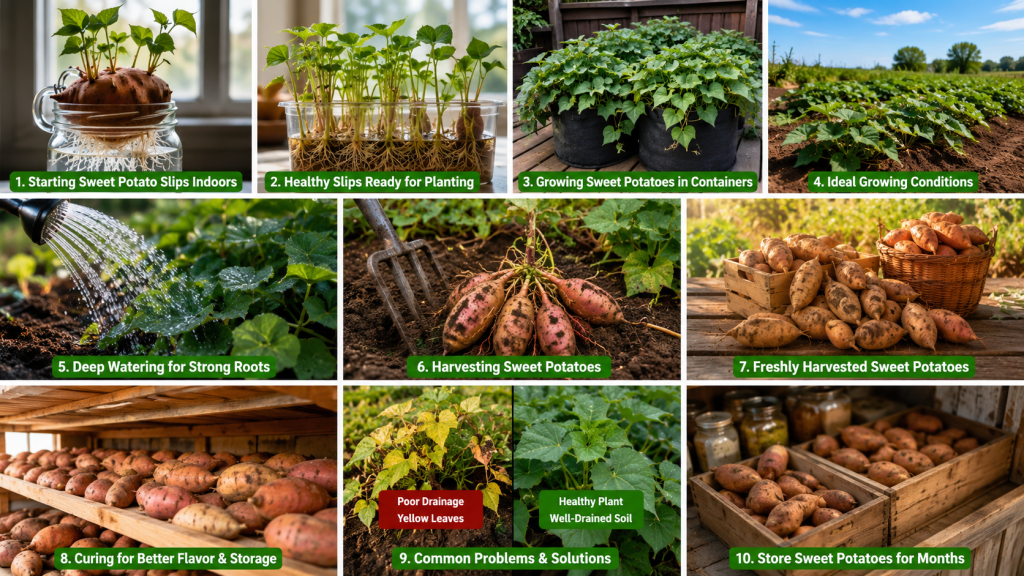
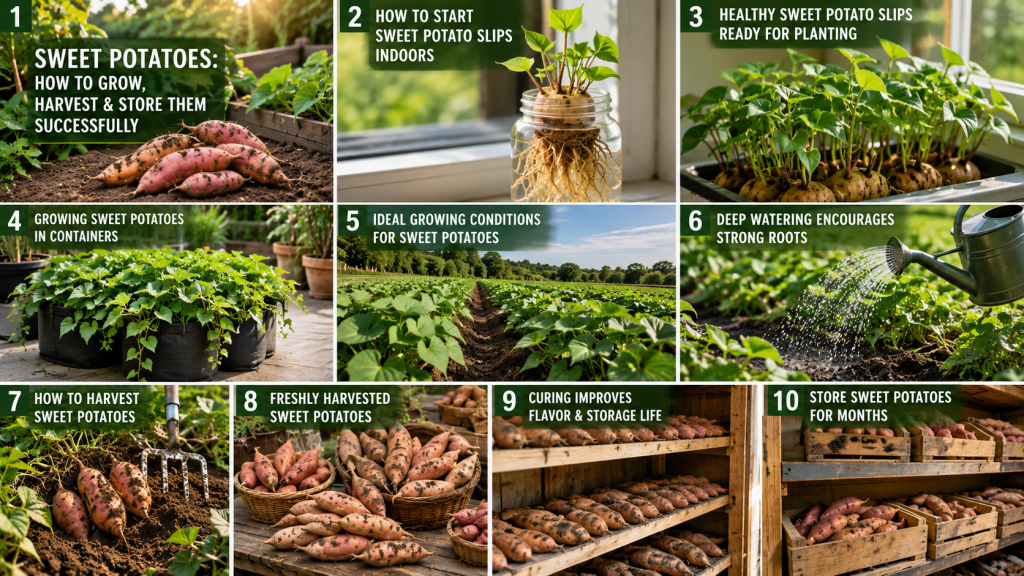
Sweet potatoes are one of the most rewarding crops for home gardeners. They produce nutritious, versatile roots, tolerate heat better than many vegetables, and can be grown in traditional garden beds, raised beds, and even large containers. Unlike regular potatoes, sweet potatoes grow from slips rather than seed tubers and thrive in warm weather.
For gardeners with limited space, sweet potatoes offer surprising flexibility. Compact varieties perform well in containers, while their attractive vines add ornamental appeal to patios and balconies. Understanding how sweet potatoes grow, what conditions they need, and how to avoid common mistakes can dramatically improve your harvest.
This guide covers everything you need to know about growing sweet potatoes, including starting slips, planting, watering, harvesting, curing, storage, and troubleshooting common problems.
Quick Answer Box
| Factor | Ideal Condition |
|---|---|
| Light | 6–8+ hours of direct sun |
| Soil | Loose, fertile, well-draining |
| Temperature | 70–85°F (21–29°C) |
| Water | Consistently moist, not waterlogged |
| Growing Time | 90–150 days |
| Container Size | 15–20 gallons minimum |
Best for: Raised beds, containers, backyard gardens, and warm-climate growing.
What Are Sweet Potatoes and How Do They Grow?
Sweet potatoes (Ipomoea batatas) are tropical perennial vines grown as annual vegetables throughout most of the United States. The edible portion is a storage root that develops underground while long vines spread across the soil surface.
Unlike regular potatoes, sweet potatoes belong to the morning glory family and are propagated from slips. Slips are young shoots grown from a mature sweet potato. Once planted, these slips develop roots and eventually produce multiple storage roots beneath the soil.
Many gardeners confuse sweet potatoes with yams. In reality, true yams are a completely different crop rarely found fresh in U.S. grocery stores. Most products labeled as yams in supermarkets are actually sweet potatoes.
Because sweet potatoes require a long growing season and warm temperatures, many gardeners start slips indoors several weeks before planting outdoors.
How to Start Sweet Potato Slips Indoors
Starting slips indoors is the most reliable way to grow sweet potatoes at home. One healthy sweet potato can produce numerous slips, making it an economical crop for gardeners.
Step-by-Step Process
- Select a healthy, untreated sweet potato.
- Place the lower half in water or partially bury it in moist potting mix.
- Keep temperatures between 75–85°F.
- Provide bright light.
- Allow shoots to emerge.
- Remove slips when they reach 6–8 inches long.
- Place slips in water until roots develop.
- Transplant after the danger of frost has passed.
Many gardeners begin slip production 6–10 weeks before their average last spring frost date.
Warmth is essential during this stage. Cool temperatures slow sprouting and can delay development significantly. A heating mat can help speed the process if your indoor environment is cool.
| Method | Advantages | Drawbacks |
|---|---|---|
| Water Jar Method | Easy to monitor growth | Requires water changes |
| Potting Mix Method | Stronger root development | Slightly more setup |
| Propagation Tray | Produces many slips | Requires additional space |
Growing Sweet Potatoes in Containers and Small Spaces
Sweet potatoes adapt surprisingly well to container gardening. Large containers, grow bags, and raised beds can all produce excellent harvests when properly managed.
Choose a container that holds at least 15–20 gallons of soil. Fabric grow bags work particularly well because they improve drainage and reduce soil compaction.
One of the most common mistakes is choosing a container that is too small. While vines may appear healthy, restricted root space often results in poor tuber production.
Container Growing Checklist
- Minimum 15–20 gallon container
- Loose, well-draining potting mix
- Full sun exposure
- Consistent watering
- Monthly balanced fertilizer
- Room for vines to spread
Container-grown sweet potatoes may require more frequent watering than those planted in the ground, especially during hot summer weather.
Best Growing Conditions for Sweet Potatoes
Sweet potatoes perform best when provided with warm temperatures, full sun, and loose soil. Consistent growing conditions encourage larger and healthier storage roots.
| Requirement | Recommendation |
|---|---|
| Sunlight | 6–8+ hours daily |
| Soil pH | 5.5–6.8 |
| Soil Type | Loose and well-draining |
| Temperature | 70–85°F |
| Spacing | 12–18 inches apart |
Loose soil is especially important because sweet potatoes expand underground. Compacted soil often produces misshapen, forked, or undersized roots.
Raised beds can be particularly beneficial for gardeners dealing with heavy clay soils. The improved drainage and loose growing environment help roots develop properly.
Watering Requirements
Sweet potatoes prefer evenly moist soil during establishment and early growth. Once mature, they become moderately drought tolerant.
Deep watering is generally more effective than frequent shallow watering because it encourages stronger root development. Avoid keeping the soil constantly saturated, which can increase the risk of root rot.
When and How to Harvest Sweet Potatoes
Most sweet potato varieties mature between 90 and 150 days after planting. The exact timing depends on the variety and local growing conditions.
While planting dates provide the most reliable indicator, gardeners may also notice some vine yellowing as harvest approaches.
Harvest Steps
- Stop watering several days before harvest.
- Loosen soil carefully with a garden fork.
- Work away from the center of the plant.
- Lift roots gently.
- Remove excess soil.
- Avoid washing immediately.
Freshly harvested sweet potatoes bruise easily. Damaged roots typically do not store as well as undamaged ones.
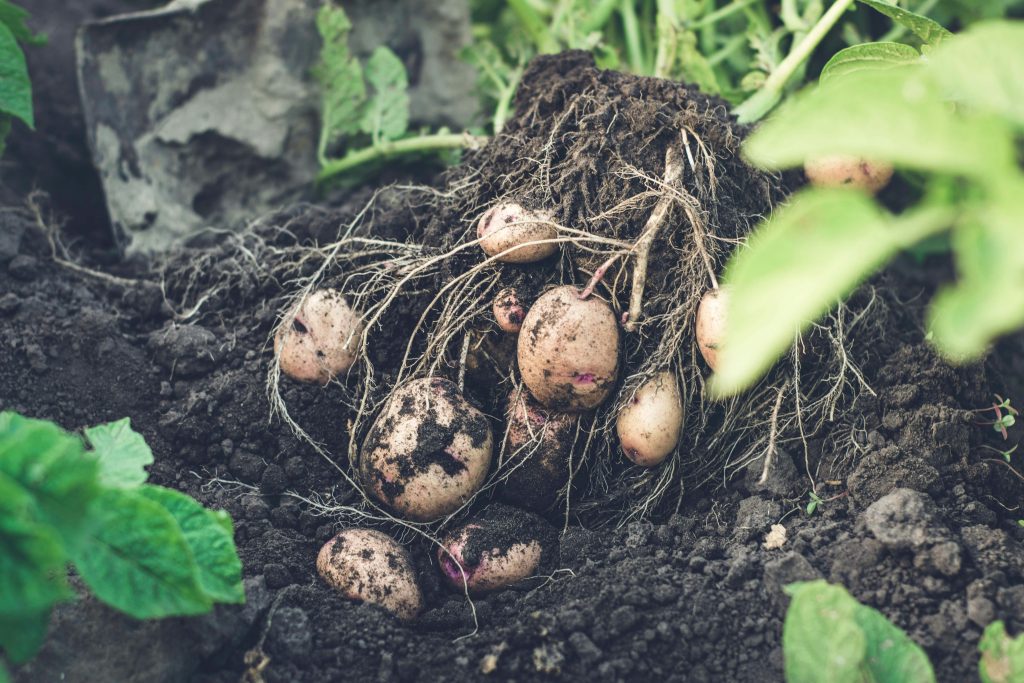
Many gardeners underestimate how far sweet potatoes spread underground. Dig carefully beyond the main crown to avoid accidentally puncturing roots.
Curing and Storing Sweet Potatoes
Curing is one of the most important steps after harvest. Proper curing allows minor wounds to heal and improves flavor by converting starches into sugars.
How to Cure Sweet Potatoes
Place harvested roots in a warm, humid environment between 80–85°F for 7–14 days.
After curing, move them to a cool, dry storage area.
| Storage Method | Expected Storage Life |
|---|---|
| Pantry | 3–6 months |
| Root Cellar | 6–10 months |
| Refrigerator | Not recommended |
| Freezer (cooked) | Up to 12 months |
Avoid refrigerating raw sweet potatoes. Temperatures below about 55°F can cause chilling injury, leading to poor flavor and texture.
Common Sweet Potato Problems and Solutions
Most sweet potato problems result from poor growing conditions, watering issues, or nutrient imbalances.
| Symptom | Likely Cause | Solution |
|---|---|---|
| Excessive vines, few roots | Too much nitrogen | Reduce fertilizer |
| Small tubers | Crowding or poor soil | Improve spacing |
| Cracked roots | Uneven watering | Maintain consistent moisture |
| Rotting roots | Poor drainage | Improve soil structure |
| Yellow leaves | Nutrient deficiency | Test and amend soil |
Pest Problems
Sweet potato weevils are among the most damaging pests in warm regions. Other occasional pests include aphids, flea beetles, wireworms, and whiteflies.
Crop rotation and healthy soil management help reduce long-term pest pressure.
Disease Issues
Root rot is most commonly associated with excessive moisture and poorly drained soils. Ensuring adequate drainage is often the best preventive measure.
What Most Guides Get Wrong About Sweet Potatoes
Many gardening articles focus heavily on vine growth, but abundant foliage does not always indicate a productive harvest. Excessive vine growth can actually signal too much nitrogen, which often reduces root production.
Another common misconception is that larger slips automatically produce larger sweet potatoes. Healthy slips establish quickly regardless of size, provided they receive proper care after planting.
Some gardeners also assume sweet potatoes require tropical humidity. While they need warmth, they tolerate a broad range of humidity conditions when sunlight and soil drainage are adequate.
Harvesting too early is another frequent mistake. Sweet potatoes continue enlarging late into the season, and waiting a few extra weeks often improves yields significantly.
Pro Tips for Bigger Harvests
Warm the Soil Before Planting
Black mulch or landscape fabric helps increase soil temperatures early in the season.
Avoid Excess Nitrogen
Choose fertilizers with moderate phosphorus and potassium levels rather than nitrogen-heavy products.
Use Raised Beds for Heavy Soils
Raised beds provide the loose growing conditions sweet potatoes prefer.
Harvest Before Frost
Even light frost can damage vines and reduce storage quality.
Conclusion
The most important factor in growing sweet potatoes successfully is providing consistent warmth and loose, well-draining soil. When these conditions are met, sweet potatoes are among the easiest and most productive food crops for home gardeners.
Start healthy slips early, provide full sun, avoid excessive nitrogen fertilizer, and harvest carefully when roots reach maturity. Proper curing and storage will further improve flavor and extend shelf life.
Whether you’re growing in a backyard garden, raised bed, or large container, sweet potatoes can deliver an impressive harvest with relatively little maintenance. With the right preparation and care, you’ll enjoy homegrown sweet potatoes for months after harvest.
Frequently Asked Questions
Can sweet potatoes be grown indoors year-round?
Sweet potatoes can be grown indoors as ornamental vines throughout the year. Producing large edible roots indoors is more difficult because tuber development requires intense light and substantial root space. Large containers and supplemental grow lights can improve results.
How many sweet potatoes will one slip produce?
A healthy slip can produce several pounds of sweet potatoes under favorable conditions. Yield depends on variety, sunlight, soil quality, watering practices, and growing season length.
Do sweet potatoes need full sun?
Yes. Sweet potatoes grow best with at least six to eight hours of direct sunlight daily. Insufficient light often results in vigorous vines but reduced root production.
Can I grow sweet potatoes from a grocery store sweet potato?
Yes, although success varies. Some grocery store sweet potatoes sprout readily, while others may be treated to reduce sprouting. Certified disease-free planting stock is generally the most reliable option.
Why are my sweet potatoes producing leaves but no tubers?
The most common cause is excessive nitrogen fertilizer. Other contributing factors include insufficient sunlight, compacted soil, overcrowding, and harvesting too early.