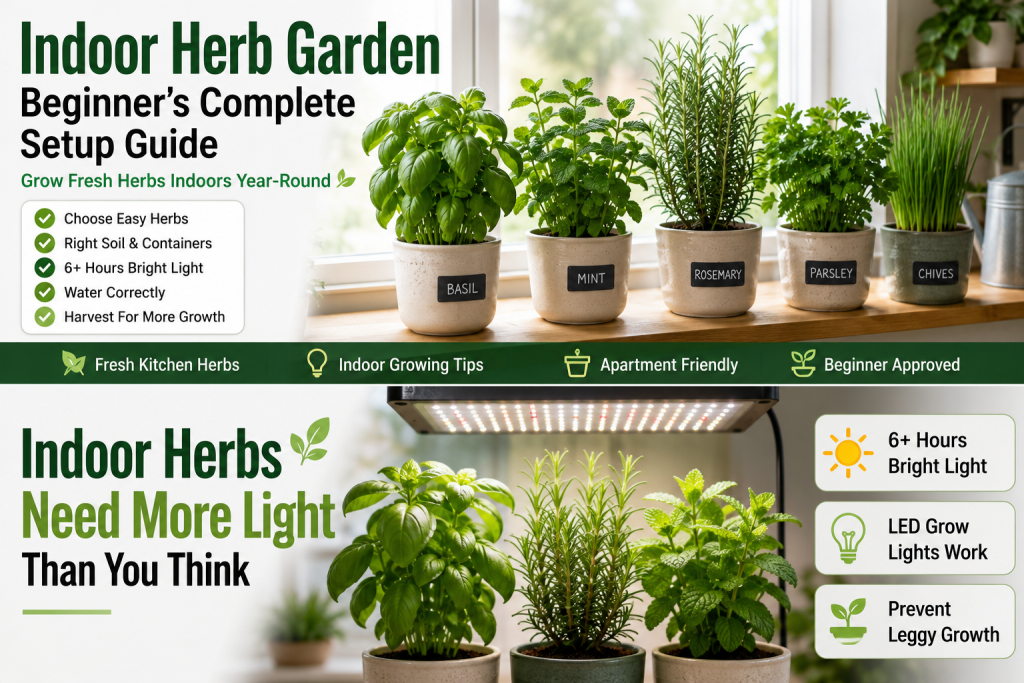
Starting an indoor herb garden is one of the most reliable ways to keep fresh basil, mint, and rosemary on hand year-round, regardless of climate, season, or how much outdoor space you have. With the right light, containers, and watering routine, most common kitchen herbs adapt well to life indoors and can be harvested within a few weeks of planting. This guide walks through everything needed to set up an indoor herb garden that actually produces, from choosing herbs and containers to solving the problems that trip up most beginners.
Quick Answer
An indoor herb garden needs three things to succeed: 6+ hours of bright light daily (natural or LED), containers with drainage holes filled with a well-draining potting mix, and consistent watering only when the top inch of soil is dry. Basil, mint, chives, and parsley are the easiest herbs for beginners, while rosemary and lavender are more demanding and better suited to growers with a strong light source.
Choosing the Right Herbs for Indoor Growing
Not every herb adapts equally well to life indoors, and picking herbs suited to your light conditions matters more than almost any other decision in this process.
Soft-leaved herbs like basil, mint, chives, parsley, and cilantro are the most forgiving for beginners. They tolerate moderate light, grow quickly, and recover well from minor watering mistakes. Woody Mediterranean herbs rosemary, thyme, sage, and lavender are pickier. They want bright, direct light for most of the day and soil that dries out between waterings, conditions that are harder to replicate without a strong grow light.
A common mistake beginners make is buying a windowsill herb kit with six different herb varieties bundled together, without accounting for the fact that those herbs often have conflicting light and water needs. Mint, for example, wants consistent moisture, while rosemary actively dislikes it. Grouping herbs by similar care needs, rather than by what looks nice in a kit, leads to far better results.
Picking Containers and Soil
Container choice affects root health more than most beginners expect, and it’s one of the easiest things to get right from the start.
Use containers with drainage holes; this is non-negotiable for herbs, since standing water at the roots is the single most common cause of indoor herb failure. A 4-inch pot works for compact herbs like thyme, while mint, basil, and rosemary generally need 6 to 8 inches to support a full root system.
Skip garden soil entirely. It compacts in containers and holds too much moisture, suffocating roots. A lightweight, well-draining potting mix, ideally one labeled for container or indoor use, gives roots the air pockets they need. Mixes with perlite or coco coir tend to drain better than basic potting soil.
Light Requirements for Indoor Herbs
Light is usually the limiting factor in how well an indoor herb garden performs, more than soil, water, or fertilizer combined.
Most culinary herbs need at least 6 hours of bright, direct light daily. A south- or west-facing window is the best natural option in most US homes. If that’s not available or common in apartments, north-facing units, or homes with limited window space, a grow light isn’t optional; it’s the fix.
For supplemental lighting, run an LED grow light for 12 to 16 hours daily, positioned 6 to 12 inches above the plants. Leggy, stretched-out growth with pale leaves is the clearest sign a herb isn’t getting enough light; pinching back the growth helps temporarily, but moving the plant closer to a light source solves the actual problem.
Watering Indoor Herbs Correctly
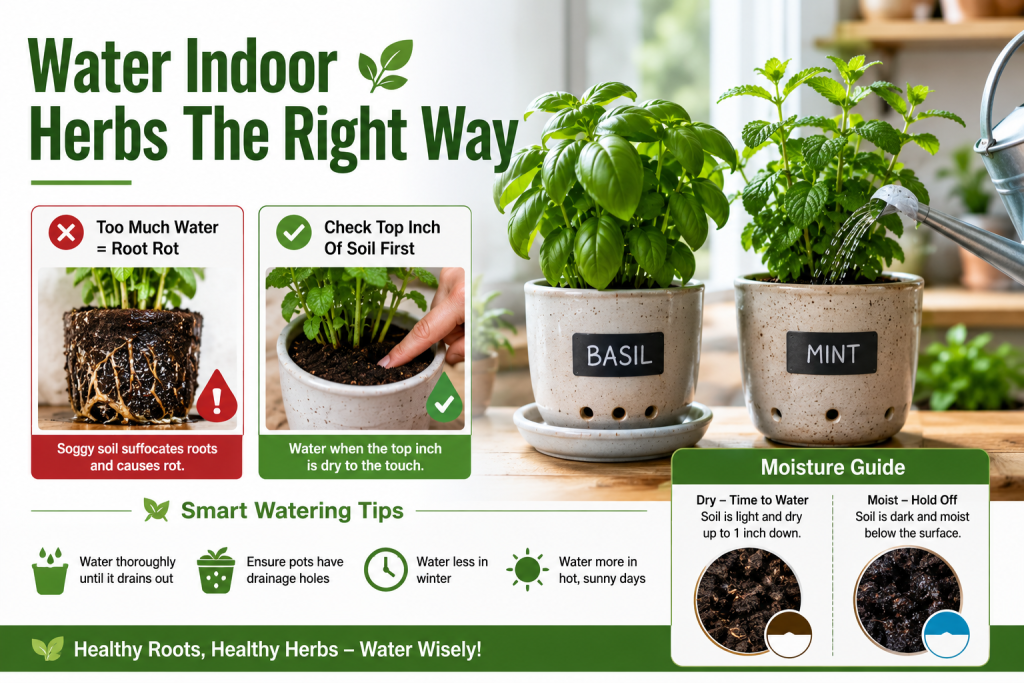
Overwatering kills more indoor herbs than any other single mistake, more than poor light, wrong soil, or pests combined.
Water when the top inch of soil feels dry to the touch, not on a fixed schedule. Conditions like room temperature, humidity, and pot size all affect how fast soil dries, so a calendar-based watering routine almost always leads to either over- or under-watering. Water thoroughly until it drains from the bottom of the pot, then empty any standing water from the saucer within 30 minutes to prevent roots from sitting in it.
Different herbs have different tolerances here. Mint and basil prefer soil that stays lightly moist, while rosemary, sage, and thyme want to dry out more fully between waterings. Treating every herb in a mixed indoor garden the same way is one of the most common setup mistakes.
Setting Up Your Indoor Herb Garden Step by Step
- Choose a location with at least 6 hours of bright light, or plan for a grow light setup.
- Select 3 to 4 herbs with similar light and water needs to start.
- Choose containers with drainage holes sized appropriately for each herb.
- Fill with a well-draining potting mix, not garden soil.
- Plant at the same depth the herb was growing in its nursery pot.
- Water thoroughly until it drains, then let the top inch dry before watering again.
- Begin light fertilizing 4 to 6 weeks after planting, using a diluted fertilizer labeled for edible plants.
Feeding and Fertilizing
Indoor herbs don’t need heavy feeding, and overfeeding causes its own set of problems, namely weak, leggy growth and diminished flavor in culinary herbs.
A diluted, water-soluble fertilizer applied every 4 to 6 weeks is sufficient for most setups. Skip fertilizer entirely for the first month after planting, and never fertilize a plant that’s already stressed from poor light or watering, since this tends to compound the problem rather than fix it.
Harvesting Without Stunting Growth
How herbs are harvested affects how quickly and how much they regrow.
Harvest by cutting just above a leaf node rather than stripping individual leaves, which encourages bushier regrowth instead of a single leggy stem. Never remove more than a third of a plant at once; doing so can stress the plant enough to slow regrowth for weeks. Basil in particular benefits from pinching the growing tip regularly, which delays flowering and keeps the plant producing usable leaves longer.
Growing Conditions at a Glance
| Herb | Light | Watering | Pot Size |
|---|---|---|---|
| Basil | Bright, 6+ hrs | Keep lightly moist | 6–8 in |
| Mint | Moderate to bright | Keep lightly moist | 6–8 in |
| Rosemary | Bright, direct, 6+ hrs | Let dry between waterings | 6–8 in |
| Thyme | Bright, direct | Let dry between waterings | 4 in |
| Parsley | Moderate to bright | Keep evenly moist | 6 in |
| Chives | Moderate to bright | Keep evenly moist | 4–6 in |
What Most Guides Get Wrong
Many beginner guides recommend buying a pre-assembled herb kit with several varieties in one container, without flagging that those herbs often need conflicting care. They also tend to recommend fixed watering schedules (“water every 3 days”) rather than the soil-dryness test, which is far more reliable since indoor conditions vary so much by home, season, and pot material.
Another common gap: most guides underplay how much light indoor herbs actually need. Six hours of bright light is a minimum, not a target, and many apartments simply don’t have a window that provides it—which is why a grow light is often a requirement, not an upgrade.
Troubleshooting Common Problems
| Symptom | Likely Cause | Solution |
|---|---|---|
| Leggy, stretched stems | Insufficient light | Move closer to window or add grow light; pinch back growth |
| Yellowing leaves | Overwatering or poor drainage | Check for drainage holes; let soil dry fully before next watering |
| Wilting despite moist soil | Root rot from overwatering | Remove from pot, trim mushy roots, repot in fresh dry mix |
| Slow or stalled growth | Underfeeding or root-bound pot | Fertilize lightly; check if roots have outgrown the container |
| Herb flowering quickly (bolting) | Heat stress or inconsistent watering | Move to cooler spot; harvest before flowering to extend usable growth |
Expert Tips for Better Results
Start herbs from seed rather than transplanting grocery store herb pots when possible. Store-bought herb pots are typically several seedlings crowded into one container for visual fullness, and they often struggle when separated or transplanted.
Group herbs by water needs, not by what looks good together in a planter. A rosemary and mint combination, while common in decorative kits, sets one of the two plants up to struggle no matter how it’s watered.
Rotate pots a quarter turn every few days if relying on a single light source. Herbs growing toward a window or single-direction grow light tend to lean and grow unevenly without this adjustment.
Don’t fertilize a stressed plant. If a herb is struggling from poor light or inconsistent watering, fix that root cause first feeding a stressed plant typically worsens the issue rather than helping it recover.
Conclusion
Light, not soil or fertilizer, is what makes or breaks most indoor herb gardens. Get six or more hours of bright light for your plants, whether from a south-facing window or a grow light, and most of the common problems beginners run into simply don’t happen. Pair that with containers that drain properly, a watering routine based on soil dryness rather than a fixed schedule, and herbs grouped by similar care needs, and an indoor herb garden becomes genuinely low-maintenance rather than a constant troubleshooting project. Start with three or four easy herbs; basil, mint, chives, and parsley are forgiving choices, and expand once the basics feel manageable.
For a simple shortlist, check herbs to grow indoors before you choose what to plant. If mint starts to fail, our guide to reviving a dying mint plant can help you save it. For low light rooms, compare herb grow lights before you buy.
Frequently Asked Questions
How much light does an indoor herb garden actually need?
Most culinary herbs need at least 6 hours of bright, direct light daily. A south- or west-facing window usually provides this in the US. If that’s not available, a grow light run for 12 to 16 hours daily, positioned 6 to 12 inches above the plants, is necessary rather than optional for most homes.
Can I grow an indoor herb garden without any natural sunlight?
Yes,s a full-spectrum LED grow light can fully replace natural sunlight for indoor herbs, provided it runs 12 to 16 hours a day and sits close enough to the plants (typically 6 to 12 inches). Many successful indoor herb gardens in windowless kitchens or basements rely entirely on grow lights.
Why do my indoor herbs keep dying even though I water them regularly?
Overwatering, not underwatering, is the most common cause of indoor herb death. Watering on a fixed schedule rather than checking soil moisture often leads to root rot, especially in containers without drainage holes. Letting the top inch of soil dry between waterings prevents this in most cases.
Which herbs are easiest to grow indoors for beginners?
Basil, mint, chives, and parsley are generally the most forgiving for beginners, since they tolerate a range of light conditions and recover well from minor watering mistakes. Rosemary, sage, and lavender are more demanding and better suited to growers with strong, consistent light.
How often should I fertilize an indoor herb garden?
Indoor herbs need light feeding, not heavy fertilizing. A diluted, water-soluble fertilizer every 4 to 6 weeks is sufficient for most setups. Skip fertilizer for the first month after planting, and avoid feeding any plant that’s currently stressed from poor light or watering issues.