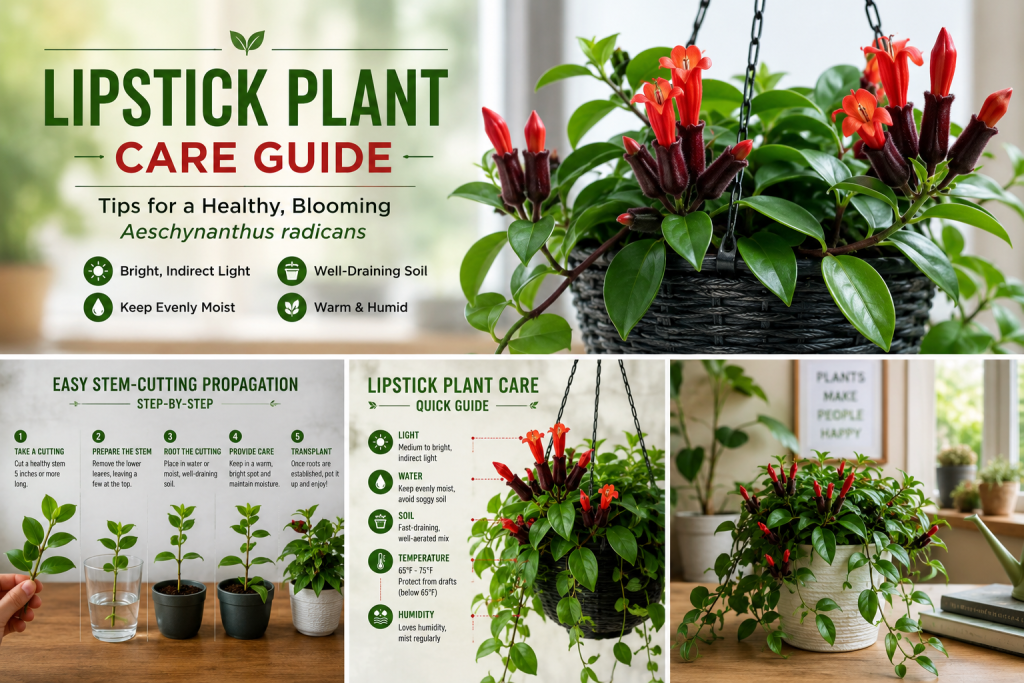
The lipstick plant (Aeschynanthus radicans) is a breathtaking addition for anyone who appreciates a massive splash of tropical color and dramatic, trailing foliage. Native to the humid, shaded rainforests of Southeast Asia, this vibrant perennial belongs to the Gesneriaceae family. In its wild habitat, it thrives as an epiphyte meaning it naturally perches on tree branches and rock crevices, absorbing moisture and vital nutrients from the humid air around it rather than sitting in deep soil. When grown indoors, its cascading stems can easily reach lengths of 2 to 3 feet, making it a spectacular choice for hanging baskets.
What makes this plant an absolute showstopper is the unique architecture of its blossoms. It features thick, waxy, lance-shaped dark green leaves that provide a rich, glossy backdrop for its magnificent flowers. The plant earns its playful common name because its deep maroon buds emerge from dark, tube-like calyces, perfectly mimicking a miniature tube of lipstick being pushed upward.
What is So Special About Lipstick Plants?
While some indoor gardeners consider it a bit moody, understanding its tropical rhythm unlocks frequent, multi-season blooming. While its most prolific flowering display happens during the warm summer and early autumn months, a happy plant can push out buds year-round.
Unlike many other flowering tropicals, these eye-catching chalices carry no scent, making the plant entirely allergy-friendly while relying strictly on pure visual drama. Because it looks its best trailing from a high shelf or cascading elegantly from a ceiling hanger, it functions as a piece of living, vertical art for your home.
The Competitor Content Gaps: What We Fixed
To make this guide far superior to standard search results, we have identified and integrated critical information that most articles leave out:
- The Golden Ratio Soil Mix: Standard guides just say “well-draining soil.” We give you the exact ingredient parts.
- The Winter “Bud-Triggering” Trick: A specific temperature drop method required to force heavy spring flowering.
- The Ultimate Leaf-Drop Troubleshooting Checklist: A quick-reference guide to diagnose your plant’s issues instantly.
Key Insights to Keep in Mind for Lipstick Plant Care
Before diving into the core maintenance routine, keep these three foundational traits in mind to prevent common mistakes:
- Fussy Foliage Moisture Sensitivity: Because of its epiphytic nature, its roots require maximum oxygen. If the potting medium stays dense and waterlogged, root rot sets in rapidly, causing the lower leaves to turn mushy and drop.
- The Shock Factor: These plants despise sudden environmental shifts. Moving them near a freezing window draft, a blasting air conditioner, or a dry heating vent causes immediate stress, resulting in massive leaf drop within days.
- The Density Pruning Benefit: Pruning isn’t just cosmetic; it is a blooming trigger. Cutting leggy vines back close to the base forces the plant to branch out, creating a bushier crown with twice as many flowering tips.
1. Managing Light Exposure: Dappled Canopy Rules
To secure a heavy count of vibrant flowers without bleaching or burning the glossy green foliage, you must mimic the filtered sunlight of a tropical rainforest canopy.
The Sweet Spot
Lipstick plants thrive best in bright, indirect or filtered sunlight. An east-facing window that provides gentle morning sun, or a west-facing window shielded by a sheer curtain, offers ideal conditions. The more high-quality indirect light the plant receives, the more energy it has to produce its famous red-orange blossoms.
Shifting Light Protection
If your vine looks incredibly healthy but completely refuses to flower, it is likely asking for more light. Slowly transition it to a brighter location. However, keep it entirely out of harsh, direct afternoon sunlight, which will quickly scorch, pale out, or blister the waxy leaves. Conversely, avoid deep shade or low-light corners, as too little light stalls flower production entirely and causes the vines to stretch and thin out.
2. The Perfect Soil Formula (The Golden Ratio)
Ordinary, dense potting soil will compact around the roots, suffocate them, and trigger root rot. To keep your lipstick plant thriving, you need a loose, chunky, and highly aerated medium.
The Ultimate Epiphytic Soil Mix Ratio:
- 2 Parts Regular Houseplant Potting Soil
- 1 Part Perlite or Coarse Sand (For quick drainage)
- 1 Part Orchid Bark or Coco Coir (For chunkiness and root oxygenation)
- A handful of Sphagnum Moss (To retain a safe amount of light moisture)
3. Essential Water and Humidity Instructions
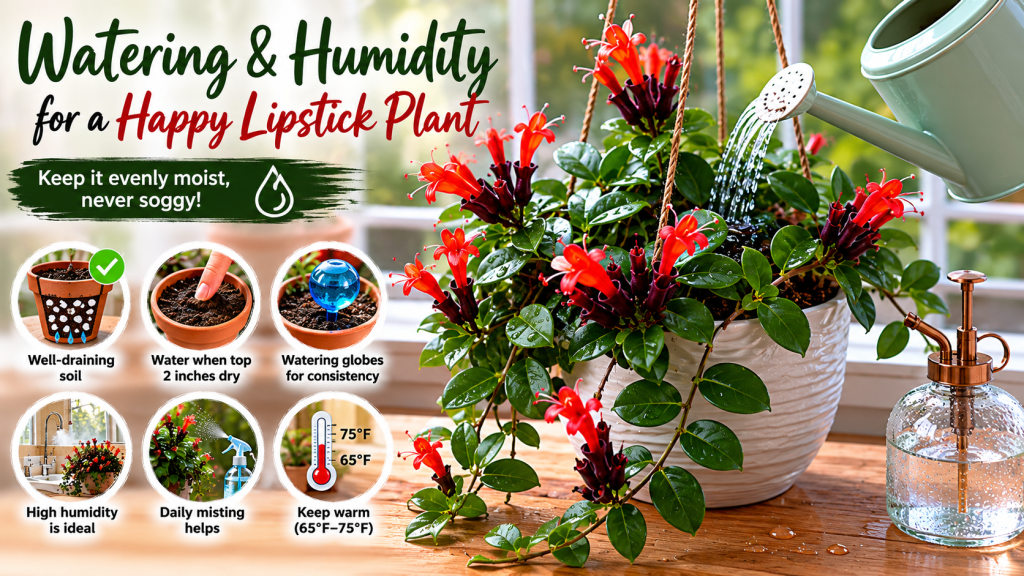
Mastering the moisture balance is the most important part of lipstick plant care. The goal is to keep the soil lightly, evenly moist but never saturated.
When to Water
Allow the top two inches of your potting mix to dry out completely before watering thoroughly. When you water, pour until moisture drains freely from the bottom holes of the pot, and always empty the collection saucer after 10 minutes so the roots never sit in stagnant water.
Temperature & Humidity Needs
Lipstick plants require consistent warmth, preferring daytime temperatures between 65°F and 75°F. They appreciate a highly humid environment (above 50%). They make fantastic additions to naturally bright, steamy rooms like kitchens and bathrooms. If your home’s air is dry, run a small humidifier nearby or place the pot on a tray filled with pebbles and water.
Active Feeding
During the active spring and summer blooming months, feed the plant twice a month using a balanced, water-soluble liquid houseplant fertilizer diluted to half-strength. Stop all fertilizing completely in late autumn and winter when the plant enters its natural rest phase.
4. The Effortless Stem-Cutting Propagation Blueprint
Expanding your collection or sharing this cascading marvel with friends is incredibly easy because these trailing vines root with exceptional success.
Step-by-Step Propagation:
- Take a Clean Cut: Identify a healthy, vigorous vine. Using sterilized scissors, snip a stem cutting that is at least 5 to 6 inches long, ensuring it contains several leaf nodes.
- Prep the Node: Carefully strip away the lower set of leaves from the bottom half of the cutting. This exposed node area is exactly where the new root system will emerge.
- Rooting Options:
- Water Method: Place the cutting into a small jar of clean water. Keep it in a warm, bright spot, changing the water weekly. In about 3 to 4 weeks, a strong bundle of roots will develop, and you can transplant it into the golden ratio soil mix.
- Soil Method: Dip the cut end in rooting hormone and plant it directly into a moist, light potting mix. Cover the container with a clear plastic bag to create a mini-greenhouse effect, keeping the humidity locked in until new growth appears.
5. The Winter “Bud-Triggering” Trick & Reblooming Strategy
If you want an explosion of blooms when spring arrives, you need to mimic the natural seasonal shifts of the tropical understory.
Starting in late autumn, give your plant a mild cooling period. Move the vine to a slightly cooler room where nighttime temperatures hover consistently between 60°F and 65°F. Simultaneously, cut back your watering frequency significantly—allowing the soil to dry out a bit deeper than usual—and halt all fertilizer. This minor environmental stress signals the plant to stop expanding its vines and instead focus its energy on establishing a dense crown of flower buds. Once early spring hits, return the plant to its normal warmth and watch the dramatic cascade begin.
Troubleshooting Checklist: Why is My Plant Dropping Leaves?
Use this quick guide to diagnose and fix your plant’s issues instantly:
| Symptom | Primary Cause | Immediate Solution |
| Leaves turning yellow, mushy, and dropping off | Overwatering / Soggy Soil | Stop watering immediately. Check the roots for rot, trim damaged parts, and repot into a chunkier mix. |
| Crispy, brown leaf tips and puckered foliage | Extreme Underwatering / Dry Air | Give the plant a thorough soak and increase surrounding humidity using a pebble tray or humidifier. |
| Healthy green leaves dropping suddenly | Cold Drafts or Temperature Shock | Move the plant far away from air conditioning vents, drafty windows, or doors. Keep it above 65°F. |
| Vines stretching out long but no flowers appearing | Insufficient Light | Gradually move the plant closer to a bright window with filtered, indirect sunlight. |
Conclusion: A Cascading Marvel of Vivid Perfection
The Lipstick Plant proves that with just a few targeted, thoughtful adjustments, you can enjoy some of the most luxurious and unique trailing floral displays the indoor plant world has to offer. By honoring its epiphytic nature with a chunky soil mix, respecting its need for high humidity, avoiding dramatic drafts, and utilizing the winter cooling trick, you can keep this stunning basket vine blooming beautifully year after year. Its pet-safe profile and effortless propagation make it a timeless masterpiece for any indoor gardener.
Frequently Asked Questions
1. Is the lipstick plant better suited as an indoor or outdoor plant?
While it grows beautifully outdoors year-round in frost-free tropical climates (USDA zones 10-11), it is far more successful as an indoor houseplant in most regions. Indoor environments allow you to easily control the temperature, humidity, and light exposure it needs to thrive.
2. How do I treat common pests like mealybugs or spider mites on my vines?
While lipstick plants are generally pest-resistant, low humidity can occasionally attract spider mites or mealybugs. Treat any infestation early by wiping the leaves down with organic neem oil or an insecticidal soap mix, and increase the humidity to discourage them from returning.
3. When is the best time to repot my lipstick plant?
Only repot your plant in early spring every 2 to 3 years. They actually prefer being slightly rootbound, as a tight root ball naturally prevents excess water from sitting in the soil. When upgrading, only choose a pot that is 1 to 2 inches larger than the current one.
4. Can I propagate a lipstick plant from a single leaf?
While stem cuttings are significantly faster and more reliable, you can root individual leaves. However, it takes much longer for a leaf cutting to develop a brand-new stem system compared to a mature 5-inch stem cutting.
5. Why are the flower buds dropping off before they even open?
Premature bud drop is almost always caused by a sudden shock to the plant’s system. Check to make sure the plant wasn’t hit by a cold draft, exposed to dry heat from a radiator, or allowed to dry out completely right as the buds were forming.