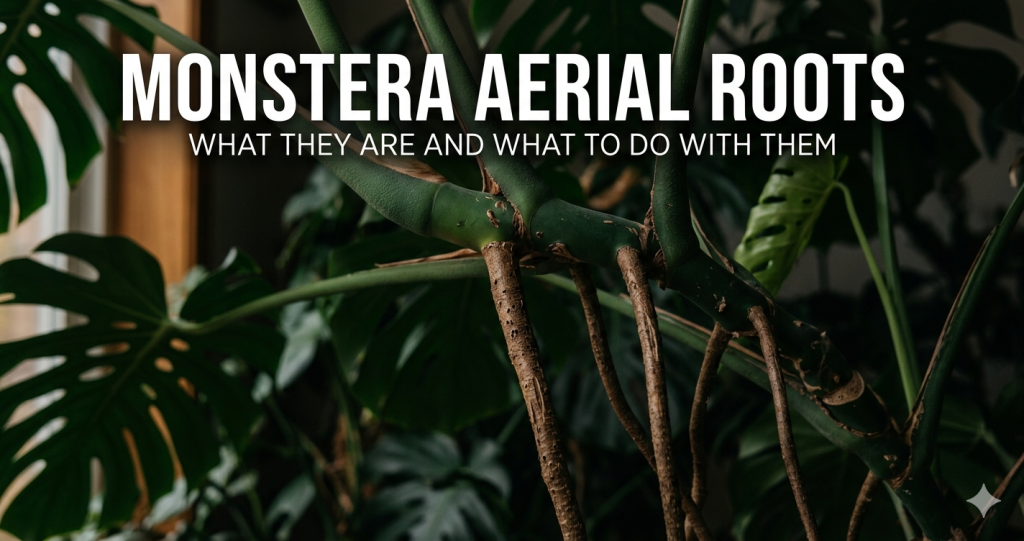
If you’ve noticed thick, brown, rope-like growths emerging from the stems of your monstera plant, you’re looking at aerial roots. They can look a little wild and untidy, especially on a large, mature plant, and many monstera owners aren’t sure whether to leave them, trim them, or do something else entirely. Here’s everything you need to know about monstera aerial roots, why they exist, and how to manage them.
What Are Monstera Aerial Roots?
Monstera aerial roots are roots that grow above the soil, directly from the plant’s stems rather than from underground. In the wild, monsteras are climbing plants that grow up the trunks of trees in tropical rainforests, using their aerial roots to grip onto bark and anchor themselves as they climb upward toward better light.
Indoors, the same instinct applies. A monstera will produce aerial roots as it matures, looking for something to attach to and climb. Without a support structure, the roots simply hang in the air or dangle toward the soil, which is perfectly normal and harmless.
Aerial roots are a sign of a healthy, actively growing monstera. A plant that’s producing them is doing well, not struggling.
What Do Monstera Aerial Roots Look Like?
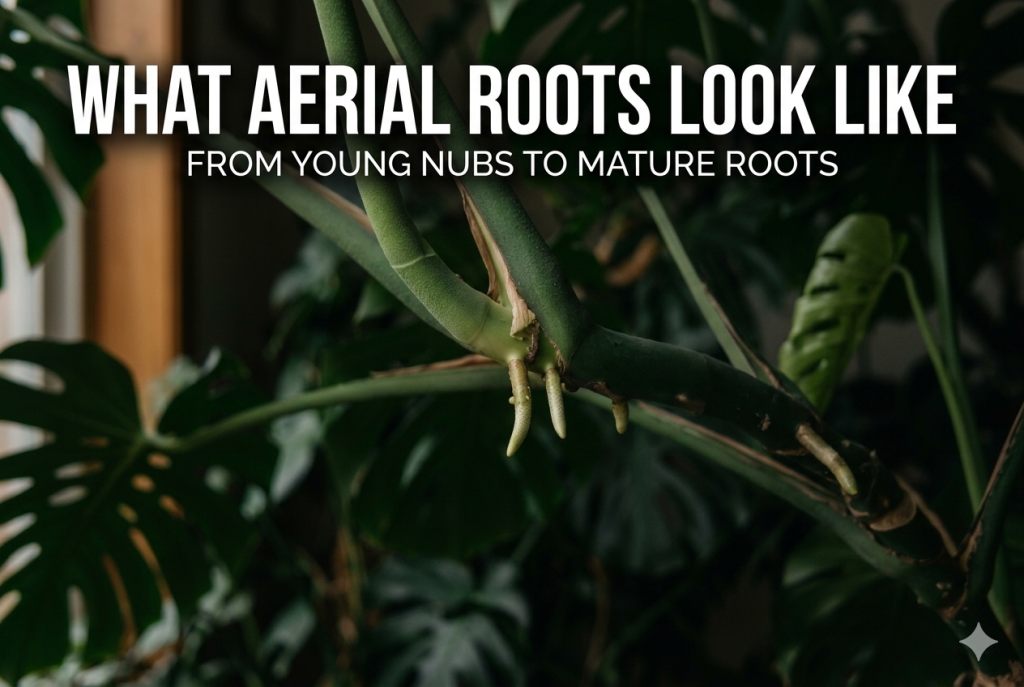
Young aerial roots typically start as small, pale or greenish nubs emerging directly from the stem at a node, the same point where leaves grow. As they develop, they thicken, turn brown, and can grow quite long, sometimes several feet on a large, mature plant.
The texture is slightly rough or papery on the outside, and unlike soil roots, they don’t need to be buried to function. On very mature plants, aerial roots can become quite thick and woody, almost resembling small branches.
Why Is My Monstera Producing So Many Aerial Roots?
A monstera that’s producing a lot of aerial roots is typically a healthy, mature plant that’s actively growing and looking for support. A few specific factors can encourage more aerial root production:
Maturity. Younger, smaller monstera often produce few or no aerial roots. As the plant grows and its stems elongate, aerial root production increases naturally.
Good light and growing conditions. A well-cared-for monstera in bright, indirect light will grow more vigorously and produce more aerial roots than one that’s struggling in low light or poor conditions.
Climbing instinct. If your monstera is reaching upward or has a moss pole or support structure nearby, it may produce more aerial roots as it tries to anchor and climb.
What Should I Do With Monstera Aerial Roots?
This is the question most monstera owners have, and the answer depends on what works for your space and how you want the plant to look.
Leave Them Alone
The simplest option is to do nothing. Aerial roots don’t harm the plant, and leaving them in place is completely fine. On a large monstera, they add to the tropical, jungle-like appearance that many plant owners actually enjoy.
Direct Them Into the Soil
If an aerial root is long enough to reach the pot, you can gently guide it into the soil. Once in contact with soil, it will function like a regular root, absorbing water and nutrients. This can actually benefit the plant slightly by giving it an additional way to take up moisture, especially in a larger plant.
Attach Them to a Moss Pole
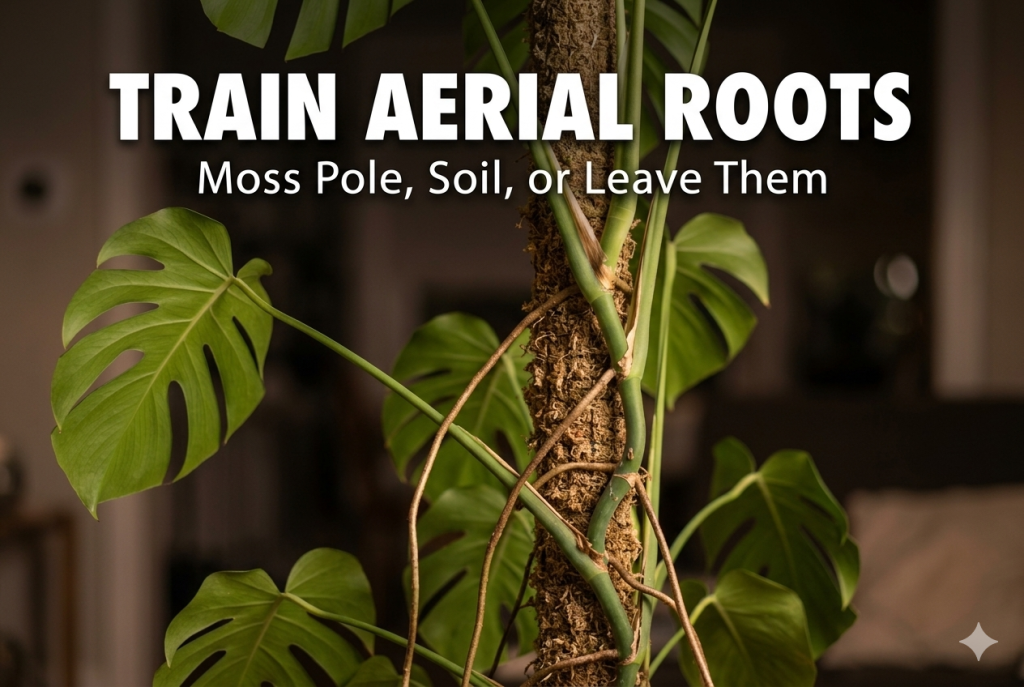
If you have a moss pole or coco coir pole in the pot, directing aerial roots toward it and gently securing them with soft ties allows the monstera to do what it naturally wants to do: climb. This encourages upward growth and can result in larger, more fenestrated leaves over time since the plant is behaving more like it would in its natural habitat.
Mist the Aerial Roots
In dry indoor environments, aerial roots can dry out and become brittle. Misting them occasionally with water mimics the humid conditions of a tropical rainforest and keeps them healthy and pliable. This is particularly useful in winter when indoor heating can reduce humidity significantly.
Trim Them if Needed
If your aerial roots are getting unruly, too long, or simply don’t fit your aesthetic, it is safe to trim them. Use clean, sharp scissors or pruning shears and cut the root back to a manageable length or remove it entirely close to the stem. This won’t harm the plant, and the root may or may not regrow depending on the plant’s growth stage.
Avoid tearing or pulling aerial roots off, since this can damage the stem tissue at the node. Always use a clean, sharp tool to make a clean cut.
Should I Put Aerial Roots in Water?
Some monstera owners place aerial roots into a vase or container of water, essentially water propagating the roots while keeping the plant in the soil. This can work, but it comes with a caveat: roots that develop in water adapt to that environment, and if the water source is removed or dries out, those roots may struggle to transition back to air. It’s not harmful to try, but it requires consistent maintenance to keep the water topped up and clean.
Do Aerial Roots Mean My Monstera Needs a Bigger Pot?
Not necessarily. Aerial roots are a normal part of monstera growth and don’t specifically indicate that the plant is root-bound or needs repotting. The better signs to look for when considering repotting are roots visibly circling the bottom of the pot, roots growing out of the drainage holes, or soil that dries out extremely quickly after watering. If none of those apply, aerial roots alone aren’t a reason to repot.
Conclusion
Monstera aerial roots are a completely normal and healthy part of the plant’s growth, not a problem to fix. Whether you leave them hanging, guide them into soil, direct them onto a moss pole, or trim them back, there’s no single right answer. The best approach depends on your space, your aesthetic preference, and how you want your monstera to grow. What matters most is that aerial roots are a sign your plant is thriving, so if yours are producing them, take it as a good sign.
Frequently Asked Questions
Can I cut off Monstera aerial roots?
Yes, trimming aerial roots is safe and won’t harm the plant. Use clean, sharp scissors or pruning shears and make a clean cut rather than pulling or tearing. The root may or may not regrow depending on the plant’s growth stage.
Do monstera aerial roots need to be in soil?
No, aerial roots don’t need to be in soil to function. They can absorb some moisture directly from the air, especially in humid environments. Directing them into soil is optional and can provide a slight benefit, but it’s not required for the plant’s health.
Why are my monstera aerial roots turning brown?
Brown aerial roots are completely normal. Unlike the green or pale color of young aerial roots, mature ones naturally turn brown as they develop. If they’re also dry and brittle, misting them with water occasionally can help, especially in low-humidity environments.
Are monstera aerial roots the same as regular roots?
They serve a similar purpose but develop differently. Soil roots are specifically adapted to absorb water and nutrients from soil, while aerial roots are adapted to grip surfaces and absorb moisture from the air. If directed into soil, aerial roots can function more like regular roots over time.
Will removing aerial roots hurt my monstera?
No, removing aerial roots won’t hurt a healthy monstera. The plant may produce new ones over time, but trimming existing ones is a safe and common practice for managing the plant’s appearance indoors.