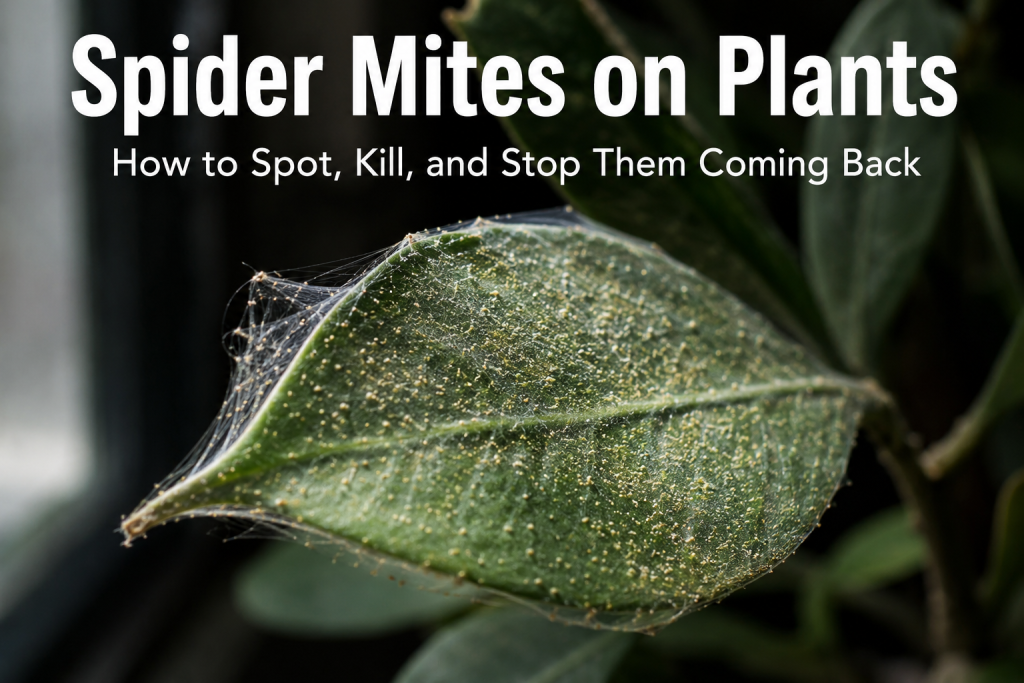
“If your plant’s leaves have tiny yellow speckles, a faint dusty look, or what seems like delicate spider webbing tucked between the stems, you’re probably dealing with spider mites on plants, one of the most common and most frustrating indoor plant problems.”
The good news: spider mites are very treatable once you know what you’re looking at and act quickly. Here’s exactly how to identify them, get rid of them, and keep them from coming back.
What Are Spider Mites?
Spider mites aren’t insects. They’re tiny arachnids, related to spiders, which is where the name and the webbing come from. They’re typically red, brown, or pale yellow, and at less than 1mm long, they’re nearly impossible to spot individually without a magnifying glass. What you’ll actually notice first isn’t the mites themselves, but the damage and webbing they leave behind.
Spider mites thrive in warm, dry conditions, which makes centrally heated homes in winter or hot, dry summers prime breeding grounds. They reproduce extremely fast; a single female can lay hundreds of eggs in her short lifespan, and a population can explode from a few mites to a full infestation in under two weeks.
Signs Your Plant Has Spider Mites
A few telltale signs to check for, especially on the undersides of leaves:
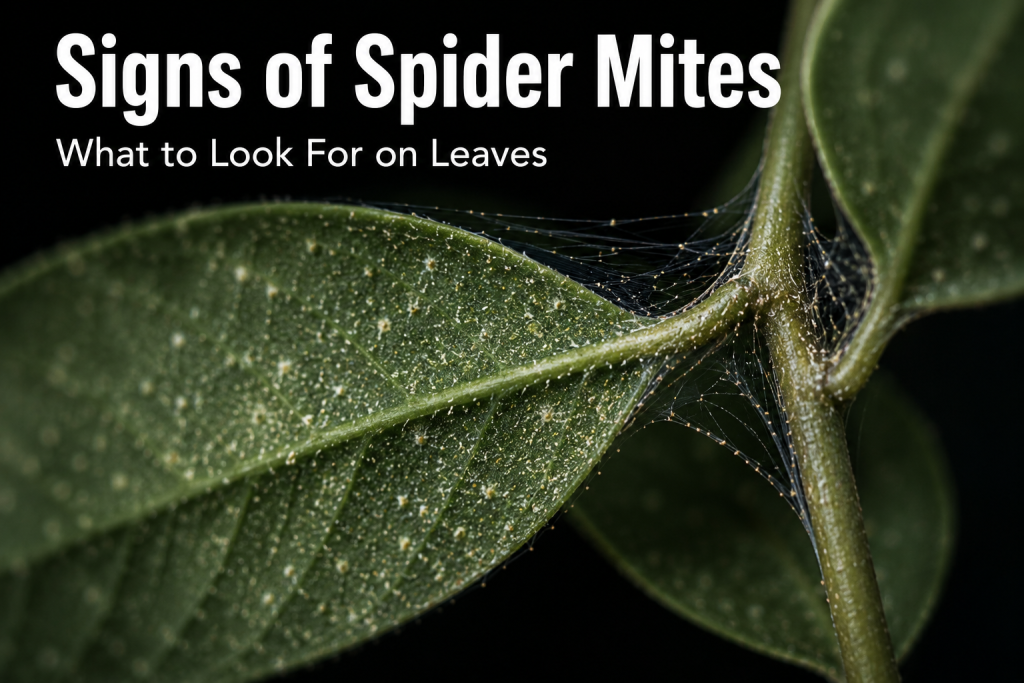
Tiny yellow or white speckles on leaves. This is called stippling, and it’s caused by mites piercing the leaf surface to feed on plant cells. From a distance it can look like dust or a slight discoloration.
Fine webbing. Usually in the joints where leaves meet stems, or stretched across the underside of leaves. This is the clearest confirmation sign; very few other pests produce webbing like this.
Leaves are turning bronze or yellow or dropping. As the infestation progresses, leaves lose color, dry out, curl, and eventually fall off.
A “dirty” or dusty look to the plant. Sometimes the first thing people notice is just that the plant looks subtly off, like it needs cleaning.
To confirm, hold a white sheet of paper under a leaf and gently tap or shake the stem. If tiny specks fall onto the paper and start moving, you’ve got mites.
Why Your Plant Got Spider Mites
A few common causes worth knowing, mostly so you can prevent a repeat:
Low humidity and dry air are the single biggest factors. Spider mites struggle in humid environments and thrive when the air is dry, which is exactly why infestations spike in winter when heating systems run constantly.
Overcrowded plants sitting close together make it easy for mites to spread from one to the next.
Stressed plants (underwatered, in poor light, or recently repotted) are more vulnerable, since healthy plants have stronger natural defenses.
New plants brought into the home without being checked or quarantined first are a very common entry point, since mites often hitch a ride on a new purchase.
How to Get Rid of Spider Mites
1. Isolate the plant immediately
Move the infested plant away from others right away. Spider mites spread plant-to-plant quickly, especially if leaves are touching or plants are close together.
2. Rinse the plant thoroughly
Take the plant to a sink or shower and rinse the leaves (top and underside) with a steady stream of water. This physically knocks off a large portion of the mite population and their eggs. Do this every few days for the first week or two.
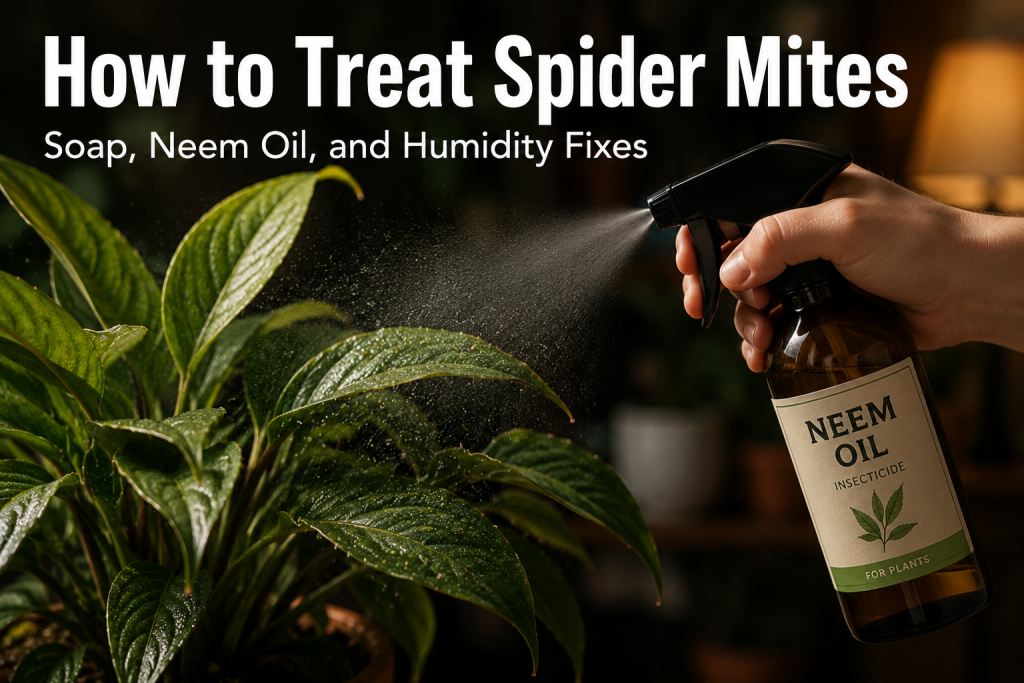
3. Apply insecticidal soap or neem oil
After rinsing, treat the plant with insecticidal soap or neem oil, making sure to coat the undersides of leaves where mites concentrate. Reapply every 5-7 days for at least three weeks. This matters because you need to break the egg-to-adult life cycle, not just kill the visible mites.
4. Increase humidity around the plant
Since spider mites hate moisture, raising humidity helps prevent reinfestation. A pebble tray, humidifier, or simply grouping plants with a humidity tray underneath can help.
5. For severe infestations, consider miticide
If soap and neem oil aren’t controlling the population after a few weeks, a dedicated miticide may be necessary. These are more targeted than general pesticides and more effective against severe, established infestations.
6. Prune badly damaged leaves
Leaves that are heavily speckled, bronzed, or covered in webbing usually won’t recover. Removing them reduces the mite population and lets the plant focus energy on healthy growth.
How to Prevent Spider Mites From Coming Back
Inspect new plants closely before bringing them near your existing collection, checking leaf undersides and stem joints specifically.
Keep humidity reasonable, especially in winter. Most houseplants do better above 40% humidity anyway, and it’s a strong natural deterrent.
Don’t let plants get too dry between waterings, since drought-stressed plants are more vulnerable.
Wipe down leaves occasionally with a damp cloth. This is a simple habit that removes dust, early-stage mites, and eggs before they establish.
Give plants some breathing room rather than packing them tightly together, especially if one is recovering from a past infestation.
For general indoor plant care basics, see our beginner’s guide to indoor plant care.
Conclusion
Spider mites are common, but they’re rarely fatal to a plant if you catch them early and stay consistent with treatment. The combination of rinsing, insecticidal soap or neem oil, and improved humidity will clear up most infestations within a few weeks. The real key is consistency. One treatment won’t break the life cycle, but a few weeks of regular care almost always will.
Silvery streaking and tiny black specks can point to thrips infestations instead, so check the leaves closely before you treat. For white, cottony clusters, follow our mealybug treatment guide, as the approach is a little different. Tiny flies hovering around the soil usually mean fungus gnats, and our fungus gnat control guide covers how to stop them.
Frequently Asked Questions
Can spider mites spread to other plants in my home?
Yes, easily. Spider mites can crawl between plants that are touching or sitting close together, and they can also spread through air currents or on your hands and clothing after handling an infested plant. This is why isolating an affected plant immediately is one of the most important first steps.
Are spider mites harmful to humans or pets?
No, spider mites don’t bite people or pets and pose no direct health risk to them. They’re strictly a plant pest. The main concern is the damage they cause to your plants, not any danger to your household.
How long does it take to get rid of spider mites completely?
Most infestations take two to four weeks of consistent treatment to fully clear, since you need to break the egg-to-adult life cycle, not just kill the mites that are visible at any one time. Stopping treatment too early is the most common reason infestations come back.
Can I use dish soap instead of insecticidal soap?
It’s better to avoid this. Regular dish soap can be too harsh and strip protective oils from leaves, sometimes causing more damage than the mites themselves. Insecticidal soap or neem oil is formulated specifically to be safe for plant tissue while still being effective against mites.
Will spider mites come back after treatment?
They can, especially if the humidity stays low or a new infested plant is introduced without being checked first. Keeping humidity reasonable, inspecting new plants before bringing them home, and occasionally wiping down leaves are the most effective ways to prevent a repeat infestation.