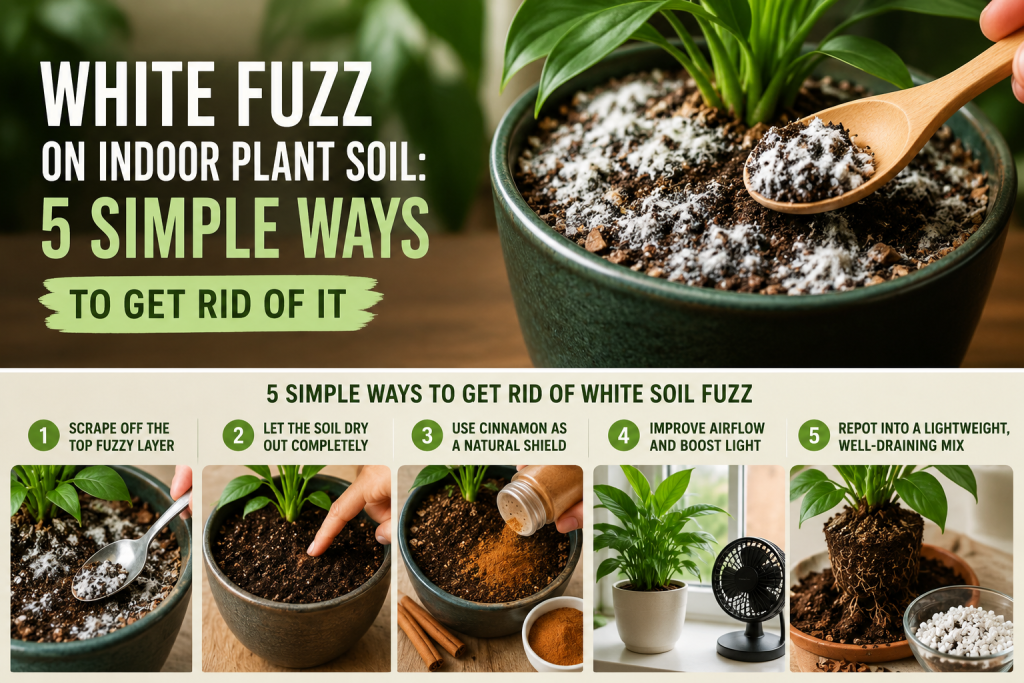
White fuzz on indoor plant soil is a common problem that can easily cause a sudden panic for any indoor gardener. You walk over to check on your favorite green companion, look down at the potting mix, and spot that strange, cotton-like layer spread across your dirt. Your mind instantly races to worst-case scenarios: Is this a deadly pest invasion? Will this completely destroy my houseplant collection?
Take a deep breath. That powdery white fuzz on your dirt is almost always a saprophytic fungus. In plain English, it is a completely harmless, non-toxic surface mold that feeds on dead organic debris inside your pot. It won’t bite your plant, and it won’t harm your health.
However, even though the mold itself isn’t dangerous, it is a clear warning sign from your plant’s environment. It tells you that your soil is holding onto stagnant moisture for too long, the room lacks moving air, or the container isn’t draining properly. If you ignore this signal, that soggy soil could eventually lead to root rot. Clearing this up is incredibly simple, and you can fix it using basic things already sitting in your home.
Is It Actually Mold? How to Identify White Fuzz
Before you start treating your container, you need to make sure you are dealing with actual mold. There are three different things that can make your potting mix look white, and each requires a totally different fix:
1. Saprophytic Fungus (True Surface Mold)
This looks like soft, three-dimensional cotton candy, a light velvety web, or a fine layer of dust on top of the dirt. It typically grows around pieces of bark or dead leaves. If you poke it with a stick, it crushes easily, and if the soil dries out, it vanishes. This is exactly what we are focusing on today.
2. Mineral and Salt Buildup (Crusty Layer)
This does not look fuzzy or soft at all. Instead, it forms a hard, white-to-yellowish crusty ring on the soil surface or around the inside rim of your clay or plastic pots. This happens when minerals, lime, and chlorine from hard tap water or heavy chemical fertilizers build up over time. You can’t kill it with antifungal tricks; you have to physically scrape it off and flush the soil with pure water.
3. Mealybug Infestations (Living Pests)
Sometimes people confuse mold with mealybugs because both look white and cotton-like. However, mealybugs are actual sap-sucking insects. They rarely cover the entire soil surface evenly. Instead, they gather in sticky, wet-looking white clumps right in the joints of the plant stems, under the leaves, or tucked into new growth.
Why Is White Mold Growing on My Soil?
Fungal spores are a natural part of the ecosystem and live invisibly in the air everywhere. They only wake up and start growing into a visible fuzzy carpet when your daily care routine or room setup gives them the perfect environment. The main culprits are:
- Continuous Dampness: Watering your plant before the top layer of soil has a chance to breathe gives the fungus the constant moisture it needs to thrive.
- Stagnant Indoor Air: Rooms with closed windows and no fans create pockets of thick, heavy humidity right above the soil line, blocking natural evaporation.
- Low Light Settings: When a plant is kept in a dark corner, it photosynthesizes very slowly. This means it leaves the soil wet and soggy for weeks at a time.
- Rich Organic Soils: High-quality potting mixes with plenty of peat moss, compost, or worm castings are fantastic for plants, but they also provide a rich food source for surface molds.
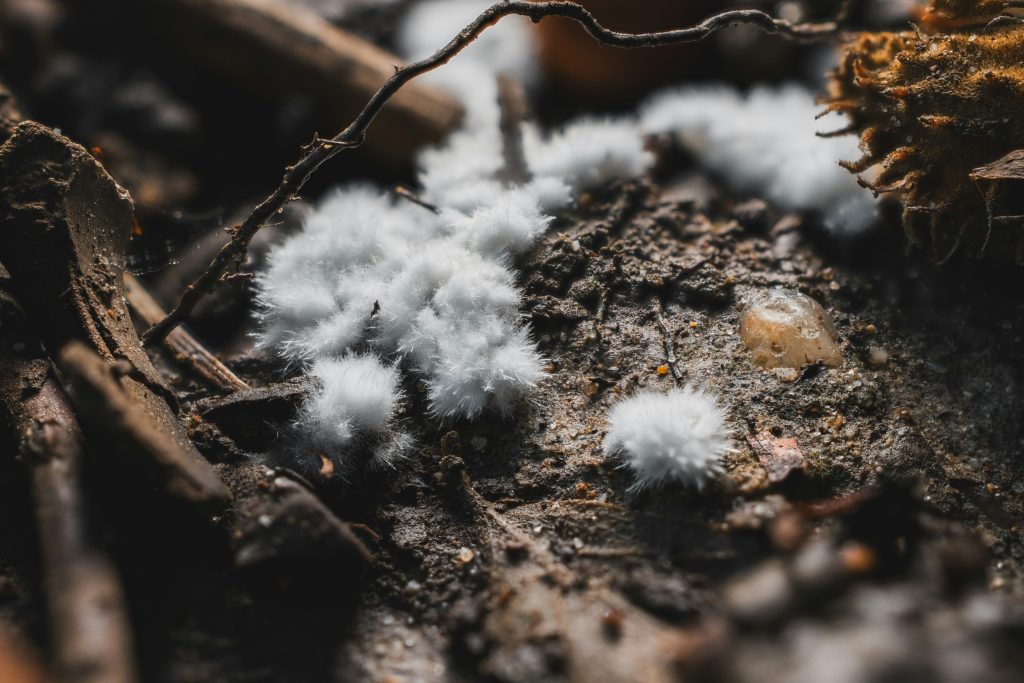
5 Simple Ways to Get Rid of White Soil Fuzz Permanently
1. Scrape Off the Top Fuzzy Layer
Since saprophytic mold only lives on the very top surface of the dirt where it can get oxygen, it doesn’t run deep into the root system. The fastest way to fix the look of your pot is to physically remove the visible layer.
How to do it safely:
Grab an old kitchen spoon, a butter knife, or a small hand trowel. Give it a quick wipe with rubbing alcohol so you don’t accidentally spread spores later. Gently scrape away the top quarter-inch layer of fuzzy dirt. Be careful not to dig too deep or damage any tiny roots growing near the surface. Put the moldy scrapings directly into a plastic bag, tie it tight, and throw it in your outside trash. To finish, just sprinkle a thin layer of fresh, dry potting soil over the exposed area.
2. Let the Container Dry Out Completely
Mold is entirely dependent on moisture. If you keep the top of the soil dry, the mold cannot survive, grow, or reproduce. By simply changing your watering habits, you can starve the fungus naturally.
How to execute this fix:
Put your watering can away immediately. Give your plant a complete break from moisture. Before you ever add water, push your finger or a wooden chopstick 2 to 3 inches deep into the soil. If it comes out feeling damp or with dark, wet dirt sticking to it, walk away. Wait until the top few inches feel completely dry, loose, and powdery. Letting the soil dry out like this won’t harm a healthy houseplant, but it will completely dehydrate and kill off the remaining mold spores.
3. Use Cinnamon as a Natural Antifungal Shield
You don’t need to spend money on expensive chemical sprays or commercial fungicides to clean your plant’s soil. The best remedy is probably sitting right in your kitchen cabinet. Pure ground cinnamon contains natural organic compounds that act as a powerful, built-in antifungal agent.
How to apply it:
First, follow the steps in method number one to scrape away the thickest patches of visible white fuzz. Once the surface is relatively clear, take your cinnamon shaker and dust a thin, even layer of ground cinnamon across the entire soil surface. It creates a natural protective barrier that stops lingering microscopic spores from waking up. As a bonus, it makes your room smell great and keeps annoying fungus gnats away from your containers.
4. Improve the Airflow and Boost Light
Mold thrives in dark, humid, and trapped environments. If your houseplants are packed tightly together in a dim corner where the air never moves, you are accidentally running a perfect mold incubator.
How to fix the environment:
Move your affected plant to a spot that gets plenty of bright, indirect sunlight. Natural light helps dry out the top of the dirt much faster after a watering. Also, space your pots out by a few inches so air can circulate between them. If the room feels stuffy, turn on a ceiling fan or place a small desk fan on a low setting nearby. A gentle, consistent breeze keeps humidity from settling heavily on top of the soil line.
5. Repot Into a Lightweight, Well-Draining Mix
If you have tried scraping the dirt and drying out the pot, but that stubborn white fuzz keeps returning after a couple of weeks, your soil mix is holding onto far too much water. Dense, heavy soil packs down tightly over time, trapping water at the bottom and creating a permanent breeding ground for mold.
How to repot properly:
Gently pull your plant out of its container and brush away as much of the old, heavy, soggy dirt from the root ball as you can. Wash the pot thoroughly with warm water and dish soap to sanitize the walls. When you replant, do not use heavy garden soil from the yard. Use a fresh indoor potting mix and mix in a large handful of coarse perlite, pumice, or orchid bark. These amendments create essential air pockets in the container, allowing excess water to drain out instantly instead of pooling at the surface.
Conclusion
Finding white fuzz on your indoor plant soil can look scary, but it is a very simple cosmetic issue to solve. Treat it as a friendly message from nature telling you to ease up on the watering can, give the dirt some fresh air, and move the pot to a brighter spot. By using simple, natural steps like scraping, drying, and a sprinkle of cinnamon, you can easily keep your potting mix clean and your houseplants thriving.
Frequently Asked Questions
1. Is this white soil mold dangerous for my pets or children?
No, the standard saprophytic mold that grows on houseplant soil is completely non-toxic and won’t harm your dogs, cats, or kids. However, if anyone in your home struggles with severe mold allergies or asthma, breathing in concentrated airborne spores might cause mild sneezing or nose irritation. It is always best to scrape it off and fix the damp soil quickly.
2. Can I use baking soda instead of cinnamon to clear the mold?
Yes, baking soda works as an alternative home remedy. You can dissolve one teaspoon of baking soda into a quart of water and lightly mist the top of the soil. Just be careful not to overdo it; using too much baking soda can alter the chemical pH balance of your soil over time, which can upset sensitive tropical plants.
3. Does white mold mean my plant is suffering from root rot?
Not necessarily, but consider it an early warning. Surface mold just means the very top layer of your dirt is staying wet and stagnant. Root rot happens deep down at the bottom of the pot when the entire root system sits in waterlogged mud for weeks until it decays. If your plant’s leaves are still firm and green, your roots are fine; just fix the watering routine now before it spreads downward.
4. Will the yellow or brown parts of my plant’s leaves turn green again?
No. Once a leaf turns yellow or crispy brown due to moisture stress or root damage, that specific tissue is dead. The plant permanently stops sending chlorophyll to those spots, and they cannot recover. Use clean, sharp scissors to trim away the dead patches so your plant can focus its energy on growing brand-new, healthy green leaves.
5. Why did white fuzz appear right after I used a brand-new potting mix?
Fresh, premium organic soils are packed with healthy nutrients, compost, and rich organic matter like peat moss. Because these bags are sealed tight and completely sterile when you buy them, airborne mold spores in your home love to land on this fresh food source. If you water the new pot heavily and leave it in a room with no airflow, the mold will throw a quick feeding party.