Why is my indoor plant not growing all of a sudden? This is one of the most frustrating questions every indoor gardener faces at some point. You brought home a gorgeous, lush houseplant, but instead of pushing out fresh, vibrant leaves, it just sits there completely frozen in time. It isn’t actively dying or dropping all its leaves, but it refuses to show even a millimeter of new growth.
When a plant stops growing, it is essentially stuck in survival mode. It means the plant is utilizing all its limited energy just to stay alive, leaving absolutely nothing left over to fuel new foliage or root development.
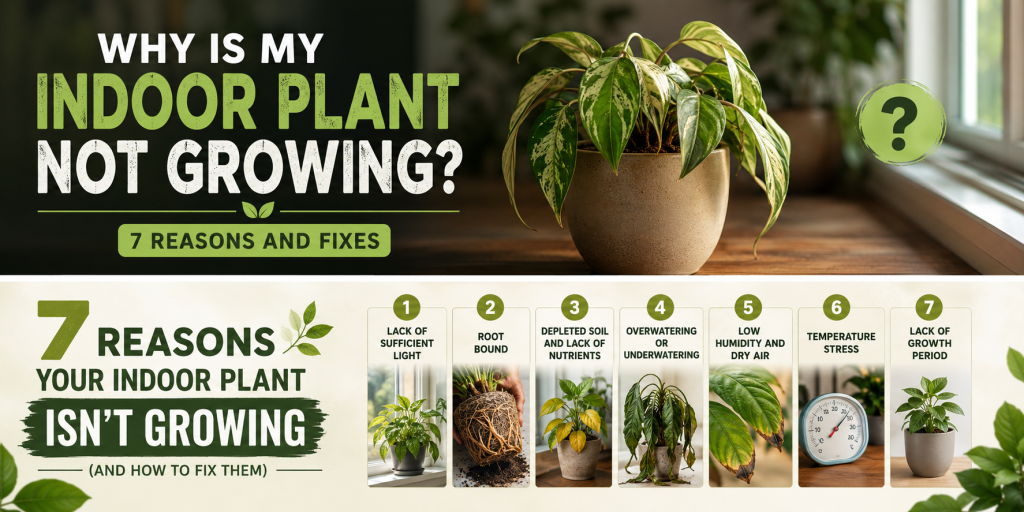
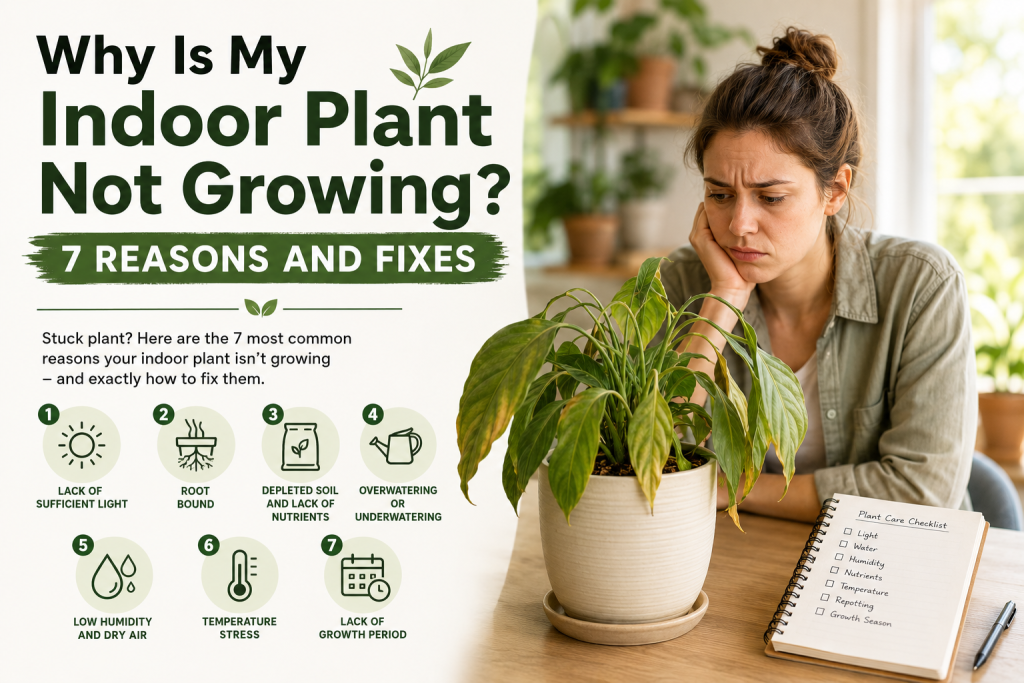
The good news is that stunted houseplant growth is rarely a permanent condition. Once you pinpoint the exact environmental bottleneck holding your plant back, you can easily reverse the damage. Here is a highly detailed, comprehensive guide breaking down the 7 most common reasons your indoor plant has stopped growing and the exact steps you need to take to kickstart its growth fast.
1. Chronic Lack of Sufficient Light
Light is essentially the true “food” for your houseplants. While water and fertilizers are helpful, plants rely entirely on light to perform photosynthesis, which creates the energy needed to build new leaves and stems. If your plant is tucked away in a dim corner, its growth will grind to a screeching halt.
The Warning Signs:
Your plant is growing incredibly slow, or the new stems are “leggy” meaning they are thin, weak, and stretching dramatically toward the nearest window. New leaves might also come in much smaller than the older ones or lose their vibrant variegation.
How to Fix It:
Move your plant closer to a window that provides the appropriate lighting for that specific species. For most tropical houseplants, a spot that receives plenty of bright, indirect sunlight is ideal. If your home has limited natural windows, investing in a quality LED grow light can provide the necessary light spectrum to jumpstart stalled growth.
2. The Plant Is Heavily Root-Bound
As a houseplant matures, its root system expands to match the foliage above. If a plant has been sitting in the exact same container for several years, the roots will eventually run out of physical space and fresh soil. When the roots completely take over the container, there is no room left for the plant to absorb moisture and nutrients.
The Warning Signs:
You will see thick roots circling the bottom or top of the soil surface or poking out directly through the bottom drainage holes. Water might also rush straight through the bottom of the pot instantly when you water it because there isn’t enough loose soil left to hold onto the moisture.
How to Fix It:
Gently slide the plant out of its container to inspect the root ball. If it looks like a tight mass of tangled roots with barely any visible soil, it is time to repot. Choose a new container that is 1 to 2 inches larger in diameter than the old one. Replant using a fresh, nutrient-rich indoor potting mix to give the roots plenty of room to expand and breathe.
3. Depleted Soil and Lack of Nutrients
When you first buy a houseplant or pot it up with a fresh mix, the soil is packed with vital nutrients. However, plants continuously drink up these minerals over time, and regular watering flushes the rest out through the drainage holes. After about 6 months to a year, the potting mix becomes completely stripped of nutrients.
The Warning Signs:
The older leaves on the bottom of the plant begin turning a pale, washed-out green or uniform yellow, while the overall growth of the plant stops completely despite getting perfect light and water.
How to Fix It:
Introduce a regular feeding routine during the active growing seasons of spring and summer. Use a balanced, water-soluble indoor plant fertilizer diluted to half the recommended strength to avoid burning the roots. Feeding your houseplants every 2 to 4 weeks during the warm months will supply the nitrogen, phosphorus, and potassium required for vigorous vegetative growth.
4. Sub-Clinical Overwatering or Underwatering
Watering issues are the number one killer of houseplants, but even if you aren’t completely killing the plant, incorrect moisture levels will permanently halt growth. Underwatering starves the cells of the moisture needed to expand, while overwatering suffocates the roots, preventing them from absorbing oxygen and functioning properly.
The Warning Signs:
Underwatered plants will have dry, crispy leaf edges and lightweight pots. Overwatered plants will have soft, drooping leaves, fungus gnats buzzing around the container, and soil that smells sour or stays wet for more than ten days.
How to Fix It:
Stop watering on a strict calendar schedule. Instead, always test the soil moisture levels manually before grabbing your watering can. Push a finger or a wooden chopstick 2 to 3 inches deep into the soil. If it feels completely dry and crumbly, water the plant thoroughly until moisture drains out the bottom. If it still feels damp, check back in a few days.
5. Low Indoor Humidity and Dry Air
The vast majority of popular indoor plants are native to tropical rainforests where the air is thick with natural humidity. Modern heating and air conditioning systems strip the moisture right out of our home’s air, creating a dry, desert-like environment that causes stress to tropical foliage.
The Warning Signs:
The tips of the leaves turn brown and crispy, new leaves get physically stuck or tear while trying to unfurl from the stems, and the plant maintains a dull, dusty look.
How to Fix It:
Boost the local humidity around your houseplant collection. The most effective method is running a small ultrasonic humidifier near your plants. You can also cluster your plants closely together so they can trap each other’s moisture, or place the pots on a shallow tray filled with pebbles and water, ensuring the bottom of the pot never touches the actual water line.
6. Temperature Extremes and Chilly Drafts
Houseplants thrive in the exact same temperature ranges that humans enjoy—typically between 65°F and 80°F (18°C and 27°C). Sudden drops in temperature or exposure to freezing or scorching air currents will shock the plant’s metabolic system, forcing it into an emergency dormant state.
The Warning Signs:
Leaves may suddenly curl inward, drop off without warning, or develop mysterious dark patches, especially after a seasonal weather shift or after being moved to a new room.
How to Fix It:
Keep your plants safely away from areas with extreme temperature fluctuations. Never place a houseplant directly in front of an air conditioning vent, a heating radiator, or next to a drafty exterior window during cold winter months. Consistent, stable warmth is key to keeping the plant’s growth engine running smoothly.
7. Hidden Pest Pressures
Tiny sap-sucking insects love to hide on indoor foliage. Because these pests are incredibly small and tuck themselves away out of sight, they can slowly drain the life out of your plant for months before you ever spot them. The plant loses so much energy to these pests that it cannot afford to produce new growth.
The Warning Signs:
Look closely for fine, spider-like webbing on the leaf joints, sticky residue (honeydew) on top of the leaves, or tiny, cotton-like white clusters hiding on the undersides of the foliage.
How to Fix It:
Isolate the infested plant immediately so the insects do not spread to your healthy collection. Wipe down the leaves with a damp cloth or spray the plant down thoroughly under a gentle shower to dislodge the bulk of the pests. Treat the entire plant with organic neem oil or an insecticidal soap spray once a week for at least three consecutive weeks to completely disrupt the pest lifecycle.
Conclusion
When you find yourself wondering, “Why is my indoor plant not growing?” try to think of it as a simple process of elimination. Check the lighting first, inspect the roots for overcrowding, and evaluate your watering routine. By adjusting your care habits and optimizing your indoor environment using these 7 fixes, you can easily wake your plant up from its slumber and enjoy a massive flush of healthy new growth.
If light is the problem, our guide to grow lights for plants will help you choose the right setup. Many stalled plants simply suffer from beginner care mistakes, so a quick review of the basics can restart growth. You could also try hydroponic growing if soil based care keeps causing problems.
Frequently Asked Questions
1. Is it normal for houseplants to stop growing during the winter?
Yes, it is completely natural. As the outdoor temperatures drop and daylight hours shorten during late autumn and winter, most indoor plants enter a natural resting phase. During this period, their growth slows down dramatically or stops entirely. You should scale back your watering and stop fertilizing during the winter, then resume normal care once spring arrives and new growth restarts.
2. How long does it take for a plant to start growing again after repotting?
It typically takes about 2 to 4 weeks for a plant to recover from transplant shock and begin showing new top growth. When you move a plant to a larger container, it focuses all its initial energy on expanding its root system into the fresh soil before it starts pushing out new leaves. Be patient and keep the soil lightly moist during this transition phase.
3. Should I prune away old leaves to encourage new growth?
Yes, removing dead, yellowing, or severely damaged leaves is highly beneficial. Dead leaves can no longer photosynthesize, but they can still drain valuable resources from the plant or attract fungal pathogens. Use a pair of clean, sterilized pruning shears to snip off unsightly foliage at the base of the stem so the plant can redirect all its energy into fresh, healthy growth.
4. Can I use tap water to water my plants if they aren’t growing?
It depends on your local water quality. Hard tap water contains heavy amounts of chlorine, fluoride, and dissolved minerals that can build up in the potting mix over time, damaging sensitive roots and stalling growth. If you suspect your tap water is the issue, switch to using filtered water, distilled water, or collected rainwater to give your plant’s roots a clean break.
5. How do I know if my grow light is close enough to my plant?
If your grow light is too far away, the plant will continue to stretch and remain stagnant. If it is too close, the leaves may develop bleached, dry scorch marks. As a general rule of thumb, keep standard LED grow lights about 12 to 24 inches above the top of your plant’s canopy, and adjust the height based on how the foliage responds over a couple of weeks.