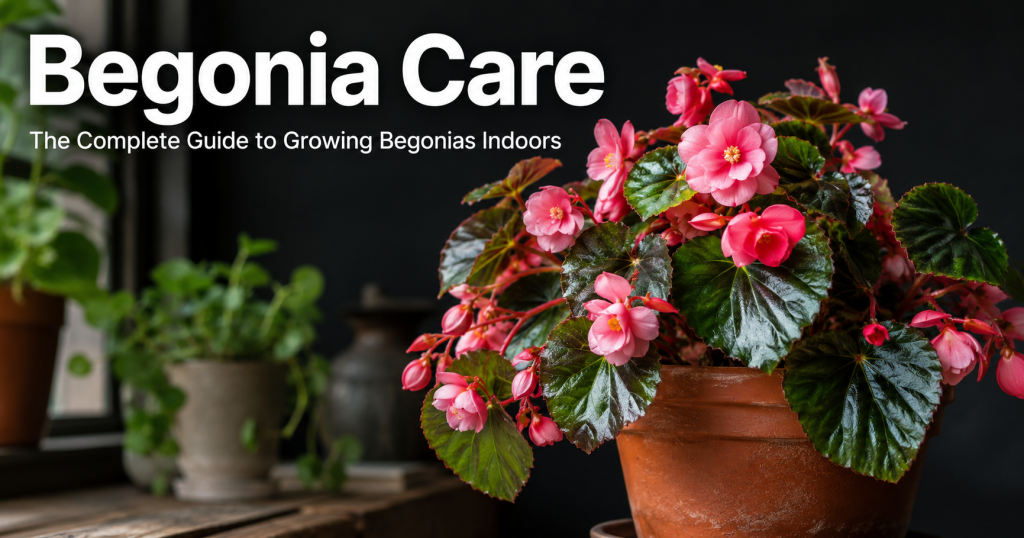
Begonias are one of the most diverse and rewarding groups of plants you can grow indoors. With hundreds of species and cultivars ranging from compact wax begonias to dramatic rex begonias with their jewel-toned foliage, there is a begonia for almost every indoor space and growing style. Begonia care varies slightly depending on the type you are growing, but the core principles remain consistent across the group. Here is everything you need to know to keep your begonias healthy and thriving indoors.
Types of Begonias for Indoor Growing
Before getting into care details, it helps to know which type of begonia you have, since different groups have slightly different needs and strengths.
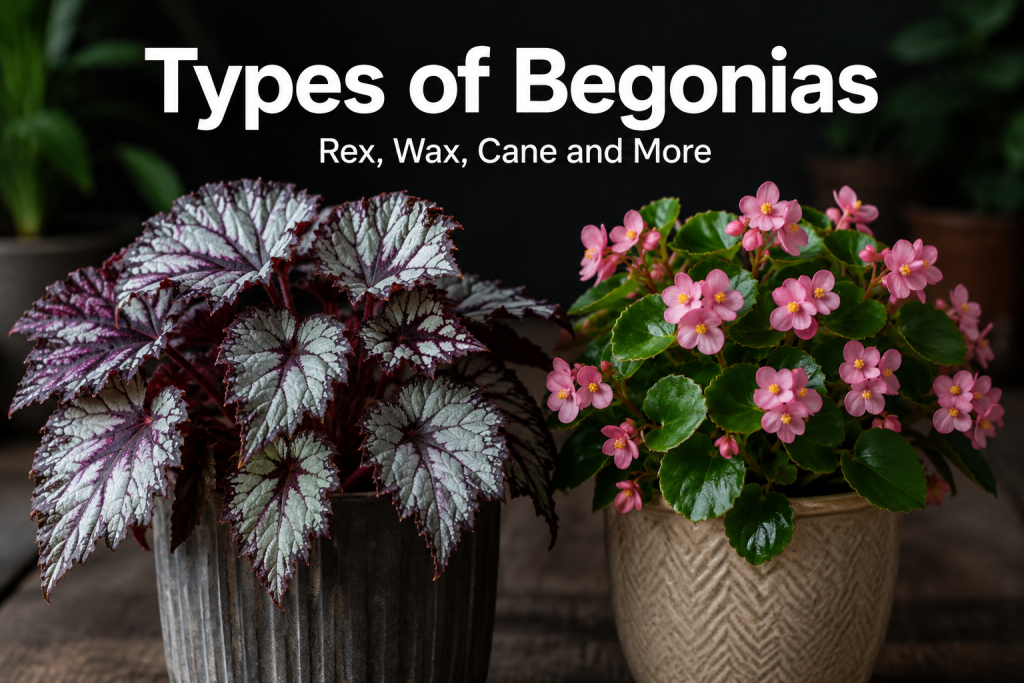
Wax begonias (Begonia semperflorens) are compact, easy-to-grow plants with waxy leaves and small flowers in pink, red, or white. They are among the most forgiving begonias for indoor growing and bloom almost continuously under good light.
Rex begonias (Begonia rex) are grown primarily for their spectacular foliage rather than their flowers. The leaves come in extraordinary combinations of silver, green, red, purple, and bronze, often with intricate patterns and textures. They are slightly more demanding about humidity than other types.
Tuberous begonias (Begonia x tuberhybrida) produce large, showy flowers that can rival roses in their fullness and color range. They grow from tubers rather than fibrous roots and have a natural dormancy period in winter.
Cane begonias (angel wing begonias) have tall, upright stems with wing-shaped leaves, often spotted with silver. They are vigorous growers that can reach impressive sizes indoors and produce clusters of flowers in hanging clusters.
Rhizomatous begonias grow from thick, horizontal stems called rhizomes and are valued for their interesting textured foliage. They are among the most drought-tolerant begonias and generally easy to care for.
Light Requirements
Most begonias prefer bright, indirect light. Direct intense sunlight can scorch the leaves, particularly on rex begonias and other types with delicate foliage, while too little light results in leggy growth and reduced or absent flowering.
A spot near an east or west-facing window that gets good light without direct afternoon sun is ideal for most begonia types. Wax begonias and cane begonias can tolerate a bit more direct morning sun than rex or rhizomatous types. If you notice your begonia stretching toward the light with long, weak stems, it needs a brighter spot.
Watering
Watering is where begonia care requires the most attention. Begonias are susceptible to both overwatering and underwatering, though overwatering is by far the more common problem.
Allow the top inch of soil to dry out between waterings, then water thoroughly and allow excess to drain completely. Never let begonias sit in standing water in a saucer, since wet roots lead quickly to root rot and stem rot.
Wax and cane begonias are somewhat more tolerant of slight dryness between waterings. Rex begonias and rhizomatous types are particularly sensitive to overwatering and should be watered conservatively. Tuberous begonias need even less water and should be allowed to dry out more between waterings during their active growing season, then watered very sparingly as they go dormant in winter.
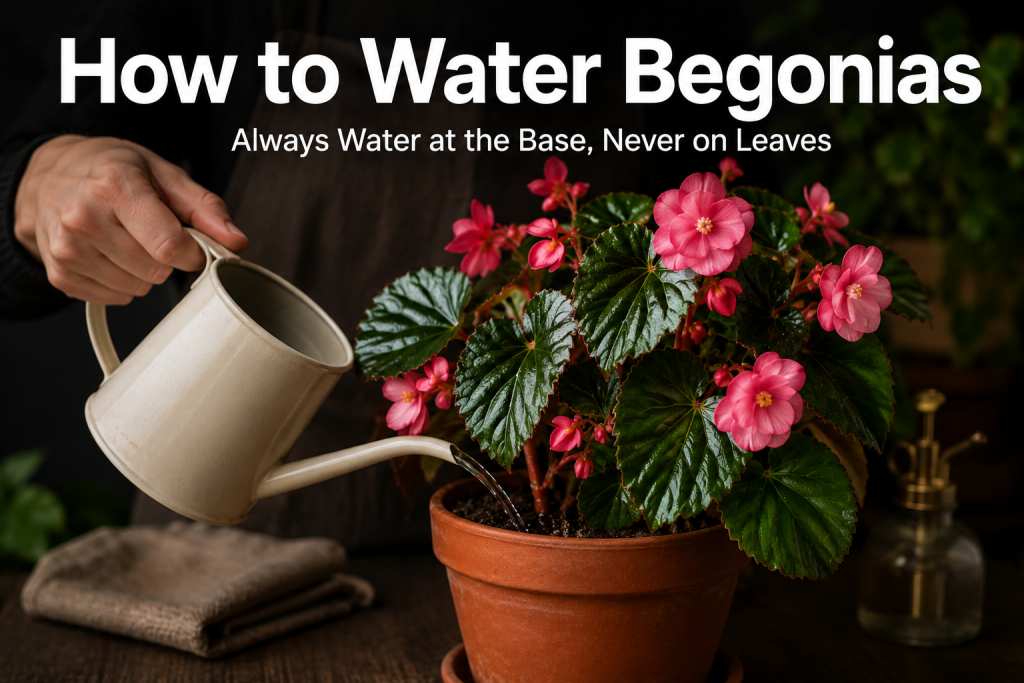
When watering, try to water at the base of the plant and avoid getting water on the leaves and stems, since wet foliage can encourage fungal diseases, particularly powdery mildew, which begonias are prone to.
Humidity
Begonias, particularly rex begonias, appreciate moderate to high humidity. In dry indoor environments, especially during winter when central heating reduces humidity, you may notice brown leaf edges and tips, particularly on rex types.
Aim for humidity above 50% for best results. A pebble tray filled with water, placed beneath the pot or a small humidifier nearby are effective ways to raise humidity without misting the leaves directly. Avoid misting begonias since wet leaves combined with poor air circulation is a recipe for powdery mildew and other fungal problems.
Temperature
Begonias prefer temperatures between 60-75°F (15-24°C) and are sensitive to cold drafts and temperatures below 55°F (13°C). Keep them away from cold windows in winter, exterior doors, and air conditioning vents. Most begonias are not frost-hardy and should never be exposed to freezing temperatures.
Soil and Potting
Begonias need a well-draining potting mix that holds some moisture without becoming waterlogged. A standard indoor potting mix combined with perlite works well. Avoid heavy, dense mixes that stay wet for extended periods.
Choose pots with drainage holes and avoid oversizing the container, since begonias generally prefer to be slightly root-bound rather than planted in pots much larger than their root system. Terra cotta pots can help prevent overwatering since they allow moisture to evaporate through the sides.
Repot begonias in spring when they have clearly outgrown their current container, moving up only one pot size at a time.
Fertilizing
Feed begonias with a balanced liquid fertilizer diluted to half strength every two to four weeks during the active growing season in spring and summer. For flowering begonias, switching to a fertilizer higher in phosphorus during the blooming period encourages more flower production. Stop fertilizing in autumn and winter when growth slows.
Avoid over-fertilizing, since too much fertilizer can cause lush, weak growth and actually reduce flowering.
Pruning and Pinching
Regular pinching and pruning keep begonias bushy, compact, and productive. Pinching out the growing tips of wax and cane begonias encourages branching and a fuller shape. Remove spent flowers regularly to encourage continued blooming. Cut back leggy stems to a leaf node to promote new, compact growth from lower down the stem.
For rex and rhizomatous begonias, remove any damaged, yellowing, or dead leaves at the base to keep the plant tidy and reduce the risk of disease.
Propagation
Begonias are among the easiest houseplants to propagate, and most types can be multiplied in several ways.
Stem cuttings work for wax, cane, and most other begonias. Take a cutting with two or three leaves and a node, allow the cut end to dry briefly, and then place it in water or moist potting mix. Roots develop within two to three weeks.
Leaf cuttings are particularly effective for rex and rhizomatous begonias. A single leaf with its stem can be placed in water or laid on moist potting mix, where it will produce new plantlets along the veins or at the cut end of the stem.
Division works well for rhizomatous begonias, whose spreading rhizomes can be cut into sections and potted individually.
Common Problems
Powdery mildew. A white, powdery coating on leaves is one of the most common begonia problems, encouraged by poor air circulation and getting water on the leaves. Improve air circulation and water at the base, and treat with a diluted baking soda solution or a fungicide if needed.
Root rot. Caused by overwatering or poorly draining soil. If stems become mushy at the base and leaves yellow rapidly, remove the plant from its pot, trim away rotten roots, and repot in fresh, dry potting mix.
Leggy, sparse growth. Usually caused by insufficient light. Move the plant to a brighter spot and prune back leggy stems to encourage bushier regrowth.
Yellowing leaves. Can be caused by overwatering, underwatering, low humidity, or natural aging of older leaves. Assess your watering routine and environmental conditions to identify the cause.
Brown leaf edges. Usually a sign of low humidity or inconsistent watering. Increase humidity and ensure the plant is not drying out too much between waterings.
Tuberous Begonia Dormancy
If you are growing tuberous begonias, be aware that they go dormant in winter. As days shorten and temperatures cool, the foliage will naturally yellow and die back. When this happens, reduce watering to almost nothing and allow the tuber to rest in its pot in a cool, dark location until spring. When new growth appears in spring, move the plant back to its usual bright spot and resume normal watering and feeding.
Conclusion
Begonia care is genuinely rewarding once you match your care routine to the specific type you are growing. Bright indirect light, careful watering that avoids both extremes, moderate to good humidity, and regular light pruning are the foundations of keeping begonias healthy and looking their best indoors. With such an extraordinary range of foliage colors, textures, and flower types available, there is a begonia for every taste and every indoor space.
Frequently Asked Questions
How often should I water begonias indoors?
Water when the top inch of soil feels dry, typically every five to seven days in warmer months. Allow excess water to drain completely and never let the plant sit in standing water. Adjust frequency based on your specific conditions since begonias are more sensitive to overwatering than underwatering.
Why are my begonia leaves turning yellow?
Yellowing leaves are most commonly caused by overwatering or poor drainage. Check that the soil is drying out adequately between waterings and that the pot drains freely. Other causes include low light, low humidity, and natural aging of older leaves.
Can begonias grow in low light?
Most begonias need at least moderate indirect light to thrive. In low light, flowering begonias will produce fewer or no flowers, and all types will become leggy and less vibrant. Bright indirect light near a window produces the best results.
How do I get my begonia to bloom more?
Ensure the plant is getting adequate bright indirect light, feed with a phosphorus-rich fertilizer during the growing season, deadhead spent flowers regularly, and maintain consistent watering. Wax begonias and cane begonias are the most reliably flowering types for indoor growing.
Are begonias toxic to cats and dogs?
Yes, begonias are toxic to cats and dogs. The most toxic parts are the underground tubers and roots, but all parts of the plant can cause vomiting and salivation if ingested. Keep begonias out of reach of pets.