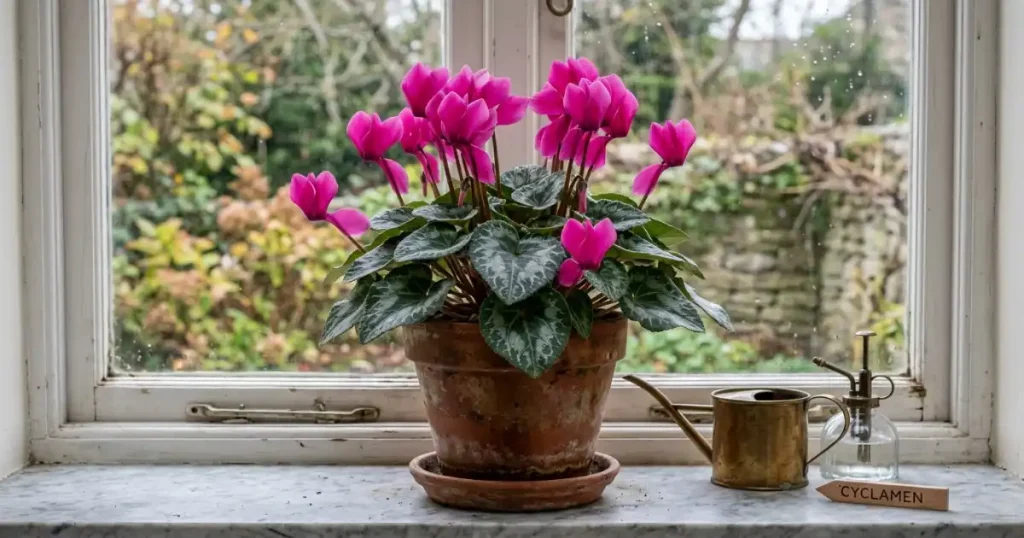
Mastering cyclamen indoor care allows you to enjoy vibrant winter blooms when most other houseplants are dormant. Florist’s Cyclamen (Cyclamen persicum) is famous for its heart-shaped, silver-marbled foliage and striking, wing-like flowers that pop in shades of pink, red, purple, and white. However, because cyclamen is a tuberous perennial with a unique growth cycle, standard houseplant care routines often lead to yellowing leaves or root rot.
Successful cyclamen indoor care requires matching the plant’s Mediterranean native climate. Providing cool indoor temperatures, bright indirect light, and a dedicated summer dormancy period keeps your cyclamen healthy and blooming year after year.
Technical Specifications: Growing & Environmental Parameters
| Care Parameter | Optimal Indoor Standard | Common Risk / Mistake |
| Light Level | Medium to bright indirect light | Direct hot sun scorches delicate petals |
| Temperature | Cool: 50°F to 65°F (10°C to 18°C) | Temperatures above 70°F trigger premature dormancy |
| Watering Method | Bottom-watering only | Pouring water on the central tuber causes crown rot |
| Soil Medium | Airy, peat-based mix with perlite (pH 6.0 to 6.5) | Dense clay soil traps water around the tuber |
| Fertilization | Half-strength low-nitrogen, high-potassium every 2 weeks | Excess nitrogen causes leafy growth with zero blooms |
| Humidity Target | 40% to 60% relative humidity | Bone-dry indoor air crispens flower margins |
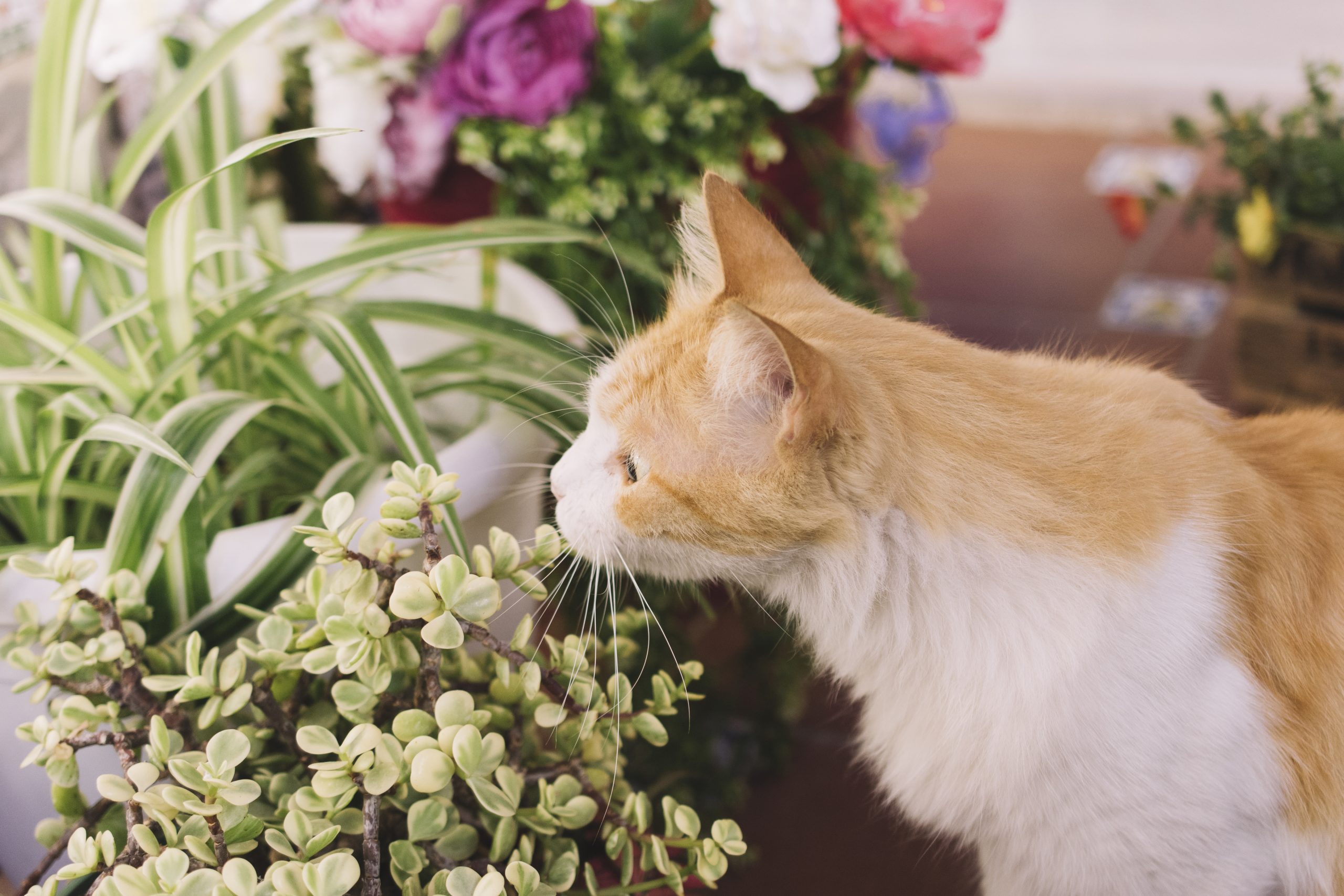
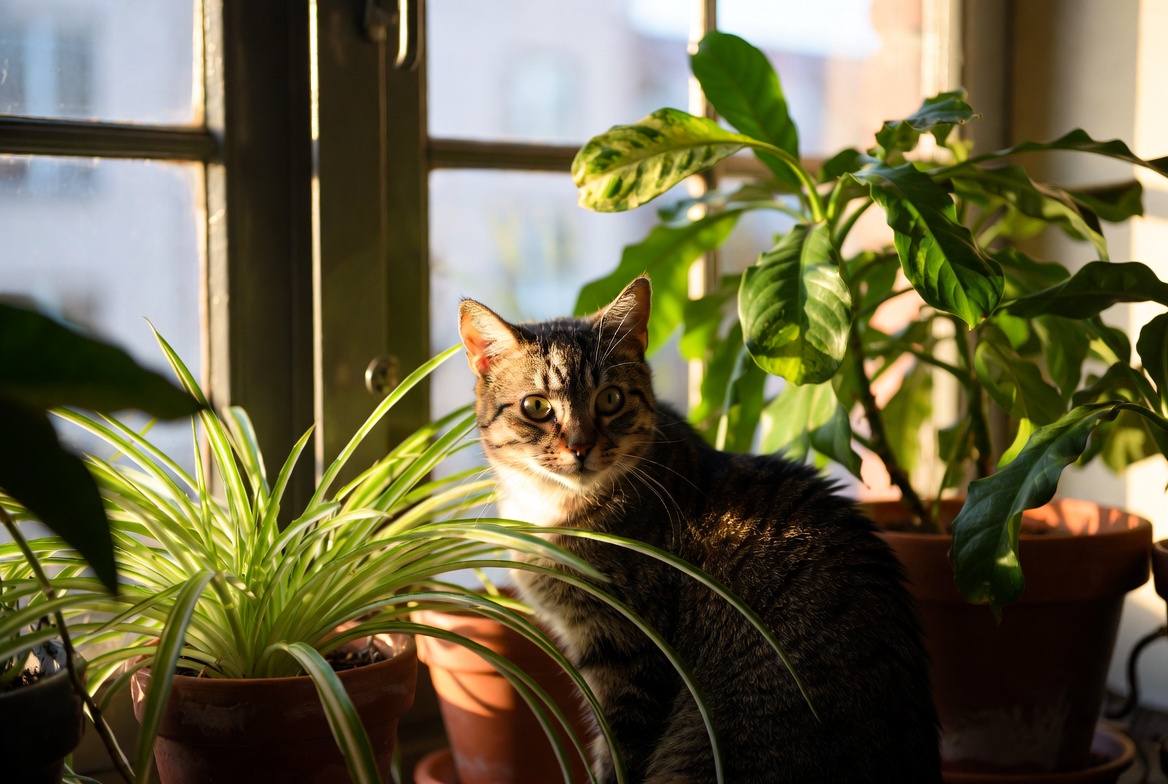
| Toxicity Level | Toxic to cats and dogs (contains saponins) | Tuber ingestion causes severe vomiting and salivation |
The Cyclamen Lifecycle: Understanding Dormancy
The biggest mistake growers make with cyclamen indoor care is treating summer leaf loss as plant death. Unlike tropical foliage plants that remain leafy year-round, cyclamen is a tuberous geophyte. It relies on a subterranean energy storage organ (the tuber) to survive seasonal drought and heat in its native Mediterranean habitats.
Autumn Growth ──► Winter Flowering ──► Spring Decline ──► Summer Dormancy
(Shoots Emerge)   (Vibrant Blooms)     (Yellow Leaves)    (Dry Tuber Rest)
Understanding this continuous cycle prevents unnecessary panic when foliage yellowing starts in late spring:
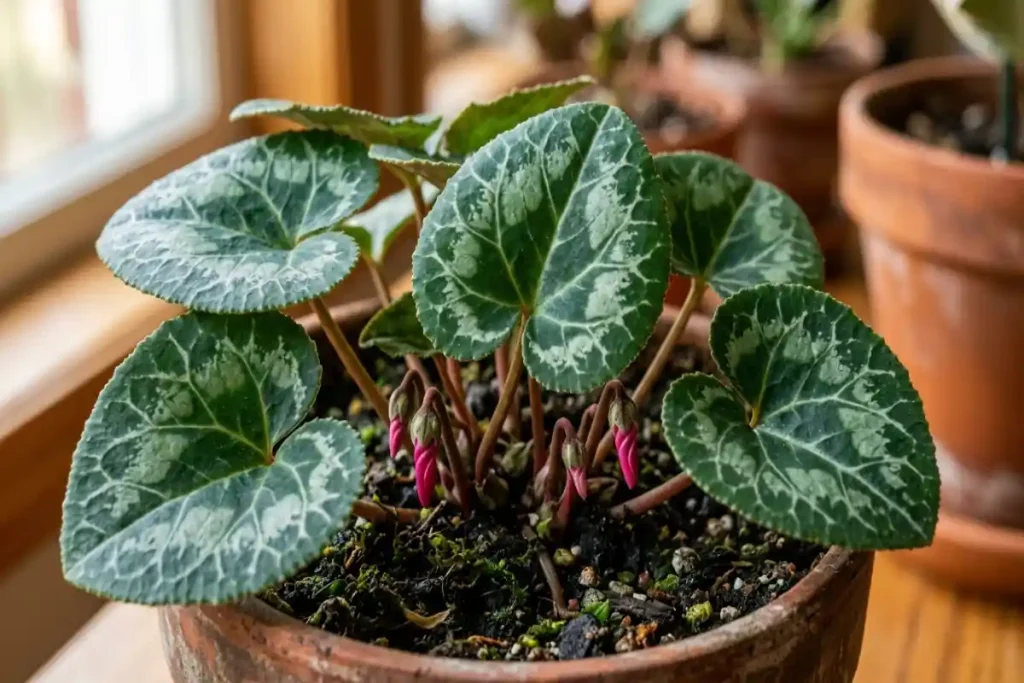
- Active Growth Period (Autumn): As room temperatures drop, small pink or red shoots burst from the top of the tuber. The foliage forms a tight, compact rosette of silver-veined leaves.
- Winter Flowering Period (Winter to Early Spring): The plant continuously shoots up tall, arching flower stems topped with distinctive swept-back petals. Under proper care, individual blooms remain vibrant for weeks.
- Transition & Decline Period (Late Spring): As daylight hours expand and ambient indoor temperatures climb, bloom production slows down and leaves turn uniform yellow.
- Dormancy Period (Summer): The plant sheds all above-ground vegetation. The tuber remains dormant beneath dry soil, storing metabolic energy for the upcoming fall awakening.
Complete Cyclamen Indoor Care Protocol
1. Temperature & Placement Strategies
Temperature control is the single most critical factor in successful cyclamen indoor care. Cyclamen thrives in cool conditions that mirror a crisp Mediterranean winter.
Keep day temperatures between 60°F and 65°F (15°C to 18°C) and night temperatures between 50°F and 55°F (10°C to 13°C). Exposure to temperatures above 70°F (21°C) signals to the plant that summer has arrived, triggering premature flower loss and leaf yellowing.
Avoid placing cyclamen pots near radiators, heating vents, wood-burning stoves, or drafty exterior doors. An unheated sunroom, cool bedroom, or bright east-facing windowsill provides ideal temperature conditions.
2. Light Requirements
During active autumn and winter growth, cyclamen requires bright, indirect light to fuel continuous flower production.
East-facing windows offer soft morning sun without overheating the foliage. South or west-facing windows work well during mid-winter months when sunlight intensity is reduced, provided you place the plant behind sheer curtains to diffuse direct rays.
Insufficient light leads to leggy, weak stems that droop under the weight of flower buds, while harsh, unfiltered summer sun causes scorch spots and scorched brown petal tips.
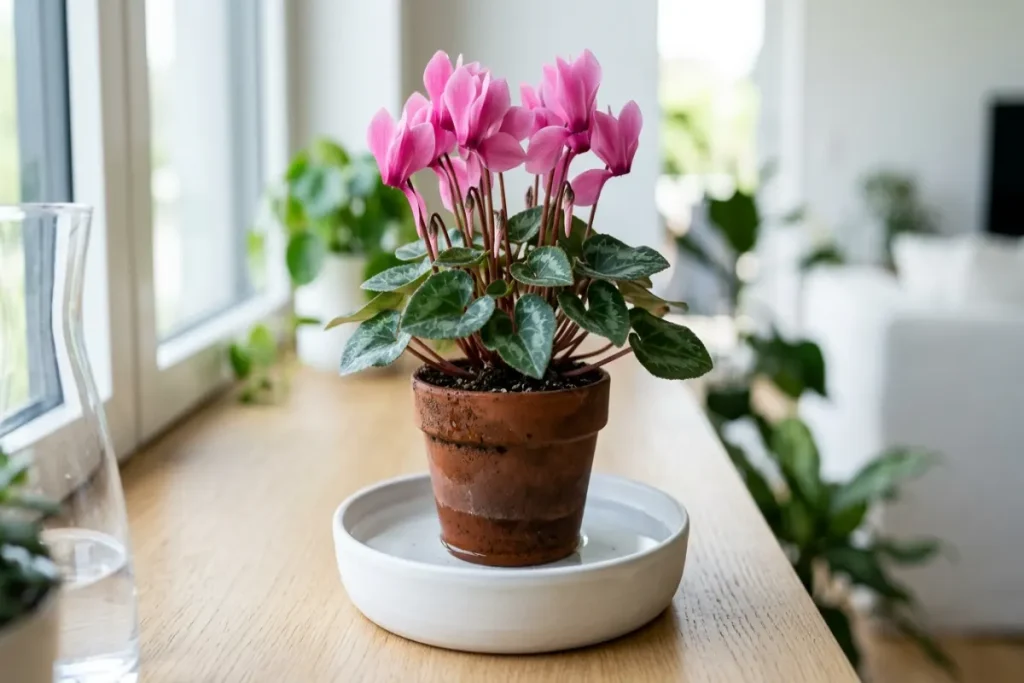
3. The Bottom-Watering Protocol
Cyclamen tubers sit flush with or slightly above the soil line. Moisture trapped within the central rosette of the tuber quickly leads to fatal fungal infections such as Botrytis crown rot.
To protect the plant, implement a strict bottom-watering routine:
- Step 1: Fill a shallow tray, bowl, or sink saucer with room-temperature, filtered water.
- Step 2: Place the cyclamen’s plastic nursery pot directly into the water bath.
- Step 3: Allow the soil to draw moisture upward through the bottom drainage holes via capillary action for 15 to 20 minutes.
- Step 4: Once the top surface of the soil feels slightly damp to the touch, lift the pot out of the water bath and let all excess moisture drain completely.
- Step 5: Empty any residual water from decorative saucers before returning the plant to its display spot. Never leave cyclamen sitting in standing water.
If accidental top-watering or overwatering causes soft, decaying tissue along your plant stems, refer to our emergency diagnostic guide on why is my indoor plant stem mushy to save your plant early.
4. Soil Medium & Potting Needs
Cyclamen prefers a light, airy potting medium rich in organic matter that drains rapidly while holding uniform moisture. A ideal potting mix combines:
- 60% peat moss or coco coir (for moisture retention)
- 30% perlite or coarse pumice (for drainage and soil aeration)
- 10% pine bark mini-nuggets or compost
Select a container with multiple bottom drainage holes. Terracotta pots are preferred over unvented plastic pots because porous clay walls allow moisture to evaporate evenly, preventing root suffocation. When repotting, ensure the top third of the tuber sits exposed above the soil surface.
5. Humidity & Air Circulation
While cyclamen prefers cool temperatures, it requires moderate to high atmospheric humidity (40% to 60%) to prevent delicate flower buds from drying out before opening.
To elevate humidity without spraying water on leaves:
- Place the pot on a tray filled with pebbles and water, ensuring the pot base rests above the water level.
- Group cyclamen with other cool-climate houseplants to create a humid microclimate.
- Use a cool-mist room humidifier near your indoor plant display.
If dry indoor heating or improper environmental conditions cause foliage distortion across your houseplants, review our troubleshooting guide on why are my indoor plant leaves curling to restore normal growth patterns.
If you observe translucent patches, pale spots, or foliage breakdown on nearby indoor plants, consult our overview on transparent spots on plant leaves.
6. Fertilizer Routine for Continuous Blooms
Cyclamen is a moderate feeder during its active growth phase. Feed the plant every 2 weeks from fall through early spring using a balanced liquid fertilizer diluted to half-strength, or use a high-potassium bloom booster formulation (such as 10-20-20).
Avoid high-nitrogen fertilizers, which encourage excessive green leaf growth while suppressing flower development. Suspend all fertilizer applications completely once flower production drops in spring and leaves begin yellowing for summer dormancy.
Deadheading and Pruning Techniques
To maintain continuous bloom cycles throughout winter, deadheading old, spent flowers is essential. Failing to deadhead spent blooms encourages the plant to direct energy into seed production rather than generating new flower buds.
- Proper Technique: Grasp the stem of the fading flower firmly down near its point of connection at the base of the tuber. Give the stem a sharp, quick twist and pull upward. The entire stem should snap cleanly off the tuber without leaving a damaged stub.
- Removing Yellow Leaves: Use the same twist-and-pull method to clear away aging lower leaves. Removing declining foliage improves air circulation around the crown and deters fungal spores.
How to Manage Summer Dormancy (Step-by-Step)
Managing summer dormancy correctly determines whether your cyclamen returns to bloom the following autumn. Follow this seasonal process when foliage begins turning yellow in May or June:
- Phase Out Watering: Gradually reduce watering frequency as yellowing spreads across the foliage. By the time all leaves have dried out, stop watering completely.
- Clean the Tuber: Gently twist and remove all dry, brittle leaves and dead stems from the crown until only the firm tuber remains in dry soil.
- Move to Storage: Relocate the potted tuber to a cool, dark, dry space such as a basement, closet, or shaded garage corner. Ambient storage temperatures should remain between 55°F and 68°F (13°C to 20°C).
- Keep Soil Mostly Dry: Do not saturate the soil during rest. Apply a tiny splash of water around the outer pot rim once a month to prevent the subterranean tuber from shriveling completely.
- Wake Up the Tuber in Autumn: In late summer or early fall (September), move the pot back into bright, indirect sunlight and give it a thorough bottom-watering soak. Fresh green leaf shoots will emerge from the crown within 2 to 3 weeks.
Common Cyclamen Pests & Fungal Diseases
| Pest / Disease | Visual Identification | Prevention & Treatment |
| Cyclamen Mites | Stunted, curled leaf growth; distorted flower buds | Isolate plant immediately; apply insecticidal soap or neem oil spray |
| Spider Mites | Fine webbing on leaf undersides; yellow speckling | Increase air humidity; spray foliage with water and neem oil |
| Fungus Gnats | Small black flies hovering around damp soil surface | Allow top inch of soil to dry; apply beneficial nematodes or Bt |
| Botrytis Blight | Gray fuzzy mold on central crown and flower stems | Improve ventilation; remove infected tissue; bottom-water only |
| Rhizoctonia Root Rot | Mushy black roots; wilting foliage despite moist soil | Repot in fresh well-draining soil; discard severely damaged tubers |
Damp soil environments can attract flying soil insects around window planters. Learn how to get rid of fungus gnats permanently using safe biological controls.
Cyclamen Troubleshooting Checklist
| Symptom / Visual Sign | Root Cause | Corrective Action |
| Flower buds collapsing before opening | Low air humidity or dry soil | Boost humidity with pebble trays; maintain consistent moisture |
| Leaves turning yellow in mid-winter | Temperatures above 70°F or top-watering | Relocate to a cooler room; switch to bottom-watering |
| Wilting foliage with wet soil | Tuber or root rot | Suspend watering; check tuber firmness; repot into fresh mix |
| Pale leaf margins and lack of blooms | Low light levels | Move closer to an east window receiving bright indirect light |
Final Thoughts
Mastering cyclamen indoor care comes down to respecting its seasonal cycle. By keeping the plant cool, bottom-watering to protect the central tuber, and allowing it to rest during summer dormancy, you will enjoy a stunning display of vibrant winter blooms year after year.
Frequently Asked Questions
1. How long do indoor cyclamen blooms last?
Individual cyclamen blooms last for 2 to 4 weeks, and a healthy plant will continually produce new flower buds from autumn through early spring when kept under cool room conditions (50°F to 65°F).
2. Why are my cyclamen leaves turning yellow?
Yellowing leaves during winter indicate room temperatures are too warm, soil is overwatered, or light levels are insufficient. In late spring, yellowing is a natural sign that the plant is entering summer dormancy.
3. Is cyclamen toxic to pets?
Yes. Cyclamen contains toxic saponins, primarily concentrated in its underground tubers. If ingested by cats or dogs, it can cause severe salivation, vomiting, diarrhea, heart rhythm abnormalities, and seizures. Keep pots well out of pet reach.
4. How often should I water my indoor cyclamen?
Water whenever the top inch of soil feels dry during active growth, typically every 3 to 7 days depending on room humidity. Always water from the bottom and suspend watering completely during summer dormancy.
5. How do I get my cyclamen to rebloom next year?
Allow the plant to go dormant in summer by stopping water and storing the pot in a cool, dark spot. In autumn, resume light bottom-watering and move it into bright, cool light to trigger fresh leaves and flower buds.