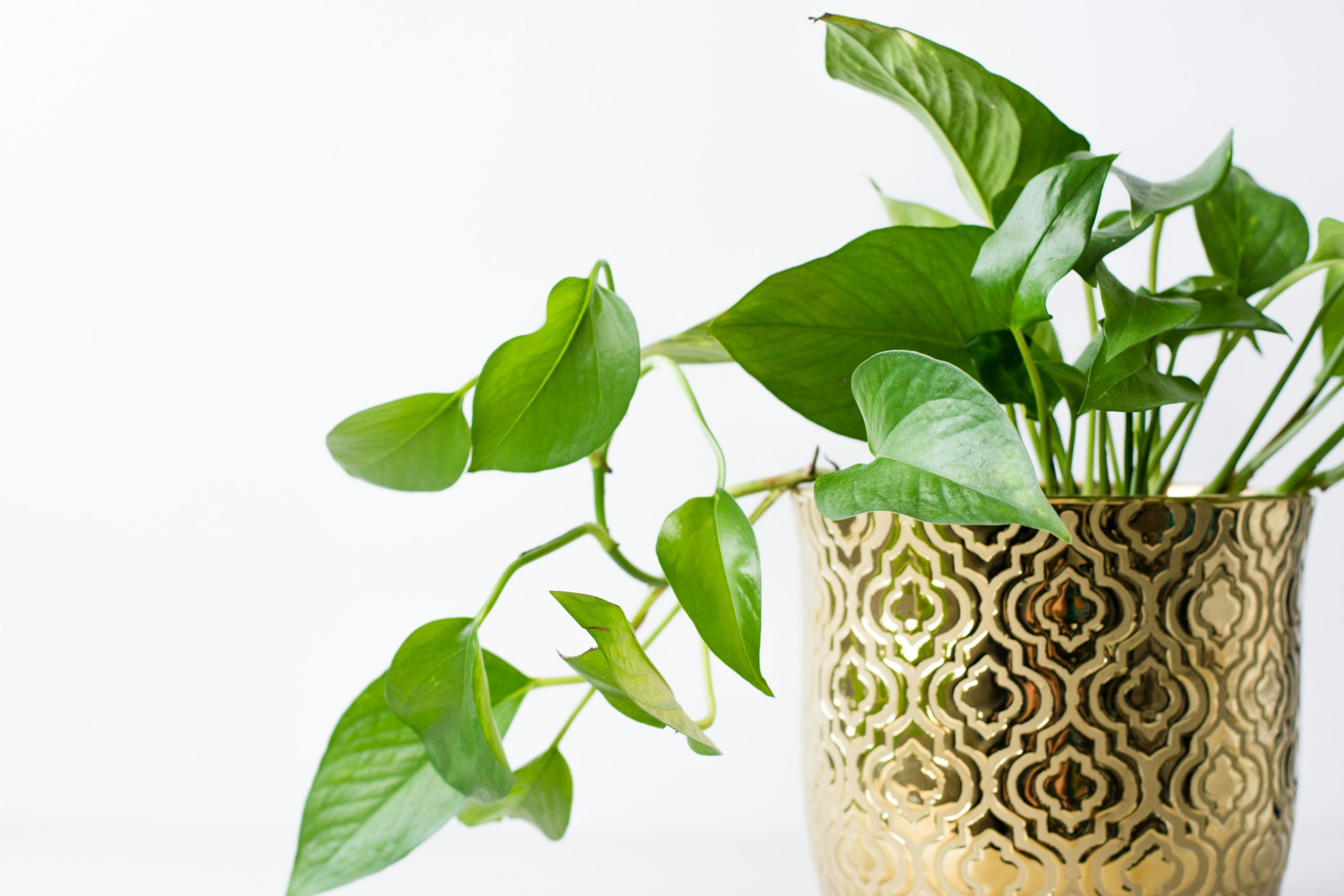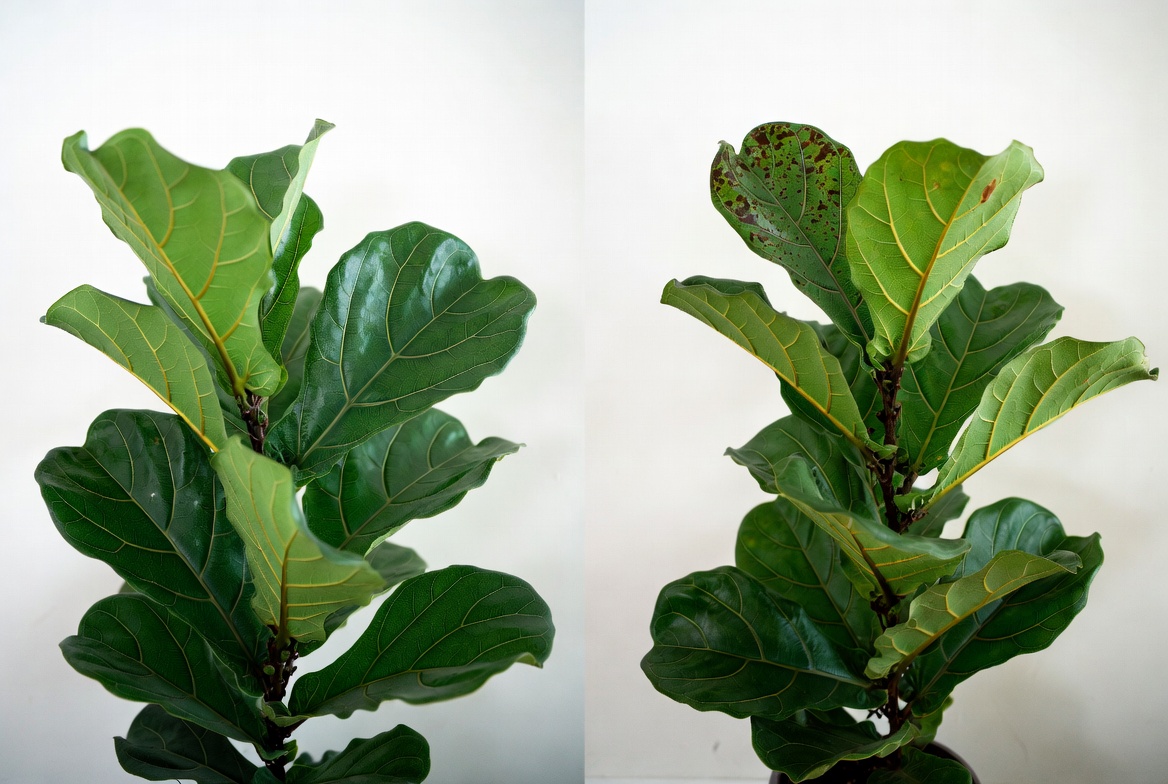
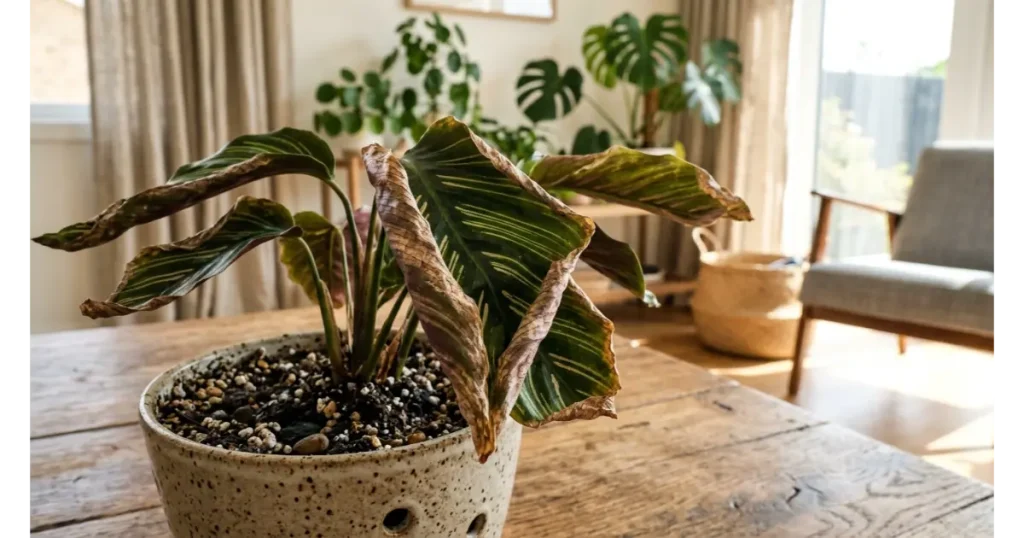
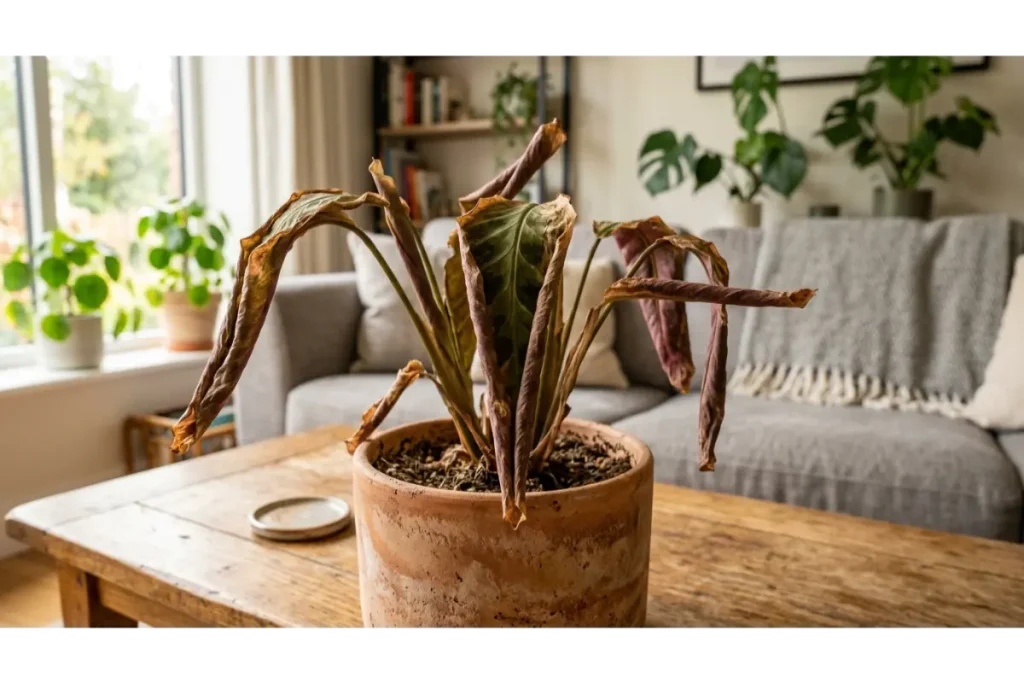
Asking why are my indoor plant leaves curling is a common reaction when seeing vibrant green leaves start to roll upward, cup downward, or pucker inward. This is a clear distress signal from your houseplant that requires immediate attention.
When foliage begins to lose its shape, it means the plant is trying to conserve moisture, protect itself from harsh environment changes, or defend against pest attacks. Understanding why are my indoor plant leaves curling allows you to diagnose the root cause early and apply simple care adjustments before permanent foliage loss occurs.
6 Causes & Fast Solutions for Why Are My Indoor Plant Leaves Curling
1. Underwatering & Dry Soil (Leaves Curling Inward)
The most frequent reason for leaf curling is moisture stress. When the root system lacks water, the plant reduces its surface area by curling its leaves inward to slow down transpiration (water evaporation).
- Symptoms: Leaves feel dry, paper-thin, or crispy along the edges. Soil is pulled away from the pot sides.
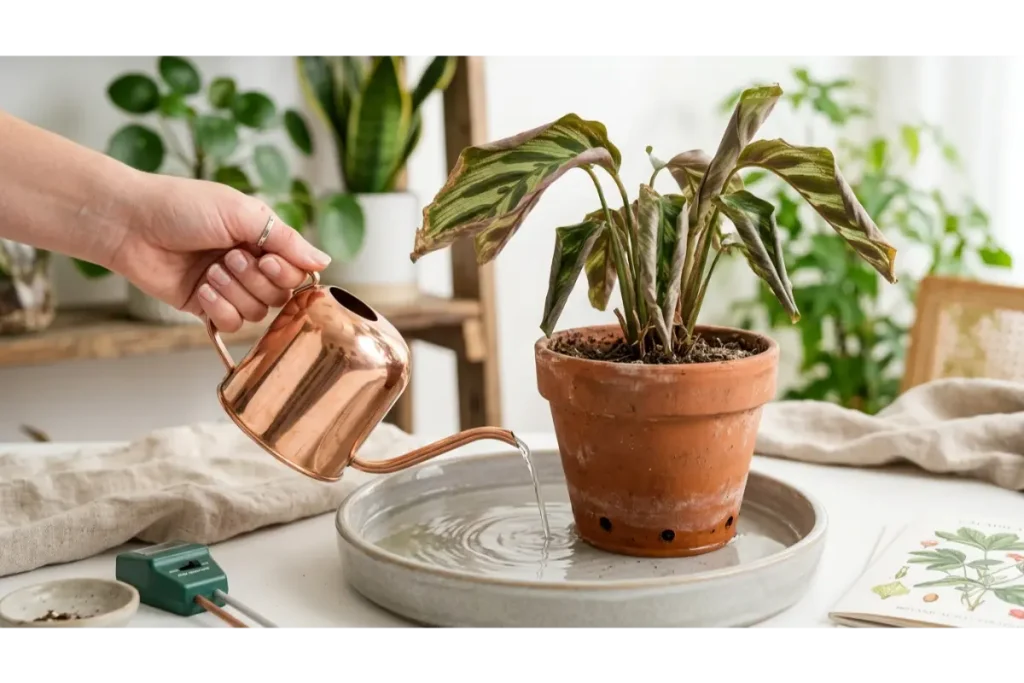
- How to Fix: Give your plant a thorough soak using the bottom-watering method. If you notice other stress signs like a mushy plant stem, check for root rot before adding more water.
2. Low Humidity & Dry Air
Tropical houseplants like Calatheas, Ferns, and Pothos rely on ambient humidity to keep their foliage plump. Indoor heating or air conditioning dries out the air, leading to curling leaf tips.
- Symptoms: Leaves curl along the outer margins accompanied by brown, crispy tips.
- How to Fix: Group moisture-loving plants together, place a pebble tray filled with water beneath the pot, or run a cool-mist humidifier nearby.
3. Pest Infestations
Sap-sucking pests gather on the undersides of foliage, draining vital plant juices and causing leaves to twist, cup, or pucker as they develop.
- Symptoms: Sticky residue (honeydew), fine webbing, or visible small insects under the leaves.
- How to Fix: Inspect your plant closely for common invaders like thrips on plants or tiny spider mites. Wipe down the foliage with insecticidal soap or diluted neem oil once a week until cleared.
4. Overwatering & Root Rot
Overwatering smothers the root zone, preventing the plant from taking up water and nutrients properly. Ironically, a drowned plant often displays the same curling leaves as a thirsty one.
- Symptoms: Leaves curl downward, feeling soft, limpy, or turning yellow before falling off.
- How to Fix: Allow the top 2 inches of soil to dry out between waterings. Ensure your pot has drainage holes. If you notice foliage discoloration turning dark, review our guide on indoor basil leaves turning black to understand how overwatering impacts leaf tissue.
5. Excessive Heat or Direct Light Exposure
Direct sunlight can burn sensitive indoor foliage and cause rapid water loss. Leaves will curl inward or downward to shield themselves from harsh light rays.
- Symptoms: Bleached or faded spots on the leaves alongside inward rolling.
- How to Fix: Move your plant a few feet away from south- or west-facing windows, or use sheer curtains to diffuse bright sunlight.
6. Fertilizer Burn & Salt Buildup
Over-fertilizing causes mineral salts to accumulate in the potting soil, damaging delicate feeder roots and drawing moisture out of the plant cells.
- Symptoms: Leaf tips curl downward with dark brown, crusty margins.
- How to Fix: Flush the potting mix with distilled water to drain away excess fertilizer salts, and hold off on feeding for at least 4 to 6 weeks.
Quick Diagnostic Checklist
| Symptom Appearance | Primary Cause | Immediate Solution |
| Crispy, inward curling leaves | Underwatering / Low Humidity | Deep water & boost air humidity |
| Soft, downward curling leaves | Overwatering / Root Distress | Let soil dry out; check drainage |
| Deformed or puckered growth | Pest Damage | Apply neem oil or insecticidal soap |
| Curling with leaf discoloration | Light / Heat Stress | Move to indirect sunlight |
Final Thoughts
Knowing why are my indoor plant leaves curling gives you the power to catch plant distress early and adjust your care routine. By checking soil moisture, raising indoor humidity, and keeping pests at bay, your houseplants will quickly recover their full, lush appearance.
Frequently Asked Questions
1. Can curled plant leaves return back to normal once the issue is fixed?
Yes, in many cases they can. If the leaf curling was triggered by underwatering, low humidity, or temporary light stress, the foliage will unroll and flatten back out within 2 to 4 days after you correct the care routine. However, if the leaves suffered severe structural damage from pests or prolonged root rot, those specific leaves may remain permanently warped or drop off to make way for new growth.
2. Should I cut off curled leaves from my houseplant?
You should not rush to prune them immediately. If the curled leaves are still green and flexible, they are actively photosynthesizing to supply energy to the root system. Only prune foliage that has turned completely yellow, brown, or dry and crispy. Always use sanitized shears when trimming dead leaves to prevent spreading fungal pathogens.
3. Why are only the new leaves on my indoor plant coming in curled?
When new unfurling growth emerges twisted or deformed, it is usually a sign of either a hidden pest infestation (like thrips or aphids) feeding inside the delicate growth tips, or an extreme drop in humidity. New foliage needs adequate moisture to expand smoothly. If you suspect pests are causing distorted growth, check our dedicated guide on scale infestation on plants to identify and treat sap-sucking insects early.
4. How can I tell the difference between overwatering and underwatering curling?
The best way to tell is by testing the foliage texture and pot weight. Underwatering causes leaves to curl upward and inward, feeling dry, papery, and light, while the potting mix is bone-dry. Overwatering causes leaves to curl downward, appearing soft, limp, and droopy, while the potting soil remains wet, heavy, and saturated.
5. Does fertilizer burn cause houseplant leaves to curl?
Yes. Over-fertilization leads to excess synthetic mineral salt buildup in the soil, which scorches tender root tips and disrupts water absorption. This manifests as downward curled, brown, or crispy leaf margins. If you suspect fertilizer burn, flush the soil with fresh water continuously for 5 minutes to leach out trapped mineral salts.
6. Can cold drafts cause houseplant leaves to curl overnight?
Absolutely. Tropical houseplants are highly sensitive to sudden drops in temperature below 65°F (18°C). Cold air blasts from uninsulated windows, exterior doors, or air conditioning vents cause cellular shock, prompting the foliage to curl tightly inward as a protective response.