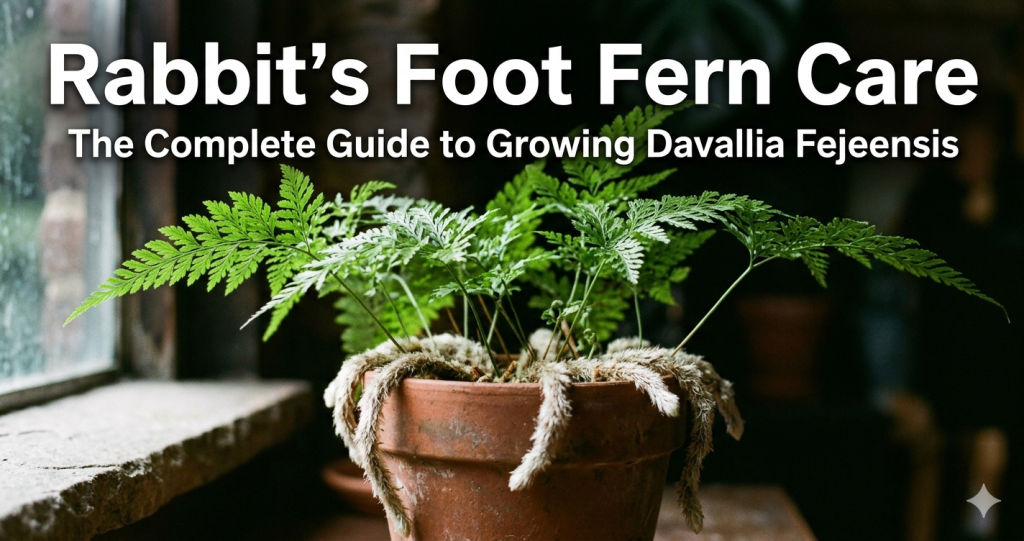
If you are looking for a fern that is a little more forgiving than the notoriously fussy maidenhair fern but just as visually interesting, the rabbit’s foot fern is an excellent choice. Named for its distinctive fuzzy rhizomes that creep over the edge of the pot and resemble a rabbit’s foot, this plant is genuinely unique in appearance and surprisingly easy to care for once you understand its basic needs. Here is everything you need to know about rabbit’s foot fern care.
What Is a Rabbit’s Foot Fern?
Rabbit’s foot fern (Davallia fejeensis) is a tropical fern native to Fiji and other Pacific islands. What makes it instantly recognizable is its silvery-brown, furry rhizomes that grow along the surface of the soil and eventually spill over the sides of the pot. These rhizomes are actually the plant’s stems, and the fronds grow upward from them.
The fronds themselves are finely divided, feathery, and bright green, giving the plant a delicate, lacy appearance that contrasts beautifully with the chunky, furry rhizomes below. Rabbit’s foot ferns are particularly well suited to hanging baskets, where the rhizomes can drape naturally over the sides, and the fronds can cascade downward.
Light Requirements
Rabbit’s foot ferns prefer bright, indirect light. They tolerate lower light conditions better than many other ferns, which makes them more adaptable to typical indoor environments. However, in very low light, growth slows significantly and the fronds may lose some of their vibrancy.
A spot near an east or north-facing window is ideal, providing good light without the intensity of direct afternoon sun, which can scorch the delicate fronds. If your only available spot gets direct sun, placing the plant a few feet back from the window or using a sheer curtain to filter the light will protect it.
Watering
One of the reasons rabbit’s foot ferns are considered more manageable than some other ferns is that they tolerate slightly drier conditions between waterings. Unlike the maidenhair fern, which needs consistently moist soil at all times, the rabbit’s foot fern can handle the top inch or two of soil drying out between waterings without going into immediate distress.
Water thoroughly when the top layer of soil feels dry, allowing excess water to drain completely through the drainage holes. Avoid letting the plant sit in standing water, since soggy soil is one of the main causes of root rot in this species.
One important note: avoid wetting the fuzzy rhizomes directly when watering. The rhizomes can rot if they stay consistently wet. Water the soil directly rather than pouring water over the top of the plant, or use bottom watering by placing the pot in a tray of water and allowing it to absorb moisture from below.
Humidity
Like most ferns, rabbit’s foot ferns prefer higher humidity and do best in environments where humidity stays above 40-50%. They are more tolerant of average household humidity than some of the more demanding ferns, but will show their best growth in humid conditions.
Placing the pot on a pebble tray filled with water, grouping it with other plants, or using a small humidifier nearby are all effective ways to raise humidity without misting the plant directly. Direct misting is best avoided, particularly on the rhizomes, since consistent moisture on the furry surface can encourage rot.
Temperature
Rabbit’s foot ferns prefer temperatures between 60-75°F (16-24°C) and should be kept away from cold drafts, air conditioning vents, and exterior doors during cold months. They are not frost tolerant and should never be exposed to temperatures below 50°F (10°C).
Soil and Potting
A well-draining potting mix is important for rabbit’s foot ferns. A mix of standard potting soil with added perlite works well, providing good drainage while retaining enough moisture for the plant’s needs.
Because the rhizomes grow along the surface and over the edges of the pot rather than deep into the soil, wide, shallow pots work better than deep ones. Hanging baskets are particularly popular for this fern since they allow the rhizomes to drape naturally and show off the plant’s unique growth habit.
When potting or repotting, avoid burying the rhizomes under soil. They are meant to sit on the surface or hang over the edge of the pot, and covering them can cause them to rot.
Fertilizing
Feed with a diluted, balanced liquid fertilizer once a month during spring and summer. Use it at half strength to avoid over-fertilizing, which can cause brown leaf tips. Stop fertilizing in fall and winter when the plant’s growth naturally slows down.

The Fuzzy Rhizomes: What to Know
The furry rhizomes are the most distinctive feature of this fern, and new owners sometimes worry about them or wonder if they should be buried or trimmed.
They should not be buried. The rhizomes are meant to grow along the surface and over the edge of the pot, and burying them will cause rot.
They should not be removed unless they are clearly dead or rotting. Healthy rhizomes are an active part of the plant’s structure and removing them can stress the plant.
If the rhizomes look dry or shriveled, it is usually a sign of low humidity or underwatering. Improving both will help them plump back up.
Common Problems
Brown or crispy frond tips. Usually caused by low humidity or inconsistent watering. Improve humidity levels and check your watering routine.
Yellowing fronds. Often a sign of overwatering or poor drainage. Check that the soil isn’t staying soggy between waterings.
Rotting rhizomes. Caused by consistently wet rhizomes, either from direct misting or overwatering. Let the soil dry out slightly more between waterings and avoid getting water directly on the rhizomes.
Slow or no new growth. Usually a combination of insufficient light and low humidity. Moving the plant to a brighter spot and increasing humidity will typically encourage new frond production.
Propagation
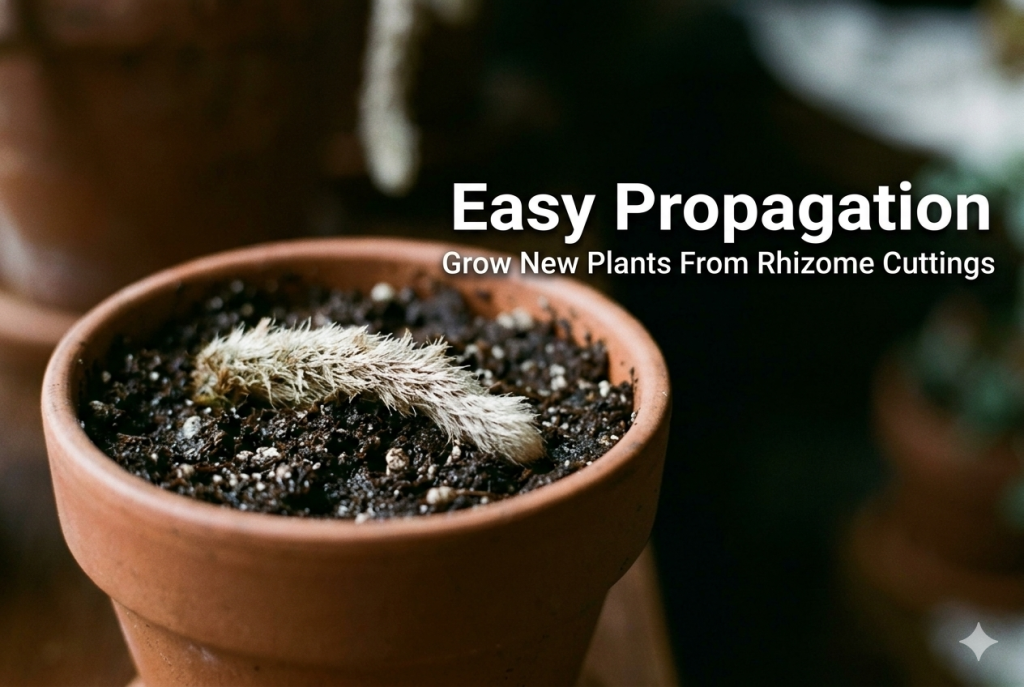
Rabbit’s foot ferns are easy to propagate from rhizome cuttings. Simply cut a section of healthy rhizome that includes at least one frond, lay it on the surface of moist potting mix, and secure it lightly with a pin or small stone so it stays in contact with the soil. Keep the soil moist and the cutting in bright indirect light, and new roots and fronds should develop within a few weeks.
Conclusion
Rabbit’s foot fern care is genuinely approachable, even for plant owners who have struggled with more demanding ferns in the past. With bright indirect light, a watering routine that allows the top of the soil to dry slightly between waterings, and reasonable humidity levels, this plant will reward you with beautiful, feathery fronds and those wonderfully unique fuzzy rhizomes that make it one of the most distinctive ferns you can grow indoors.
Frequently Asked Questions
Why are my rabbit’s foot fern’s rhizomes turning brown?
Some browning of the rhizomes is natural as they mature. However, if they are mushy or smell unpleasant, that indicates rot from overwatering or direct moisture on the rhizomes. If they are dry and shriveled, low humidity or underwatering is the more likely cause.
Should I bury the fuzzy rhizomes of my rabbit’s foot fern?
No, the rhizomes should sit on the surface of the soil or hang over the edge of the pot. Burying them can cause rot. They are designed to grow along surfaces rather than underground.
How often should I water my rabbit’s foot fern?
Water when the top inch or two of soil feels dry. This typically means watering every five to seven days in warmer months, though this varies depending on pot size, humidity, and light levels.
Can rabbit’s foot fern tolerate low light?
It tolerates lower light better than many other ferns, but still does best in bright indirect light. In very low light, growth slows and fronds may lose some color. Bright indirect light near a north or east-facing window is ideal.
Are rabbit’s foot ferns safe for cats and dogs?
Rabbit’s foot ferns are generally considered non-toxic to cats and dogs, making them a good choice for pet-friendly households. However, it is always a good idea to discourage pets from chewing on any houseplant as a precaution.