Introduction
Indoor gardening brings life, fresh air, and vibrant energy to your home, but nothing ruins the experience faster than a sudden swarm of tiny black flies buzzing around your pots. If you notice small, irritating insects hovering near the soil surface every time you water your plants, you are dealing with fungus gnats.
While the adult gnats are mostly a flying nuisance, their hidden larvae beneath the soil can chew on tender plant roots, stalling growth and leaving your green companions vulnerable to root diseases. Eradicating them requires more than just swatting the adults out of the air you have to disrupt their entire reproductive cycle. This comprehensive guide walks you through the exact, proven steps to eliminate fungus gnats from your indoor garden for good.
Understanding the Enemy: What Are Fungus Gnats?
Fungus gnats (Sciaridae) are small, weak-flying insects that resemble tiny mosquitoes. They are deeply attracted to moisture, organic matter, and the decay found in potting soil.
Unlike fruit flies, which hover around ripe kitchen produce or trash cans, fungus gnats stay close to the damp soil surfaces of houseplants. They feed on soil fungi and decaying organic material. A single female gnat can lay hundreds of eggs in her short lifespan of just a few days, meaning a minor issue can quickly spiral into a massive infestation if left unchecked.
The Real Culprit: Why Do Fungus Gnats Keep Coming Back?
Many plant parents struggle with gnats because they only target the flying adults using yellow sticky traps. However, adult gnats represent only about 15% of the total population. The real problem lies in the remaining 85%, which exist as hidden eggs, pupae, and larvae wriggling just beneath the top layer of your soil.
Gnats thrive and lay eggs exclusively in consistently wet soil. If your pots don’t drain properly, or if you practice frequent top-watering without letting the soil dry out, you are essentially providing a perfect breeding ground for these pests. To break the cycle permanently, you must eliminate the surface moisture they depend on and target the larvae directly where they live.
Step-by-Step Blueprint to Eliminate Fungus Gnats Permanently
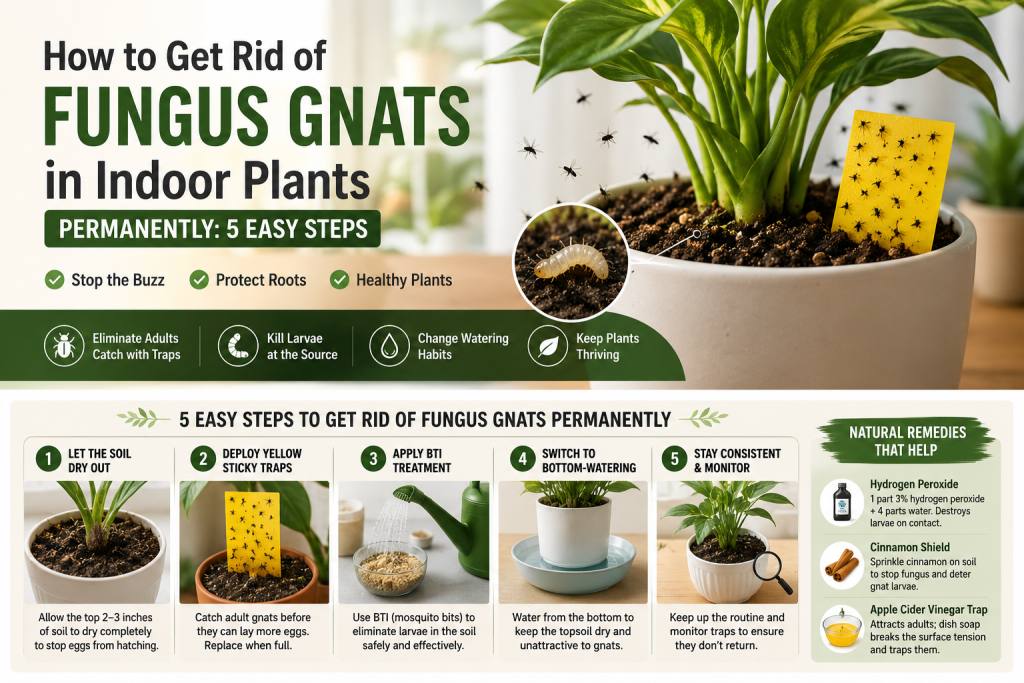
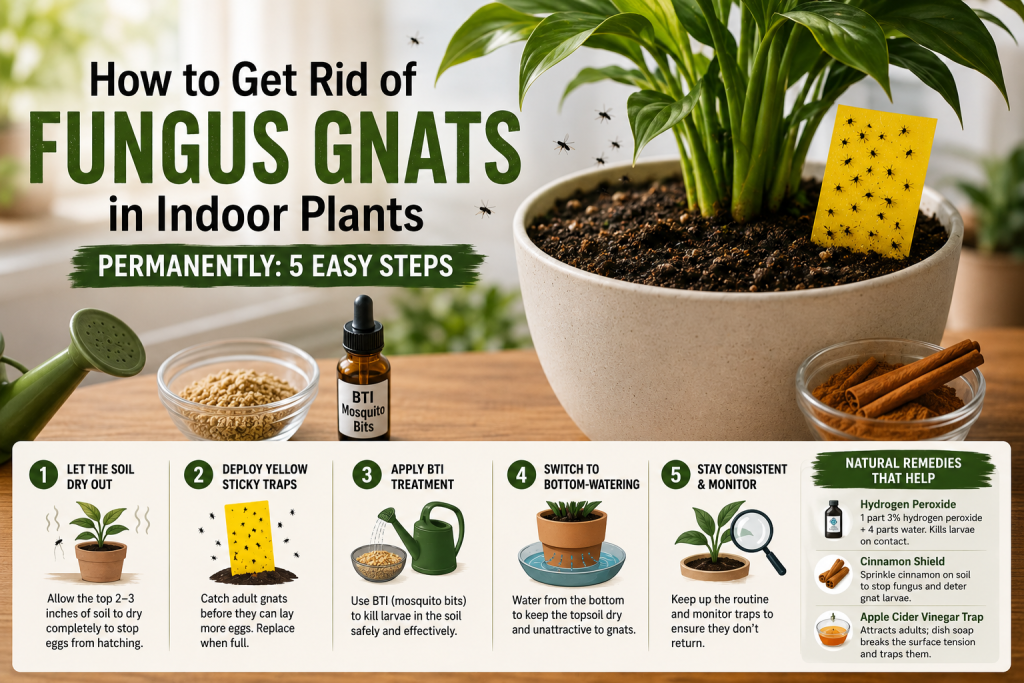
Step 1: Let the Soil Dry Out Completely
The simplest and most effective defense against fungus gnats is to alter their environment. Since larvae require constant moisture to survive, allowing the top two to three inches of soil to dry out thoroughly will naturally kill off a significant portion of the population and stop females from laying new eggs.
Step 2: Deploy Yellow Sticky Traps for Adults
While you target the soil, you need to catch the breeding adults. Place bright yellow sticky traps at the base of your infected pots, right at the soil level. Adult gnats are naturally drawn to the yellow color and will get stuck before they can lay more eggs. Replace these traps once they are covered in insects.
Step 3: Apply a Biological Larvicide (BTI Treatment)
To wipe out the larvae completely, use Bacillus thuringiensis israelensis (BTI), a naturally occurring bacterium that targets gnat larvae without harming your plants, pets, or family.
- Steep BTI granules or mosquito bits in your watering can for about 30 minutes.
- Strain out the bits and use the treated water for your regular plant care routine.
- When the larvae ingest the bacterium, it halts their internal development, breaking the life cycle within days.
Step 4: Switch to Bottom-Watering
To prevent future infestations, change how you water your plants. Instead of pouring water onto the top soil layer, place your pots in a shallow tray filled with water and allow the roots to soak it up from the bottom drainage holes. This keeps the top layer of the soil bone-dry and completely unattractive to passing gnats.
Natural and Home Remedies: Do They Work?
If you prefer a DIY approach before buying commercial treatments, several home remedies can assist in reducing gnat numbers:
- Hydrogen Peroxide Flush: Mix one part 3% hydrogen peroxide with four parts water. Pour it through the soil; it will fizz on contact, instantly destroying larvae while releasing oxygen into the root system.
- The Cinnamon Shield: Cinnamon is a natural fungicide. Dusting a generous layer of organic cinnamon powder over the top of your potting soil destroys the fungi that gnat larvae feed on, making the environment inhospitable.
- Apple Cider Vinegar Traps: Place small bowls filled with apple cider vinegar and a few drops of dish soap near your pots. The sweet scent attracts adults, and the soap breaks the surface tension, causing them to sink.
Frequently Asked Questions
What kills fungus gnats in indoor plants?
The most reliable method to kill fungus gnat larvae is applying BTI (mosquito bits) directly into the soil via watering, combined with placing yellow sticky cards around the pot to catch flying adults.
How do you 100% get rid of gnats?
To fully eradicate gnats, you must dry out the top layers of potting soil completely, capture the adult population with traps, and treat the soil with a biological larvicide or hydrogen peroxide mix to break the reproductive cycle.
What is the most effective fungus gnat killer?
BTI (Bacillus thuringiensis israelensis) is widely considered the most effective and safe solution for houseplant owners, as it selectively destroys gnat larvae without disrupting plant health or posing risks to domestic pets.
Can fungus gnats live without soil?
Adult fungus gnats can survive for a few days without soil, but they cannot reproduce. Their larvae strictly require a moist, organic medium like potting soil or decaying moss to feed and develop into adults.
Will vinegar attract and kill fungus gnats?
Yes, apple cider vinegar works well to attract adult fungus gnats due to its fermenting scent. Adding a few drops of liquid dish soap to a shallow bowl of vinegar ensures the gnats sink and drown upon contact.