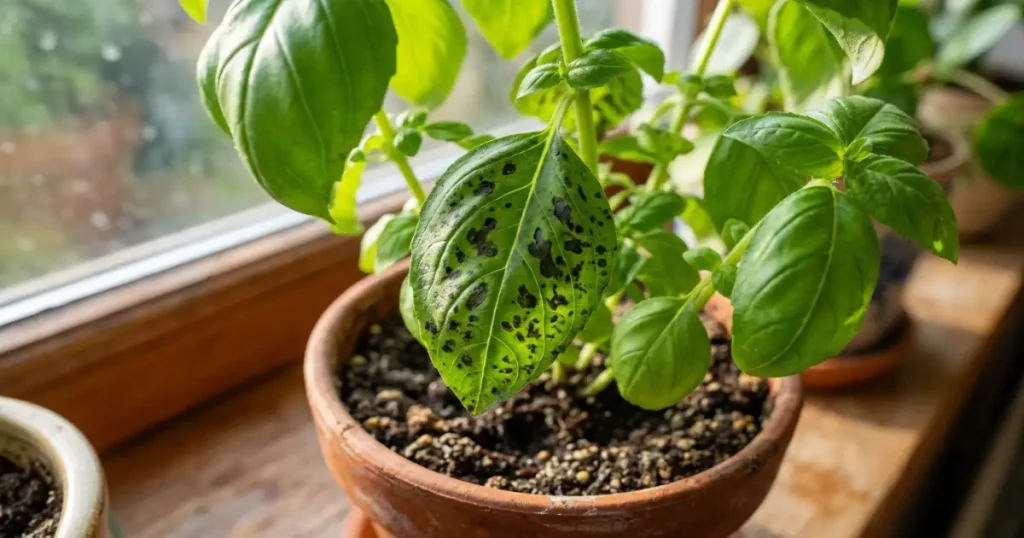
Discovering indoor basil leaves turning black can be alarming for any herb gardener. Basil (Ocimum basilicum) is celebrated for its lush green foliage and vibrant culinary scent, but its soft leaves are exceptionally sensitive to environmental stress, watering imbalances, and fungal pathogens. When indoor conditions fall outside the plant’s ideal range, broad green foliage can rapidly develop dark, necrotic spots or turn entirely black.
To treat indoor basil leaves turning black, you must accurately diagnose whether the issue stems from abiotic factors like temperature shock and root suffocation, or biotic threats like fungal leaf spot. By identifying the root cause early and adjusting your indoor growing environment, you can stop tissue decay and encourage fresh, healthy shoots.
Technical Specifications: Basil Leaf Discoloration Matrix
| Symptoms & Visual Indicators | Primary Cause | Environmental Trigger | Immediate Corrective Action |
| Soft, water-soaked black patches starting at leaf tips | Cold Shock / Drafts | Temperatures below 50°F (10°C) | Move away from cold windows and air conditioning vents |
| Black, mushy stems accompanied by yellowing lower leaves | Root Rot / Soil Suffocation | Waterlogged soil & poor pot drainage | Aerate soil, reduce watering, repot with perlite mix |
| Yellow halos surrounding distinct black spots across leaves | Fungal Leaf Spot (Cercospora) | Excess overhead misting & high humidity | Prune infected leaves, improve airflow, apply copper fungicide |
| Fuzzy dark growth beneath leaves with top surface blackening | Basil Downy Mildew | Poor air circulation & wet foliage | Remove affected foliage, isolate plant, increase ventilation |
| Pinpoint black specks, sticky residue, and speckled leaves | Pest Infestation (Thrips/Aphids) | Low room humidity & dry indoor air | Wash foliage with insecticidal soap or diluted neem oil |
Why Is Your Indoor Basil Turning Black? 5 Root Causes
1. Temperature Drops & Cold Drafts
Basil is a tender annual that thrives in warm Mediterranean conditions. Exposure to cold drafts from winter windows, air conditioning units, or sudden night-time temperature drops below 50°F (10°C) causes rapid cell wall breakdown. This cellular damage turns delicate green leaves dark gray or black overnight.
2. Overwatering & Root Rot
While basil requires consistent moisture, overwatering deprives the root system of oxygen. Saturated soil leads to root decay (Pythium or Rhizoctonia fungal infections), preventing the roots from transporting nutrients upward. As the root system collapses, leaf margins turn black, soft, and limp.
If you notice similar soft decay spreading along the stems of other plants in your indoor garden, consult our diagnostic guide on why is my indoor plant stem mushy for emergency plant care procedures.
3. Fungal Diseases (Downy Mildew & Cercospora)
Fungal pathogens thrive in warm, high-humidity indoor environments with restricted airflow.
- Basil Downy Mildew (Peronospora belbahrii): Causes broad yellowing on leaf tops paired with a purplish-gray fungal growth underneath, eventually leading to large blackened areas.
- Cercospora Leaf Spot (Cercospora ocimicola): Characterized by small, circular dark spots with light centers that merge until the entire leaf turns dark and drops off.
4. Poor Air Circulation & Overhead Misting
Misting basil foliage to boost humidity often backfires indoors. Water droplets sitting on leaf surfaces for extended periods create an ideal breeding ground for bacterial and fungal spores. Coupled with stagnant indoor air, wet leaves rapidly develop dark necrotic patches.
5. Sap-Sucking Pest Infestations
Insects like thrips, spider mites, and aphids pierce basil leaf tissue to extract sap. Severe feeding damage destroys local plant cells, leaving behind dark, scarred patches. Additionally, honeydew excreted by aphids can host black sooty mold, coating the leaves in a dark, velvety layer.
If pest stress is causing foliage distortion across your windowsill herbs, read our guide on why are my indoor plant leaves curling to restore healthy growth patterns.
Step-by-Step Action Plan: How to Fix Black Basil Leaves
- Step 1: Prune Affected LeavesUse clean, sterilized pruning shears to snip off all blackened, spotted, or diseased leaves. Discard infected plant material in the trash to prevent fungal spores from spreading to nearby foliage.
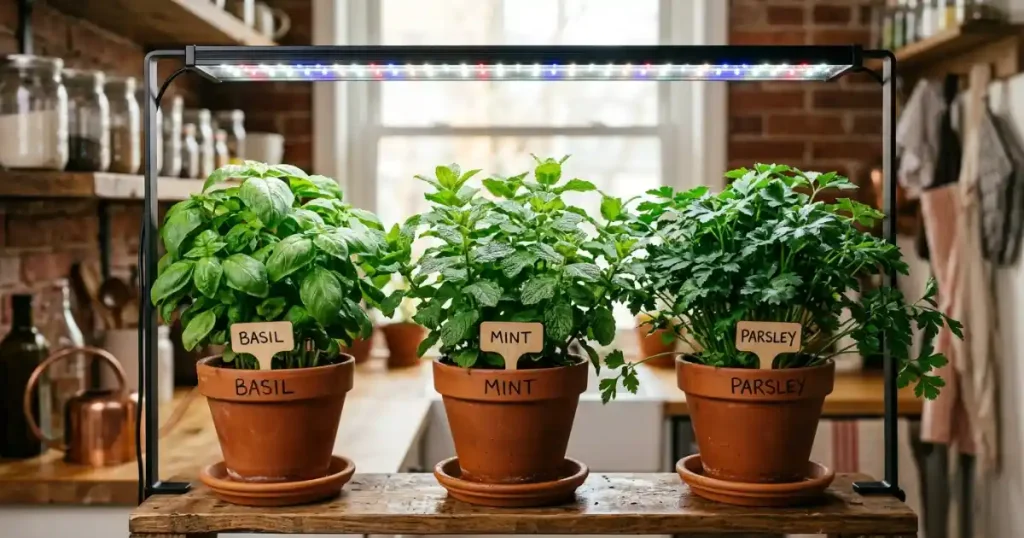
- Step 2: Optimize Light & TemperaturePlace your basil pot in a location that receives at least 6 to 8 hours of bright, indirect sunlight or beneath an LED grow light. Ensure ambient room temperatures remain between 65°F and 80°F (18°C to 27°C) day and night.
- Step 3: Refine Your Watering TechniqueAlways apply water directly to the soil surface using a long-spouted watering can. Never pour water over the top of the plant canopy or mist the foliage. Allow the top inch of soil to dry out between waterings.If you suspect soil moisture imbalances or translucent patches are developing on nearby tropical foliage, refer to our troubleshooting overview on transparent spots on plant leaves.
- Step 4: Improve Room VentilationSet up a small oscillating fan on a low setting near your herb collection to encourage continuous air movement. Good ventilation helps foliage dry quickly and deters pest populations.To prevent gnats from colonizing damp potting soil, learn how to get rid of fungus gnats permanently using biological controls.
Indoor Basil Care Checklist
| Care Parameter | Optimal Indoor Standard | Warning Sign of Stress |
| Light Exposure | 6-8 hours direct/bright indirect or 12 hours LED grow light | Stretchy, pale stems |
| Temperature | 65°F to 80°F (18°C to 27°C) | Blackened leaf margins after cold nights |
| Watering | Water soil directly when top inch feels dry | Soft, wilting black leaves (overwatering) |
| Soil Mix | Well-draining peat/coco coir with 30% perlite | Heavy, waterlogged potting medium |
| Potting Container | Terracotta or plastic pot with drainage holes | Water pooling in saucers |
Final Thoughts
Addressing indoor basil leaves turning black requires prompt action to correct environmental conditions before permanent damage occurs. By providing warm temperatures, direct soil watering, adequate spacing, and bright sunlight, you can eliminate black spots and enjoy a continuous harvest of aromatic basil leaves all year round.
Frequently Asked Questions
1. Can I eat basil leaves that have turned black?
No. Leaves that have turned black due to fungal infections, cold shock, or bacterial rot should not be consumed. They lose their culinary flavor and may harbor pathogens. Snip off affected foliage and harvest only healthy green leaves.
2. Should I prune off all black leaves on my basil plant?
Yes. Immediately prune off black or spotted leaves using clean shears. Removing damaged foliage stops the spread of fungal spores and allows the plant to direct its energy toward generating healthy new growth.
3. Why are my indoor basil leaves turning black in winter?
Winter blackening is usually caused by cold drafts from nearby window panes or dry, stagnant indoor conditions. Move your basil pot a few inches back from cold glass and ensure room temperatures stay above 65°F (18°C).
4. How do I prevent black spots on indoor basil?
Prevent black spots by watering directly at the base of the plant, avoiding leaf misting, providing at least 6 hours of light, maintaining warm temperatures, and keeping an oscillating fan running nearby for proper air circulation.
5. Will a basil plant recover after its leaves turn black?
Yes, provided the stem and root system remain healthy and firm. Once you remove the damaged leaves and adjust light, temperature, and watering routines, fresh green shoots will emerge within 1 to 2 weeks.