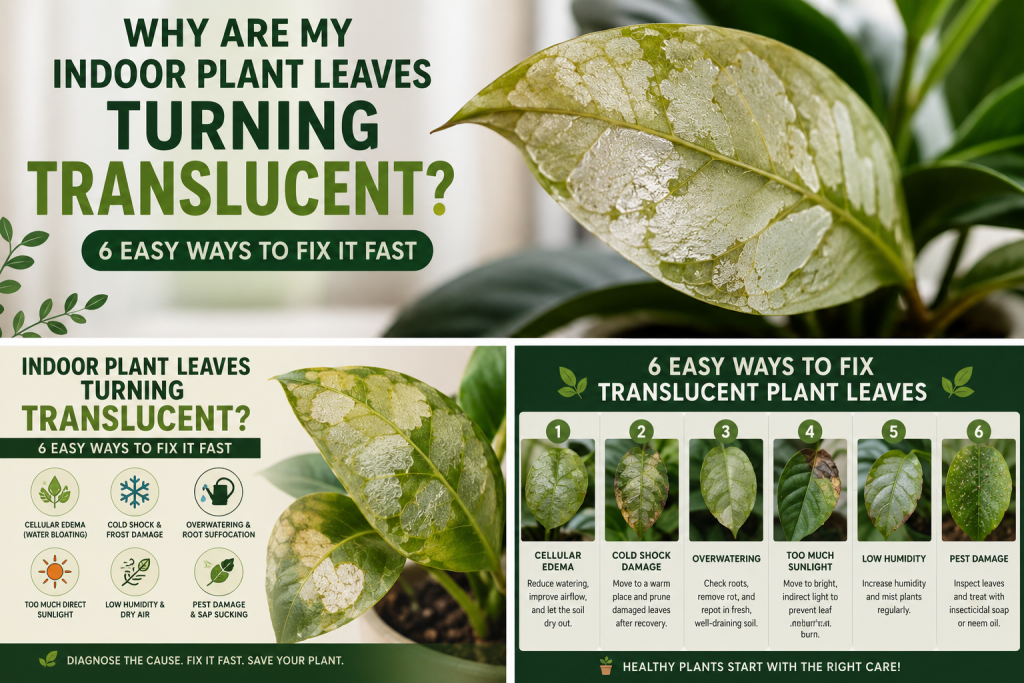
Why are my indoor plant leaves turning translucent all of a sudden? Walking over to your indoor jungle only to notice that your plants’ once-vibrant green foliage is starting to look thin, clear, or almost glass-like can be deeply unsettling. Unlike typical yellowing or crisping, translucent plant leaves look physically washed out, as if the green pigment has been completely drained from the cells, leaving behind a pale, see-through tissue.
When a leaf turns translucent, it is experiencing severe cell collapse. In an indoor setting, plant cells maintain their rigid, opaque green appearance thanks to light-absorbing chlorophyll and steady internal water pressure. If that cellular structure is suddenly ruptured, flooded with too much moisture, or destroyed by extreme temperatures, the internal fluids leak out, causing the tissue to lose its density and turn transparent.
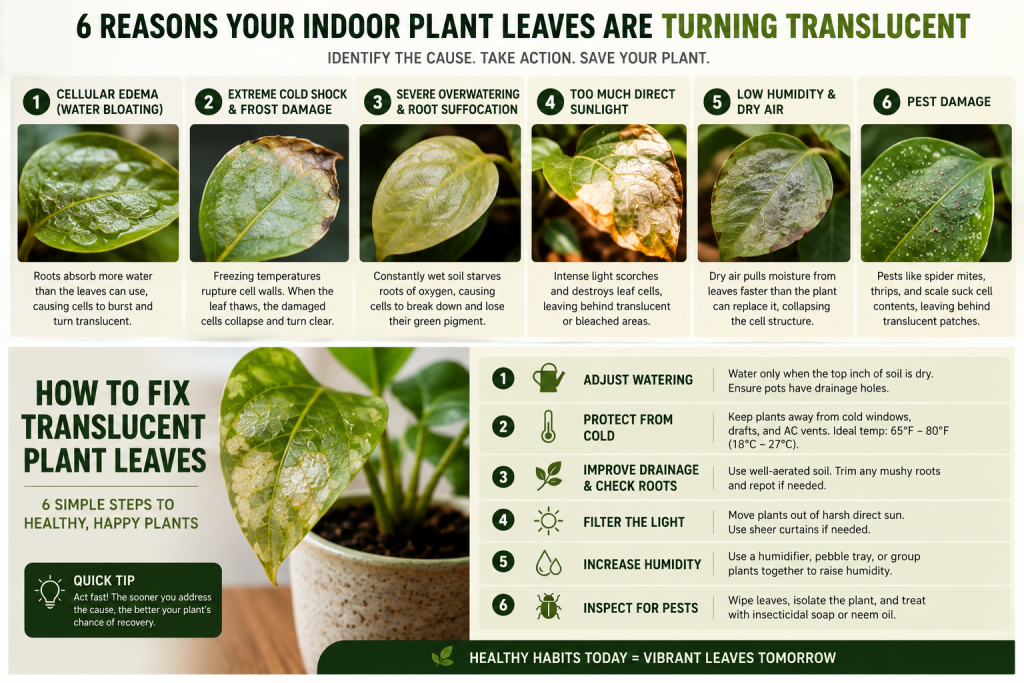
To stop this structural breakdown from spreading to the rest of your plant’s foliage, you must pinpoint the exact environmental trigger behind the cellular failure. Here is a definitive diagnostic guide to the 6 hidden causes making your plant leaves translucent and exactly how to fix it fast.
The Internal Mechanics of Transparent Foliage
To successfully treat translucent leaves, you need to understand what is happening inside the plant tissue. Translucency is not a slow disease; it is an immediate physical response to cellular trauma. When the walls of the individual plant cells break open, the green chloroplasts are destroyed, and the internal moisture floods the spaces between the cells. This creates a wet, windowpane effect that can quickly turn mushy and lead to widespread decay if ignored.
1. Cellular Edema (Internal Water Bloating)
By far the most common cause of transparent or wet-looking spots on houseplant leaves is a physiological condition known as cellular edema. Edema occurs when an indoor plant’s roots absorb significantly more water from the soil than the leaves can naturally transpire into the surrounding air. This typically happens when you water a plant heavily during a period of high humidity or low light, where evaporation slows down. The plant cells take on so much water that they stretch, blister, and physically burst under the pressure, leaking fluid into the surrounding leaf tissue.
The Warning Signs:
The transparency usually starts as small, water-soaked, translucent spots on the undersides of the lower leaves. Over time, these clear patches can spread across the entire leaf, making the tissue feel soft, waterlogged, and limp. It is incredibly common in thick-leaved plants like Peperomias, Hoyas, and various Philodendrons.
How to Fix It:
Immediately stop watering and allow the potting mix to dry out thoroughly. Move your plant to a location with better air circulation, or run a small fan nearby to help the leaves transpire more efficiently. Never leave your plant pot sitting in a drainage saucer filled with stagnant water. Once you adjust your watering schedule and let the soil dry between drinks, the plant will stabilize, though severely burst leaves may need to be pruned away.
2. Extreme Cold Shock and Frost Damage
Many popular indoor houseplants are native to tropical climates where temperatures never drop below freezing. When a plant is subjected to a sudden blast of freezing air—such as being left near an open window in winter, sitting in the path of a powerful air conditioning vent, or being transported outdoors in the cold—the water inside the leaf cells literally freezes into microscopic ice crystals. These sharp ice crystals puncture the delicate cell walls from the inside out. When the air warms back up, the punctured cells collapse entirely and liquefy, leaving behind a translucent, clear, or jelly-like appearance.
The Warning Signs:
The leaves turn translucent almost overnight after a sudden drop in room temperature. The clear patches will appear uniformly across the most exposed outer edges of the foliage. Within a few days, these translucent zones will oxidize, turning from clear to a dark, mushy black or brown. This is highly common on sensitive varieties like the Spider Plant, Pothos, and Alocasias.
How to Fix It:
Move your cold-stressed plant to a warm, stable room immediately, keeping temperatures safely between 65°F to 80°F (18°C to 27°C). Do not prune the clear leaves immediately; wait a few days to see exactly where the boundaries of the permanent damage are. Once the translucent areas dry up and turn brown, use a pair of sterilized scissors to clip away the dead tissue just above a healthy green node to encourage fresh, warm-weather growth.
3. Severe Overwatering and Root Suffocation
While edema causes localized cell bursting, chronic overwatering can cause the entire leaf structure to lose its green pigment and turn thin and translucent. When the soil is kept continuously wet, the roots are starved of vital oxygen. Without oxygen, the roots cannot generate the energy needed to process nutrients or maintain the cellular integrity of the upper foliage. The cells in the leaves begin to starve, break down, and shed their chlorophyll, leading to a weak, transparent look.
The Warning Signs:
The entire leaf turns a pale, washed-out, semi-translucent yellow or clear color, feeling incredibly soft and droopy rather than dry. The soil remains wet and heavy for weeks at a time, and the stems near the base may begin to soften or turn dark.
How to Fix It:
Slide the plant gently out of its container and inspect the root system. If you notice mushy, black roots, trim them away with sterilized shears. Repot the plant into fresh, dry, highly aerated soil mixed with plenty of perlite or orchid bark to guarantee rapid drainage. Moving forward, use the finger test: only water when the top two to three inches of soil feel completely dry to the touch.
4. Intense Sun Scald and Chlorophyll Bleaching
While a lack of light can cause paleness, exposing a shade-loving tropical houseplant to harsh, direct afternoon sunlight can physically bleach the foliage. Extreme, unfiltered UV rays can destroy the chlorophyll molecules inside the leaf tissue faster than the plant can reproduce them. Without chlorophyll to mask the inner structure, the leaf tissue looks thin, white, and translucent before drying up completely.
The Warning Signs:
The translucent patches appear exclusively on the upper surfaces of the leaves that are directly facing the window or light source. The protected lower leaves will remain perfectly green. The transparent patches will feel dry, papery, and brittle rather than wet or mushy.
How to Fix It:
Move your plant several feet back from the window, or hang a sheer, transparent curtain across the glass to diffuse the intense, direct sunbeams. Most indoor tropicals thrive in bright, indirect light. Cut away any heavily bleached, papery leaves that are more than 50% transparent, as they can no longer photosynthesize, and let the plant focus its energy on fresh, shaded growth.
5. Severe Nutrient Deficiencies (Nitrogen and Iron)
Plants rely heavily on specific macro and micronutrients to continuously manufacture chlorophyll and maintain strong cell walls. If a plant has been growing in the exact same potting soil for years without being refreshed or fertilized, the soil becomes completely depleted of nutrients. A severe lack of Nitrogen or Iron means the plant can no longer produce green pigments, causing the newest leaves to emerge incredibly pale, thin, and semi-translucent.
The Warning Signs:
The transparency develops gradually over several weeks or months. In an iron deficiency, the new leaves will turn almost entirely clear or white while the tiny veins remain green (interveinal chlorosis). The plant’s overall growth will stunt completely.
How to Fix It:
Flush the soil with clear water to remove any old salt crusts, then feed your plant with a high-quality, balanced liquid indoor fertilizer that includes chelated iron, nitrogen, and micronutrients. For a quick recovery, apply a diluted foliar spray directly to the leaves so they can absorb the nutrients instantly. Moving forward, make it a habit to repot your houseplants into fresh, nutrient-rich potting mix every one to two years.
6. Microscopic Pest Damage (Thrips and Spider Mites)
Tiny, aggressive indoor pests like thrips and spider mites do not chew holes through leaf edges; instead, they use sharp, piercing mouthparts to puncture individual plant cells and suck out the cellular contents, including the chlorophyll. When thousands of these microscopic insects attack a single leaf simultaneously, they completely hollow out the cell layers, leaving behind nothing but the clear, transparent outer skin of the leaf.
The Warning Signs:
The leaves develop silvery, metallic, or semi-translucent patches that look like tiny windows. If you look closely under a bright light, you may see tiny black specks of pest waste, fine spider-like webbing on the leaf joints, or microscopic insects crawling inside the clear zones.
How to Fix It:
Move the infested plant to an isolated room immediately to protect your other greenery. Take the plant to the shower or sink and thoroughly rinse the foliage with a firm stream of lukewarm water to blast away the majority of the bugs. Once dry, spray the entire plant—especially the undersides of the leaves—with organic insecticidal soap or neem oil. Repeat this treatment once a week for three consecutive weeks to completely eliminate any newly hatched pests.
Conclusion
Figuring out why are my indoor plant leaves turning translucent comes down to checking the physical texture of the transparent zones. If the clear patches feel wet, soft, and blistered, you are likely dealing with overwatering or internal bloating from edema. If the transparent areas appeared overnight after a cold spell or feel dry and papery, temperature shock or sun scald is the culprit. By matching the texture to the right fix, you can stop cell collapse in its tracks and keep your indoor garden strong, green, and vibrant.
Frequently Asked Questions
1. Can a translucent plant leaf ever turn green again?
No, once a leaf has turned completely translucent due to cell collapse, frost damage, or a severe pest attack, those individual cells are permanently broken and empty. They cannot regenerate chlorophyll or rebuild their walls. If the transparency is confined to small spots, the rest of the leaf can survive, but if the entire leaf is clear and limp, it is best to prune it off so the plant can divert its energy toward fresh, healthy green foliage.
2. Is leaf translucency contagious to my other indoor plants?
The translucency itself is a physiological reaction to environmental stress and is not contagious. However, if the root cause behind the clear leaves turns out to be a massive thrips or spider mite infestation, those pests can easily crawl or fly to neighboring plants and cause similar translucent damage. Always isolate a plant showing clear leaves until you rule out pests.
3. Why do my Philodendron leaves look translucent after watering?
If your Philodendron leaves look clear or water-soaked immediately after a deep watering, it is a classic sign of temporary edema or localized flooding of the leaf tissue. If your room has low airflow or high humidity, the plant cannot sweat out the excess moisture fast enough. Move the pot to an area with active air circulation and wait until the soil dries out completely before adding any more water.
4. How can I tell the difference between a sunburn and cold damage transparency?
Look at the timing and the texture of the clear patches. Cold damage happens suddenly overnight during winter or after exposure to a draft, making the leaf feel soft, jelly-like, and wet before it eventually turns black. Sunburn develops during bright, hot summer days on leaves closest to the window, and the resulting translucent patches are instantly dry, crisp, and papery to the touch.
5. Does high humidity cause indoor plant leaves to turn transparent?
High humidity on its own does not turn leaves transparent, but when combined with heavy watering and low light, it blocks the plant’s ability to evaporate water from its leaves. This causes water pressure to back up inside the plant, leading to burst cell walls and transparent edema spots. Always pair high humidity with good ambient air movement to keep your plants safe.