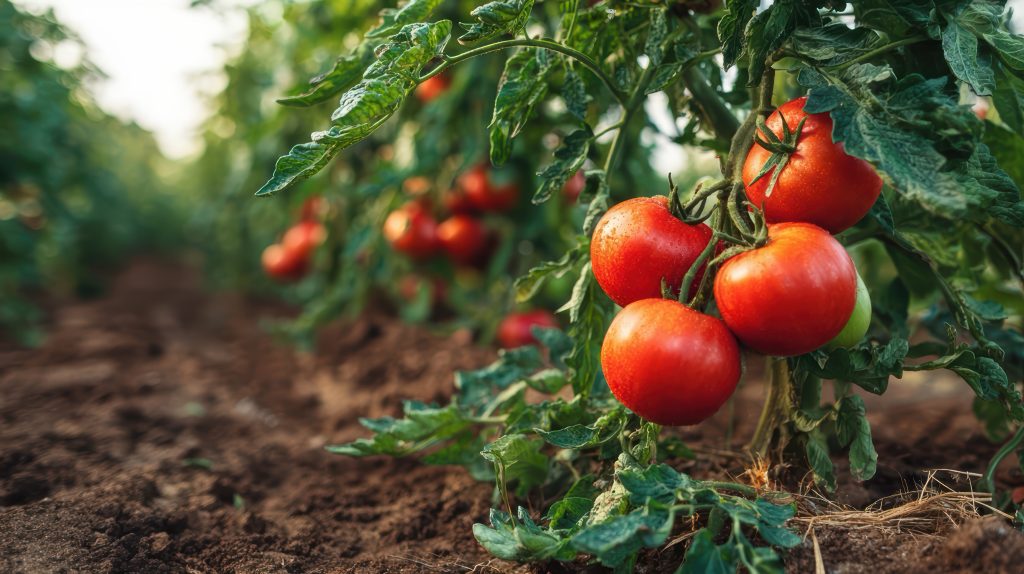
Growing tomatoes indoors is one of the most rewarding projects for any edible garden enthusiast, but it comes with a unique set of challenges. There is nothing more frustrating than waking up to see your vibrant, healthy plant covered in yellow blossoms, only to watch them wither away, turn brittle, and drop off one by one, leaving you with zero fruit. If you are currently staring at a beautiful green bush and wondering why your indoor tomato plant is not fruiting, you are likely missing a key environmental piece of the puzzle that nature usually handles for free outdoors.
Indoor environments lack the two most critical components for tomato reproduction: natural wind currents and wandering wild pollinators like bumblebees. Unlike other house plants that rely on cross-pollination, tomatoes are self-pollinating, meaning each individual flower contains all the necessary reproductive machinery. However, they need physical movement to shake pollen from the top of the flower to the bottom sticky stigma. If your plant is stagnant and isolated from moving air, those flowers will never set fruit.
To help you turn those sad, dropping blossoms into a bountiful, juicy harvest, here is the ultimate, in-depth troubleshooting blueprint to discover exactly why your plant is struggling and the 5 best proven fixes to get your indoor tomato plant fruiting heavily.
The Indoor Biology: How Tomato Pollination Works
To fix a fruiting problem, we first need to look at the anatomy of a tomato blossom. Tomato flowers are known as “perfect” or bisexual flowers. This means that both the male pollen-producing anthers and the female pollen-receiving stigma are housed entirely within the exact same yellow petal cone.
In an outdoor garden, a bumblebee lands on a flower and vibrates its wings at a specific frequency—a process known as “sonication,” or buzz pollination. This vibration causes a microscopic explosion of pollen inside the cone, dropping it straight down onto the stigma, completing the fertilization process within milliseconds. Wind achieves a similar, albeit less efficient, result by constantly rocking the branches.
When you bring a tomato plant indoors, the air is completely still. The pollen remains locked inside the anther tubes, heavy and immobile. Without a physical force to disrupt the pollen, the flower reaches the end of its natural lifecycle without being fertilized. Once the plant realizes a flower hasn’t been pollinated, it cuts off the cellular nutrient supply to that specific stem, causing the entire blossom to drop. This is famously known in the agricultural world as blossom drop.
1. You Must Manually Pollinate (The Mechanical Triggers)
Since your kitchen or grow room lacks wind and insects, you must step in and perform manual pollination daily. This is the single most effective solution to fix an indoor tomato plant that refuses to set fruit.
The Best Techniques
- The Electric Toothbrush Method (The Pro Trick): Buy a cheap electric toothbrush and use it solely for your plants. Turn it on and gently press the back of the vibrating brush head (not the bristles) against the thin green stem directly behind an open flower cluster. Hold it there for 2 to 3 seconds. If your lighting and humidity are perfect, you will literally see a tiny cloud of yellow dust shake out of the flowers.
- The Gentle Finger Tap: If you don’t have an electric toothbrush, simply go to your plant every single morning between 10:00 AM and 12:00 PM (when humidity is lowest and pollen is driest) and gently flick or tap the main flowering branches with your index finger.
- The Cotton Swab Fallacy: Many beginner indoor gardeners try to use a cotton Q-tip to pollinate tomatoes, just like they would for cucumbers or squash. However, because tomato reproductive organs are tightly enclosed inside a narrow cone, a cotton swab is often too large and bulky to reach the pollen properly, and it can accidentally bruise the delicate internal tissues of the flower. Stick to vibration methods instead.
2. Correct Suboptimal Temperature and Sticky Humidity
You can shake your tomato flowers all day long, but if your indoor room parameters are out of bounds, the pollen itself becomes structurally unviable. Tomatoes are incredibly sensitive to environmental extremes during their reproductive phase.
Temperature Boundaries
Tomato pollen thrives in a relatively narrow temperature window. Ideally, your indoor grow space should remain between 65°F and 80°F (18°C to 27°C) during the day, and should never drop below 55°F (13°C) or rise above 85°F (29°C) at night.
- Extreme Heat: If your indoor setup is next to a scorching radiator or inside an unventilated grow tent that exceeds 85°F, the heat effectively cooks the pollen, making it sterile. The flower will look healthy, but fertilization becomes biologically impossible.
- Extreme Cold: If temperatures drop too low, the plant enters a survival mode, dropping flowers to conserve core cellular energy.
Humidity Limitations
Humidity determines the physical texture of the pollen grains:
- High Humidity (Above 70%): If your air is too humid or sticky, the microscopic pollen grains absorb excess moisture from the air, becoming heavy, wet, and clumpy. Clumpy pollen cannot break free from the anthers when shaken.
- Low Humidity (Below 40%): If your home is dried out by artificial heating, the pollen becomes so dry that it loses its natural stickiness, failing to adhere to the female stigma even if it falls directly onto it. Aim for a balanced indoor humidity sweet spot of 50% to 60%.
3. Solve the Hidden Light Deficit (Lux and PAR Reality)
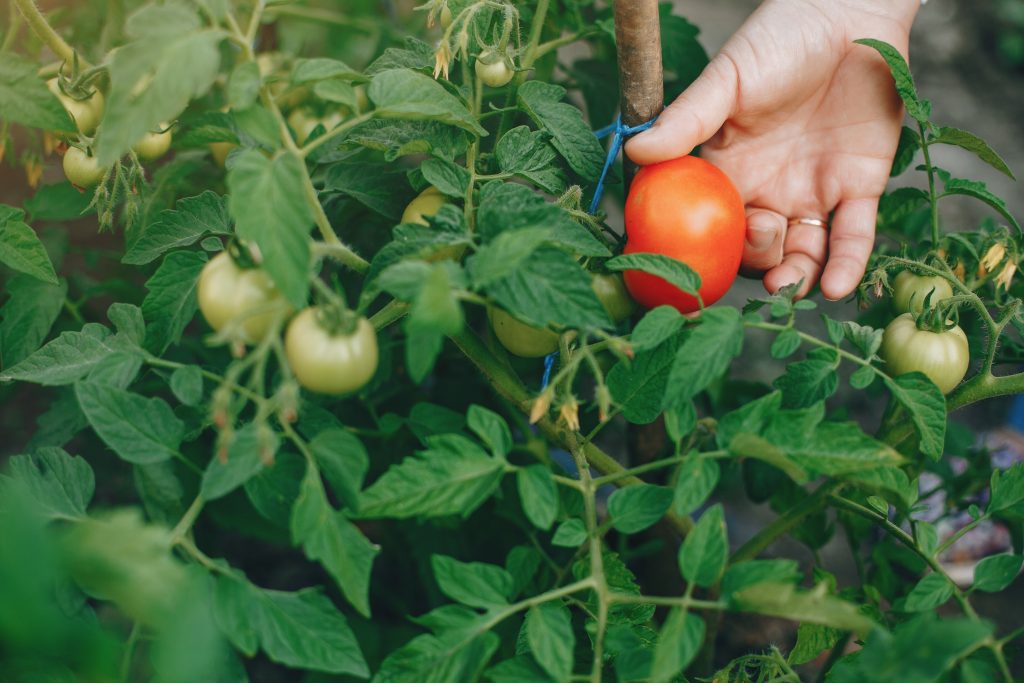
Tomato plants are extreme “sun-hungry” crops. They are classified as high-energy plants, meaning they require massive amounts of light to run the chemical process of photosynthesis, which creates the sugars needed to grow heavy fruit. A common mistake is assuming that a standard houseplant window provides enough energy for an edible vegetable.
The Light Trap
A window that looks bright to the human eye is often vastly inadequate for a tomato plant. Standard glass window panes actively filter out critical spectrums of light. Furthermore, while tropical houseplants like Monsteras or Pothos can survive on 100 to 200 foot-candles of light, an indoor fruiting tomato demands upwards of 2,000 to 3,000 foot-candles to successfully transition from growing leaves to building actual fruit.
The Best Fix
- The Southern Exposure: Place your indoor container directly against your absolute brightest south-facing or west-facing windowsill. The plant must receive a bare minimum of 8 to 10 hours of continuous direct sunlight daily.
- Upgrade to Dedicated Grow Lights: If you don’t have access to intense natural sunlight, you must invest in a dedicated full-spectrum LED grow light fixture. Position the grow light roughly 6 to 12 inches directly above the top canopy of the plant. Keep the lights turned on via an automated timer for 14 to 16 hours every single day to mimic optimal summer conditions.
4. Reverse Nitrogen Overload (Foliage vs. Fruit Balance)
A major trap that indoor gardeners fall into is feeding their tomato plants the wrong type of nutrients. When you see your plant growing massive, dark green, lush leaves but absolutely zero fruit, you are likely dealing with Nitrogen toxicity or overload.
The Nutrient Dynamics
Fertilizers are categorized by three main macronutrients: Nitrogen (N), Phosphorus (P), and Potassium (K).
- Nitrogen is solely responsible for structural vegetative growth building tall stems and giant green leaves.
- Phosphorus is the direct chemical fuel required for root development, flower initiation, and fruit setting.
- Potassium regulates cellular water movement and overall plant health.
If you continue to feed your indoor tomato a high-nitrogen houseplant food once it reaches maturity, you are sending a constant chemical signal to the plant that says, “Keep growing leaves; do not worry about producing offspring.” The plant will gladly gobble up the nitrogen, creating a beautiful, bushy green monster that is biologically suppressed from holding onto its blossoms.
The Best Fix
- The Transition Strategy: As soon as you see the very first tiny yellow flower buds beginning to form on your indoor tomato stems, immediately halt all high-nitrogen feeding.
- Flush and Switch: Flush the soil with pure water to wash away excess salts, then switch to a specialized organic “Bloom” or “Tomato-Specific” liquid fertilizer. Look for an N-P-K ratio where the middle and last numbers are significantly higher than the first (such as a 2-8-4 or 3-4-6 blend). The sudden influx of phosphorus and potassium will immediately trigger the plant to lock those yellow blossoms into place and begin swelling fruit.
5. Implement Smart Pruning and Airflow Management
Indoor space is highly restricted, and without proper physical maintenance, an indoor tomato plant can quickly choke itself out. A dense, overcrowded canopy traps stale air, blocks light from reaching lower flowering branches, and wastes precious energy that should be going directly into fruit production.
The Role of Plant Genetics
It is crucial to know if your indoor tomato is determinate or indeterminate:
- Determinate (Bush Varieties): These grow to a fixed, compact size (like Tiny Tim or Micro-Tom) and produce all their fruit at once. These need very little pruning, apart from removing yellowing bottom leaves.
- Indeterminate (Vining Varieties): These keep growing indefinitely, producing branches, leaves, and flowers continuously. These require aggressive management indoors.
The Best Fix
- Eradicate the Suckers: Identify the “suckers”—the small, sneaky diagonal shoots that sprout in the “V-shaped crotch” between the main vertical stem and the horizontal leaf branches. Snip these suckers off with your fingers when they are small. If left to grow, they turn into entirely new main stems, draining the plant’s resources and crowding out light from the existing flower clusters.
- Instate a Dedicated Fan: Set up a small, low-voltage household oscillating fan in your indoor grow room. Keep it running on a gentle low setting, pointing across the plants. This continuous airflow mimics natural outdoor wind, strengthens the structural integrity of the main stems, lowers ambient humidity around the leaves to prevent mold, and assists in constant passive self-pollination!
Conclusion
Mastering how to solve an indoor tomato plant not fruiting comes down to replacing the natural systems of the great outdoors. By taking over the job of the wind with a gentle daily shake or vibration, securing high-intensity LED light exposure, and dialing back nitrogen in favor of bloom-boosting phosphorus, you can easily reverse blossom drop. Keep the air moving with a simple fan and manage your canopy density through clean pruning. With these structural adjustments, those beautiful yellow flowers will quickly transform into a heavy, continuous harvest of fresh, delicious tomatoes right inside your home.
Frequently Asked Questions
1. Does adding baking soda under indoor tomato pots help them fruit?
No, this is an old gardening myth that can severely damage your container plants. Baking soda is sodium bicarbonate; adding it to a closed indoor potting soil system causes a massive spike in soil alkalinity and sodium levels. This burns the sensitive root hairs, stunts nutrient uptake, and can ultimately kill the plant. Stick to balanced organic fertilizers instead.
2. How long does it take for a tomato blossom to turn into a visible fruit after pollination?
Once successful pollination occurs, the yellow petals of the flower will wither, dry up, and eventually fall away within 3 to 5 days. At the center of the remaining green calyx, you will see a tiny, shiny green pea-sized nub begin to swell. From that point, it typically takes 40 to 60 days for the tomato to grow to full size and completely ripen, depending on the specific variety.
3. Why do my tomato flowers turn brown and snap off at the stem joint?
This is classic “blossom drop.” When a tomato plant experiences extreme environmental shock—such as temperatures spiking over 85°F, soil drying out completely, or a total lack of pollination—it forms an abscission layer at the small joint of the flower stem. This layer cuts off water and nutrients, causing the flower to turn brown, die, and cleanly snap off the plant.
4. Can I grow large beefsteak tomatoes successfully indoors?
While technically possible with industrial-strength commercial grow lights, it is highly discouraged for average indoor gardeners. Large-type tomatoes require massive root zones, heavy structural support, and an immense amount of light energy to mature. For indoor edible setups, you will experience significantly higher success and faster harvests by sticking to dwarf determinate cherry tomato varieties like Regatta, Tiny Tim, or Red Robin.
5. How often should I run an indoor fan around my tomato plants?
You should ideally keep a small oscillating fan running on a low setting for 12 to 24 hours a day. Continuous, gentle air movement is highly beneficial indoors because it prevents moisture from pooling on the undersides of the leaves, keeps the air from becoming stagnant, lowers fungal disease risks, and provides constant, effortless passive pollination support for your blossoms.