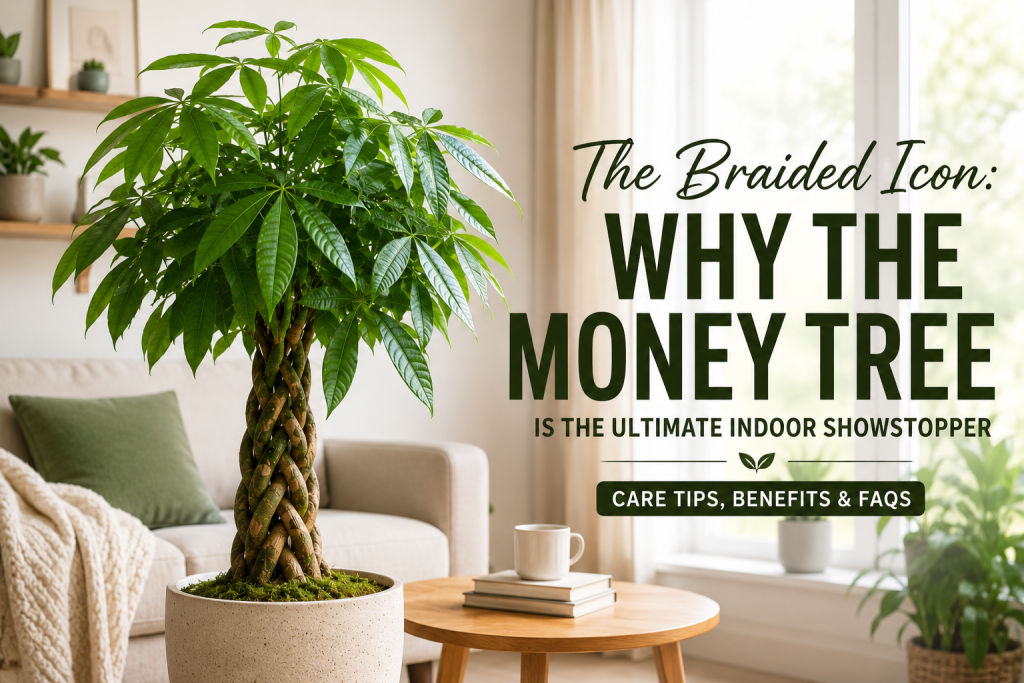
The Braided Icon: Why the Money Tree is the Ultimate Indoor Showstopper
The Money Tree (Pachira aquatica), also known as the Guiana chestnut, is a true living work of art. Native to the lush swamps of Central and South America, this tropical houseplant became an absolute phenomenon in Taiwan during the 1980s. Celebrated for its iconic braided trunk usually woven by nurseries from three, five, or seven young stems and its vibrant, umbrella-like green canopy, it looks spectacular on any floor stand, desk, or office shelf.
Beyond its undeniable aesthetic appeal, the Money Tree is deeply tied to the ancient practice of Feng Shui. It is widely believed to create positive “chi,” balance the energy of a room, and attract good fortune and prosperity into banks, offices, and homes alike.
What is so special about money trees?
What makes the Money Tree truly special is its incredible resilience and unique growth habits. While it can tower up to 60 feet tall in its native marshlands, it scales down beautifully indoors, typically topping out at a manageable 6 to 8 feet tall. If you prefer smaller statement pieces, its flexible stems make it one of the premier choices to be trained as an intricate, high-end indoor bonsai.
Furthermore, in the wild, it produces beautiful yellowish-white flowers that evolve into seed pods filled with peanut-like nuts. While it won’t flower indoors because it requires wild pollinators like bats, its rapid indoor growth rate of up to 24 inches a year makes it an incredibly rewarding plant to watch mature.
Is the money tree an indoor plant?
Yes, the Money Tree is one of the most reliable and popular indoor houseplants on the market. It is highly valued by interior decorators because it adapts effortlessly to typical indoor environments, including fluorescent office lighting. Whether placed in a spacious living room corner or a bright kitchen space, its hardy nature ensures it maintains a lush, architectural presence year-round.
Do money trees like sun or shade?
Getting the light exposure right is one of the most critical elements of indoor money tree care:
- The Sweet Spot: Indoors, they flourish best in bright to medium indirect light for at least six hours a day.
- Outdoor vs. Indoor: While fully mature outdoor trees can tolerate direct sunlight, indoor foliage is far more sensitive. Direct, harsh afternoon rays through a windowpane will scorch and bleach the leaves.
- Low Light Struggles: Too much shade causes the plant to become weak and leggy and can lead to pale, slow-growing foliage.
- Pro Tip: Rotate your pot 180 degrees every two weeks to guarantee the canopy receives even light and grows perfectly symmetrical.
Safe for Your Furry Friends
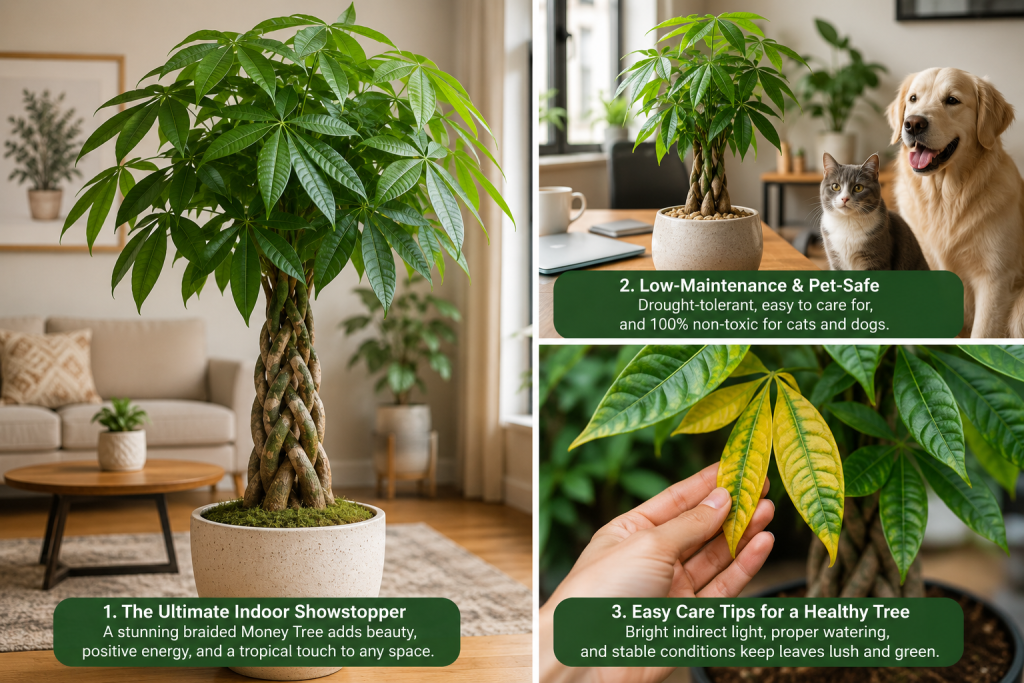
If you share your living space with curious animals, you can breathe a sigh of relief. The Money Tree is 100% non-toxic and pet-safe for cats and dogs. Unlike many exotic indoor trees that can pose a danger if chewed, this plant allows you to enjoy lush tropical vibes and promote good energy without worrying about the health of your pets.
Are Money Trees High Maintenance?
No, the Money Tree is actually celebrated as one of the most beginner-friendly, low-maintenance indoor trees available. It thrives on a predictable routine and is highly drought-tolerant, meaning it won’t suffer if you occasionally forget to water it.
A Quick Correction: Some online guides claim it is “difficult to overwater” a money tree, but the exact opposite is true. Because its thick, braided trunk stores an immense amount of water, overwatering is the single fastest way to kill this plant. It doesn’t require constant attention, but it does demand correct watering practices.
Why are My Money Tree Leaves Turning Yellow?
If you notice the leaves of your money tree turning yellow, it is an immediate warning sign that its environmental balance is off. Here is how to diagnose and fix the issue quickly:
- Overwatering and Poor Drainage: If the soil stays constantly soggy, the roots suffocate and rot, causing widespread yellowing. Always ensure your potting container has ample drainage holes, and empty the bottom saucer immediately after watering so the roots never sit in stagnant pool water.
- Underwatering: If the soil completely dries out down to the bottom of the pot, the lower leaves will turn pale yellow, crisp up, and drop off.
- Environmental Shocks and Drafts: Money trees crave stability. Placing them near blasting air conditioner vents, drafty winter doors, or dry radiators will cause sudden leaf discoloration. Keep temperatures stable between 65°F and 80°F.
- Nutrient Depletion: During the active spring and summer growing season, a lack of food can stall growth. Feed monthly with a balanced houseplant fertilizer diluted to half strength. You can skip feeding entirely during the fall and winter when the tree rests.
Conclusion: Cultivating Good Fortune and Greenery
Mastering Money Tree care is an incredibly rewarding journey for any indoor gardener. By providing a stable environment with bright filtered light, high humidity, and a well-draining, peat-moss-based potting soil, you can easily maintain a striking tropical centerpiece. Its pet-safe status, low-maintenance attitude, and potential to bring positive energy make it an essential addition to any modern plant collection.
Frequently Asked Questions
1. Is the Money Tree safe for cats and dogs?
Yes, it is entirely non-toxic and completely safe for all household pets.
2. How often should I water my indoor money tree?
Typically, you should water it every 1 to 2 weeks. Always wait until the top inch of soil feels completely dry to the touch before watering thoroughly until moisture runs out of the drainage holes.
3. Why is my money tree dropping its green leaves?
Money trees hate being moved. If you recently relocated your plant to a new room or a different spot, it may drop a few healthy leaves in protest. Give it a few weeks to acclimate, and it will quickly recover.
4. Should I prune my money tree?
Yes. Regular pruning of dry or yellowing lower leaves is an excellent way to maintain its shape, control its indoor size, and encourage fresh, bushy new growth at the very top of the canopy.
5. How do I treat common pests like mealybugs or scale on my money tree?
If you spot sticky residue or small white pests on the stems, treat the plant immediately by wiping the foliage down with a mild insecticide or a natural horticultural oil like neem oil.