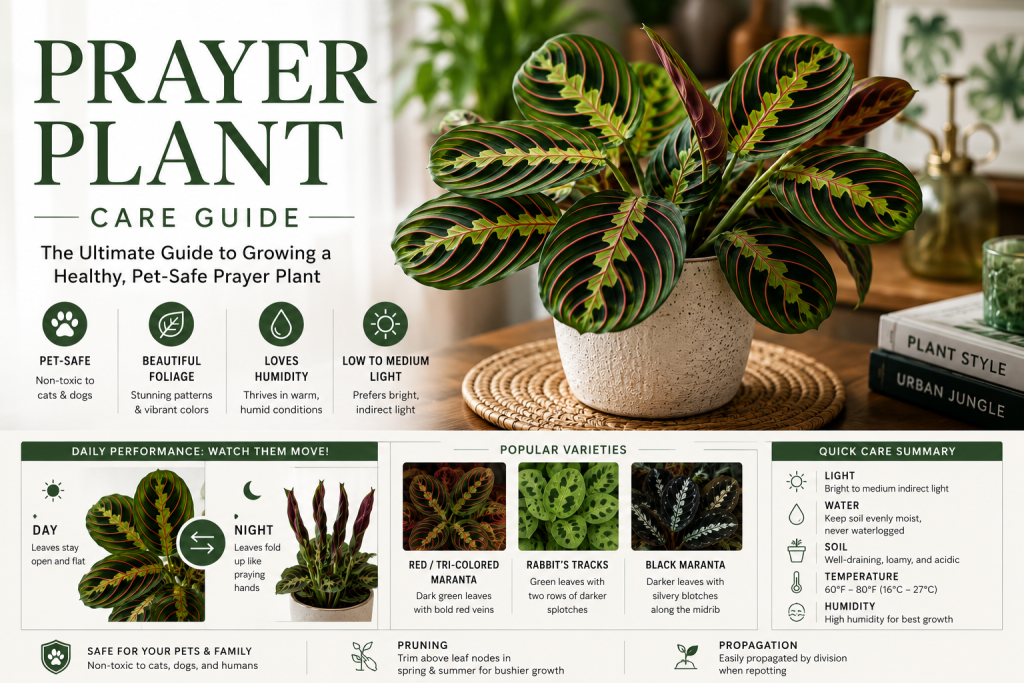
Indoor gardening is an art form that brings dynamic life into the modern home. While many plants offer static beauty, the Prayer Plant (Maranta leuconeura) provides a daily performance that captivates any observer. This tropical perennial is famous for its decorative foliage and its unique leaves, which remain flat during the day and fold upward like praying hands at night.
For enthusiasts seeking pet-safe plants that don’t compromise on visual flair, the Prayer Plant is an elite choice. It is considered non-toxic to both humans and pets, making the Prayer Plant a stress-free addition to any household. Whether you are a beginner or a seasoned collector, understanding the specific needs of this slow-growing tropical beauty is key to maintaining its lush leaves year-round.
Technical Specifications: At a Glance
- Common Name: Prayer Plant
- Botanical Name: Maranta leuconeura
- Mature Size: 6–12 inches tall and wide
- Sun Exposure: Partial shade; bright to medium indirect light
- Soil Type: Moist but well-drained, loamy
- Soil pH: Neutral to Acidic
- Bloom Time: Spring (white flowers)
- Toxicity: Pet-Safe (Non-toxic to pets and humans)
Masterclass in Prayer Plant Care
To see your prayer plant thrive, you must replicate the warm, humid environment of its native South American rainforest habitat.
1. Light Requirements: Finding the Dappled Glow
Lighting is the most common area where indoor gardening beginners struggle with their prayer plant.
- The Prayer Plant is sensitive to the intensity of the sun.
- The Ideal Spot: Bright to medium indirect sunlight is best for maintaining the vibrant leaf patterns of your prayer plant.
- Low Light Tolerance: While a prayer plant tolerates lower light, very dim conditions can lead to leggy growth.
- What to Avoid: Prolonged direct sunlight will scorch the delicate leaves and cause the colors to look washed out or faded.
2. Watering Wisdom: The Balancing Act
A prayer plant can be tricky regarding moisture. They are highly susceptible to drought but can easily succumb to root rot if overwatered.
- The Golden Rule: Keep the soil of your prayer plant evenly moist.
- Method: Water once the top layer of soil has dried out.
- Seasonal Adjustments: This usually means watering once or twice a week in the spring and summer and once a week during the fall and winter.
- Water Quality: These sensitive plants prefer filtered or distilled water, where possible, to avoid sensitivities.
3. Soil and Potting
A high-quality growing medium is essential for preventing fungal problems in your prayer plant.
- The Mix: The Prayer Plant requires well-draining, loamy, and acidic soil to thrive.
- The Recipe: A standard potting mix works, but you can create a superior blend using two parts sphagnum peat moss, one part loamy soil, and one part perlite or coarse sand.
- Pot Choice: Because the Prayer Plant is a low-growing, spreading plant, it often does best in shallow pots.
4. Temperature and Humidity
True to their tropical roots, prayer plant varieties demand warm, humid airflow.
- Temperature: Maintain standard household temperatures between 60°F and 80°F.
- Humidity: High humidity is non-negotiable for lush growth. If your home is dry, run a small humidifier nearby or place the plant on top of a pebble tray filled with water.
Troubleshooting Common Prayer Plant Problems
Even with the best indoor gardening practices, your prayer plant may encounter these common issues:
Yellowing Leaves
Yellow leaves on a prayer plant can result from improper watering (overwatering or underwatering), a lack of sunlight, or too much sunlight. It can also be an early warning sign of root rot.
Brown and Crispy Edges
Brown leaves on a prayer plant typically indicate underwatering, a lack of humidity, or a lack of sunlight. If your watering schedule is consistent but browning continues, check the leaves for pests like spider mites.
Suddenly Dropping Leaves
Extreme changes in temperature, pest infestations, drought, or excessive fertilization can cause the plant to go into shock and drop its leaves.
Exploring Popular Prayer Plant Varieties
Within the Maranta genus, several Prayer Plant variations are highly sought after:
- Red/Tri-Colored Maranta: The most common variety, also called the herringbone plant, features bold red veins.
- Rabbit’s Tracks: Features green leaves with two rows of darker splotches.
- Black Maranta: A variety with a darker leaf background and silvery blotches along the midrib.
Maintenance: Pruning and Propagation
Pruning the Prayer Plant
Regular pruning is not required, but it is recommended to prevent the prayer plant from looking unruly or to encourage a bushier appearance. Use sharp, clean shears to trim sections of the stem just above the leaf nodes. Spring and summer are the best times to prune to encourage new growth.
Propagation via Division
The easiest way to propagate a prayer plant is by dividing the plant while repotting.
- Remove the prayer plant from its pot and gently shake the soil off the roots.
- Divide it into several smaller plants, ensuring each has a good mass of roots and several stems.
- Pot the new prayer plant sections into shallow pots using a well-draining potting mix.
Frequently Asked Questions (FAQs)
1. Do prayer plants need sun?
They need bright to medium indirect light. Direct sunlight will scorch and burn the plant’s delicate leaves.
2. How can I tell if my prayer plant is happy?
A happy prayer plant has lush, verdant leaves free of crispy edges. It may even produce delicate flowers in the spring and summer.
3. Are prayer plants easy to grow?
They are fairly easy to grow if the conditions are right, particularly consistent moisture and high humidity.
4. Why are there brown spots on my prayer plant leaves?
This is often a sign of underwatering, a lack of humidity, or pests like spider mites. Treat your prayer plant with neem oil if you detect an infestation.
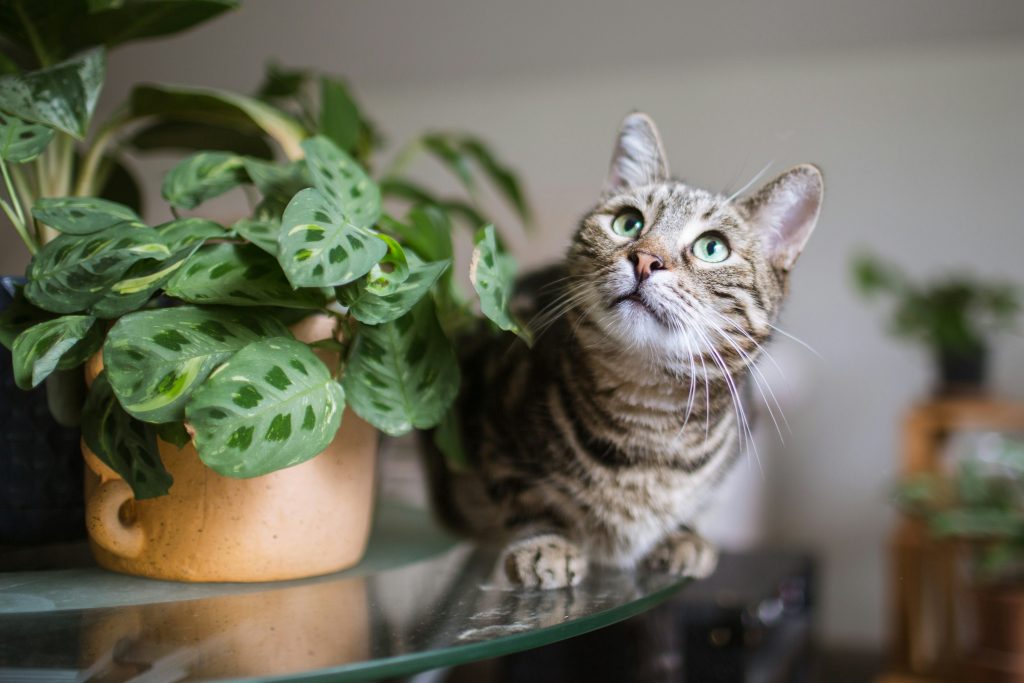
5. Is the Prayer Plant safe for cats?
Yes, the prayer plant is non-toxic to both pets and humans.