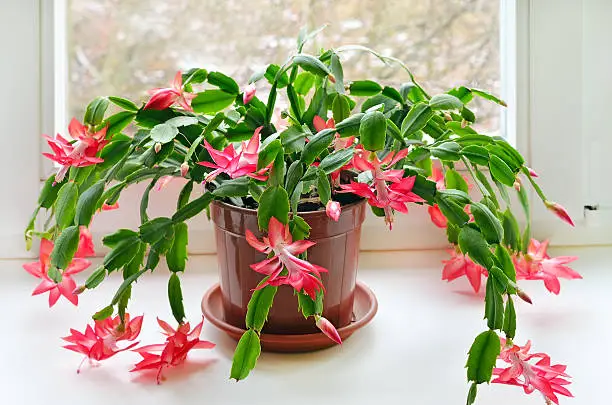
The Thanksgiving cactus (Schlumbergera truncata) is an absolute showstopper for anyone loving vibrant, late-flowering winter houseplants. Native to the humid, shaded tropical rainforests of Southeastern Brazil, this tough perennial succulent belongs to the diverse Cactaceae family and grows naturally in coastal mountains on trees or rocky surfaces. It features a multi-branched, bushy, and cascading habit that typically reaches 6 to 12 inches in height and spreads up to 24 inches wide.
It features flat, segmented, and spineless green stems that serve as an attractive canvas for festive floral displays. Because its dramatic blossoms emerge continuously from late fall through winter in striking shades of red, purple, orange, pink, and creamy white, this plant acts as an adaptable piece of living art. It styles beautifully in hanging containers or baskets, serving as a festive tabletop centerpiece, a luxury holiday gift, or a colorful focal point on a bright interior shelf.
What is So Special About the Thanksgiving Cactus?
Despite its reputation as a temporary seasonal grocery store plant to be set aside after the flowers fade, this tropical epiphyte is highly prized by collectors for its incredible longevity, often living for 20 to 30 years with proper care. What makes it truly special is its internal seasonal rhythm, which relies on a strict cycle of active spring growth followed by a mandatory autumn cooling period to trigger bud development. The plant brings a magnificent splash of color into your home just as the outdoor weather turns cold.
Throughout its active blooming season, which typically lasts from November to March, it sends up a dense crown of buds that expand into elongated, tube-shaped flowers. Because supporting dying blossoms can drain vital energy reserves, growers practice regular deadheading. Gently removing spent blooms redirects the plant’s immediate energy, leaving space for new buds and helping to prolong the stunning holiday display.
Key Insights to Keep in Mind for Thanksgiving Cactus Care
While this tropical classic is straightforward to manage once you understand its epiphytic nature, a few vital characteristics bring exceptional uniqueness to your indoor space:
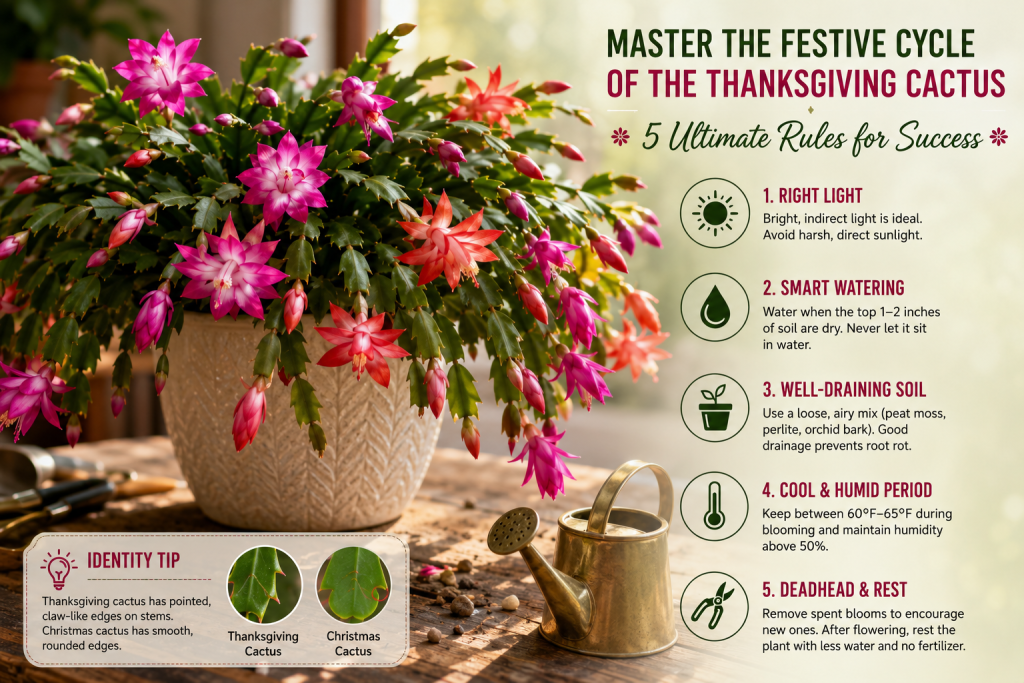
- The True Identity Confusion: Most holiday plants sold in stores today under the name “Christmas Cactus” are actually sterile hybrids or true Thanksgiving cacti (Schlumbergera truncata). You can easily run a quick ID check by examining the stems: the Thanksgiving variety features pointed, claw-like, or teeth-like projections along its stem margins, whereas the true Christmas cactus (Schlumbergera x buckleyi) features completely smooth, rounded margins.
- Environmental Stress Reactivity: These holiday cacti are exceptionally sensitive to sudden changes in their immediate surroundings. Drastic shifts in light exposure, sudden temperature fluctuations, or a lack of moisture during the bud stage will cause the plant to drop flower buds prematurely.
- The Post-Bloom Rest Phase: Once the heavy winter flowering cycle ends completely, your cactus requires a dedicated period of rest. During this dormant phase, you should temporarily reduce your watering frequency and stop fertilizing until active new growth restarts in the spring.
Managing Light Exposure: Dappled Canopy Rules
Balancing your light exposure ensures your plant produces heavy flower counts without bleaching out its segmented green foliage:
- The Warm Season Sweet Spot: During the active spring and summer growing months, the plant does best in medium indirect light or partial shade. Placing it near an east- or north-facing window provides a perfectly filtered environment that mimics a tropical forest canopy.
- Shifting Autumn Protection: As days shorten in the early fall, move your pot to a brighter indoor location to stimulate flower production. However, always avoid direct afternoon sunlight, which will instantly scorch the delicate stems and turn the foliage a pale, sickly yellow.
- Summer Shade Management: If you choose to move your containers outdoors during the peak of summer, ensure they are placed in deep shade. Unprotected, direct outdoor rays will quickly degrade the plant’s structural health.
Safe for Your Furry Friends?
If you share your living space with curious cats or dogs, you can style this tropical succulent with absolute peace of mind. The Thanksgiving cactus is completely non-poisonous and safe for both pets and humans. While it is always best to discourage animals from chewing on the fleshy stem segments to protect the shape of your display, a random nibble carries no toxic or dangerous risks.
Essential Soil and Water Instructions for Thanksgiving Cactus Care
Thanksgiving cacti are low-maintenance house plants, but they will thrive beautifully when you master their moisture, soil, and humidity requirements. In their native environment, they grow directly on tree bark, surviving off decaying organic matter. Therefore, they must never be planted in heavy, standard garden soil. Instead, use a loose, airy, and well-draining potting mix with an acidic pH a perfect blend is one part peat moss, one part perlite, and one part orchid bark.
Keep the soil consistently moist but never waterlogged or saturated. Check the substrate regularly with your finger and water thoroughly as soon as the top 1 to 2 inches of soil feel dry. Pour water until it flows freely out of the bottom drainage holes, and immediately empty any standing water from the saucer to prevent root rot.
These tropical succulents thrive in warm, humid conditions. Keep your indoor environment between 60°F and 65°F during the blooming cycle, and try to maintain household humidity levels above 50 percent. Because of these high humidity requirements, bathrooms and kitchens make excellent homes for this plant. To help promote heavy flowering, apply a balanced, diluted liquid fertilizer every two weeks during the spring and summer, tapering off as winter approaches.
The Effortless Stem-Cutting Propagation Blueprint
Because their segmented cladodes contain highly responsive growth nodes at each joint, propagating a Thanksgiving cactus from stem cuttings is an incredibly easy spring project.
- Take a Clean Stem Cutting: During the active spring or summer growing period, use a sharp, sanitized knife or pruning shears to remove several healthy cuttings that are 2 to 3 segments long.
- Allow the Cut to Callous: Set the cuttings aside in a cool, dry location for 24 hours to a few days, allowing the wounded ends to form a protective callous.
- Plant in Moist Medium: Insert the callused cuttings upright into a small pot filled with pre-moistened, well-draining potting soil. Ensure they face the same direction they were growing originally.
- Maintain Minimum Moisture: Place the pot in indirect light and water only when the potting mix is completely dry. Within a few weeks, the stems will establish a healthy new root system.
How to Force Your Cactus into Majestic Holiday Blooms
If your houseplant is hesitant to flower or you want to guarantee a massive explosion of color exactly in time for late November, you can easily force it into bloom by manipulating its environment in early fall.
First, take advantage of natural temperature drops. For six or more weeks in the early autumn, place your cactus in an environment that experiences cool night temperatures between 50°F and 55°F. Exposure to night temperatures down to 40°F for several successive nights acts as a powerful botanical trigger for flower bud initiation.
Second, control the light cycle. The Thanksgiving cactus requires long, uninterrupted nights to produce buds. Keep your plant in absolute, complete darkness for at least 12 to 13 straight hours per day for a stretch of several weeks. Avoid turning on household lights in the room during these dark hours, as even minor light disruptions can halt bud development. Lastly, keep the plant slightly pot-bound; waiting to repot every three years ensures the root restriction naturally encourages heavier flowering.
Conclusion: 5 Simple Rules to Keep Your Holiday Icon Blooming for Decades
The Thanksgiving cactus proves that with just a touch of seasonal strategy, you can enjoy decades of spectacular holiday color. By honoring its epiphytic roots with an airy orchid bark mix, keeping its environment humid, and giving it those crucial dark, cool autumn nights, you transform this grocery-store favorite into a magnificent family heirloom. Its completely pet-safe profile, easy spring propagation, and dramatic cascading habit make it an absolute must-have masterpiece for any indoor jungle collection.
Frequently Asked Questions
1. Does a Thanksgiving cactus bloom more than once per year?
Yes! While its primary, most prolific blooming season occurs in the late fall around Thanksgiving, a properly managed plant will frequently surprise you with a second, lighter bloom cycle as the days begin to lengthen in February or March.
2. Why are the segmented leaves of my cactus turning a wrinkled, mushy yellow?
Wrinkled, soft, or mushy yellowing stems are a classic indicator of overwatering and impending root rot. Immediately stop watering, verify that your container has open drainage holes, and allow the potting mix to dry out significantly.
3. What are the most common pests that target a holiday cactus?
Indoor plants can occasionally attract common insect pests such as aphids, red spider mites, scale, and mealybugs. Monitor the joints of the stem segments regularly and treat any outbreaks early using organic insecticidal soap or neem oil.
4. Why did my plant fail to produce any flowers during its second year in my home?
Commercial growers routinely use specialized greenhouse lighting and cooling equipment to artificially force holiday cacti into heavy bloom right before shipping them to stores. It is quite common for a plant to take a year or two to adjust to normal household conditions before it stabilizes and blooms naturally again.
5. How do I prevent gray mold from damaging my plant’s dense foliage?
Gray mold typically develops when a plant is kept in an environment with high humidity but poor air circulation. Ensure your cactus has plenty of breathing room around its cascading stems and avoid crowding it too closely against other houseplants.