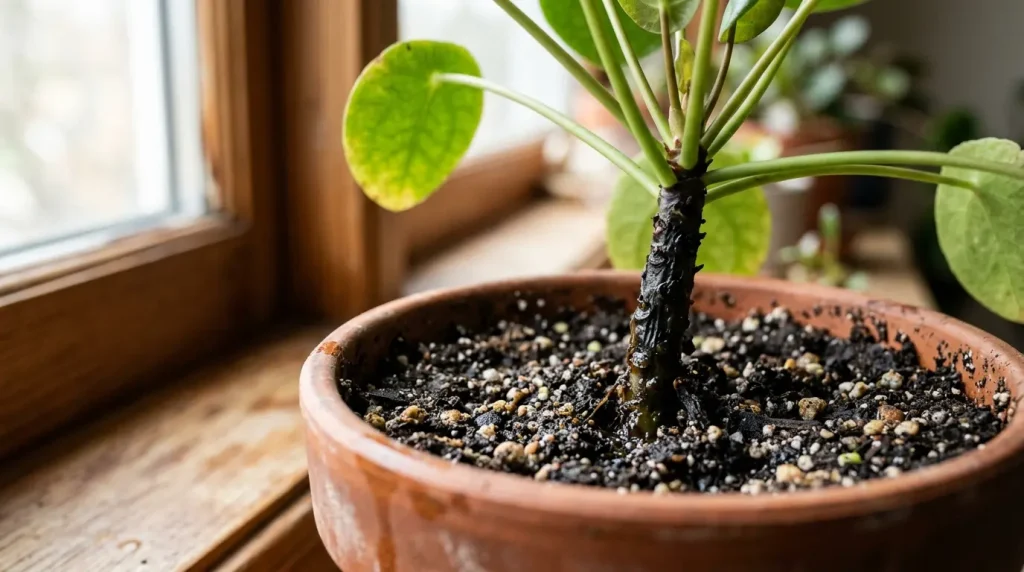
Asking why is my indoor plant stem turning black is one of the most alarming moments for any plant parent. Discovering a dark discoloration creeping up the base or main stalk of a beloved houseplant requires immediate emergency action. Whether you notice soft mushy tissue, translucent foliage, or sudden darkening after a cold night, this condition indicates severe cellular distress or an active pathogenic attack.
When indoor foliage shows signs of decline, the root cause is almost always tied to environmental stress or improper watering routines. Understanding why is my indoor plant stem turning black allows you to accurately diagnose whether you are dealing with advanced root rot, a fungal canker, or a bacterial infection so you can save your plant before total structural collapse occurs.
Technical Specifications: At a Glance
| Feature | Diagnostic Details |
| Primary Condition | Stem Necrosis / Tissue Vascular Collapse |
| Common Causes | Overwatering, Root Rot, Fungal Cankers, Bacterial Soft Rot, Cold Shock |
| Key Symptoms | Mushy base, black water-soaked tissue, foul soil odor, wilted leaves |
| Progression Speed | Moderate (Fungal) to Extremely Fast (Bacterial: 24–48 Hours) |
| Recovery Potential | High if caught early; requires surgical pruning of dead tissue |
6 Main Reasons Why Your Indoor Plant Stem Is Turning Black
1. Advanced Root Rot and Upward Stem Rot
By far the most frequent reason behind a dark, decaying stalk is root rot that has progressed upward into the main stem. When potted plants sit in saturated, airless potting mix without proper drainage, roots suffocate, drown, and decay. Opportunistic fungal pathogens thrive in these anaerobic conditions, travelling up into the vascular system and turning the base soft, slimy, and black.
If you suspect excess water is damaging your foliage as well as the stem, review our guide on indoor basil leaves turning black to understand how root stress affects overall leaf tissue.
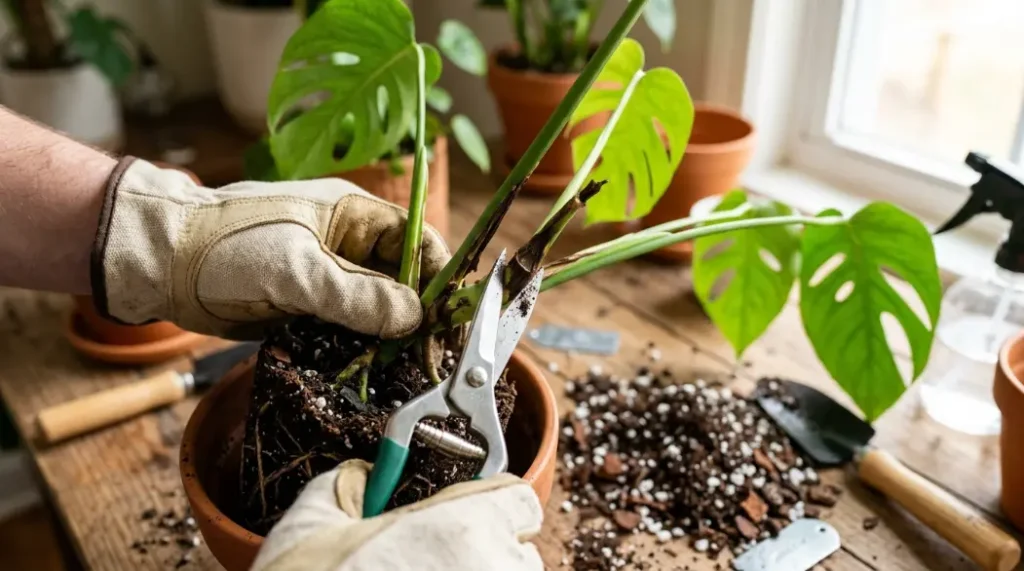
- How to Fix: Unpot the plant immediately and wash off contaminated soil. Use sterilized shears to snip away all mushy, dark roots until only firm white roots remain. Cut the blackened stem back to completely healthy green wood, treat the remaining roots with a diluted copper fungicide, and repot into a fresh, aerated potting mix enriched with perlite and orchid bark.
2. Fungal Canker Infections
Fungal cankers are localized diseases caused by airborne spores (such as Phomopsis or Botryosphaeria) that invade through microscopic wounds caused by pruning or insect bites. Once inside, the fungus destroys internal vascular channels, creating dark, sunken dead zones that girdle the branch.
- How to Fix: Isolate the affected plant to protect your collection. Prune the infected branch 2 to 3 inches below the black canker into clean, green tissue using shears sanitized with rubbing alcohol. Spray the remaining foliage with an organic sulfur or copper-based fungicide to kill remaining spores.
3. Bacterial Soft Rot (Erwinia or Pectobacterium)
Bacterial soft rot is an aggressively fast-moving infection targeting soft-stemmed tropicals like Philodendrons, Alocasias, and Dieffenbachias. Thriving in warm, stagnant environments with poor air circulation, these bacteria release enzymes that liquefy plant cell walls, transforming firm stems into a watery, black sludge.
If the stem feels completely soft and collapses under gentle touch, compare your symptoms with our detailed guide on a mushy plant stem for immediate stabilization steps.
- How to Fix: Because bacteria spread rapidly through internal sap channels, infected parts cannot be cured. Aggressively cut out all diseased stems immediately, wiping your blades with disinfectant after every snip. If the main trunk is completely liquefied, discard the plant and soil to prevent spreading bacteria to healthy foliage. Improve room ventilation by using a small oscillating fan.
4. Cold Shock and Severe Frost Exposure
Tropical houseplants suffer severe tissue damage when exposed to freezing temperatures or icy drafts near single-pane winter windows. The water inside the plant’s cells freezes and expands, bursting internal cell walls. As the air warms back up, these ruptured tissues rapidly oxidize and turn a stark, jet-black color.
- How to Fix: Move your plant to a stable room maintained between 18°C and 27°C (65°F to 80°F). Wait 7 to 10 days for the plant to recover from temperature shock so you can clearly distinguish between dead and living tissue. Once new leaf nodes activate, trim away dead, black tips just above healthy growth nodes.
5. Fertilizer Burn and Chemical Salt Accumulation
Over-feeding indoor plants with synthetic chemical fertilizers causes mineral salts to build up heavily in the potting medium. These concentrated salts draw moisture out of the root system via osmotic shock. This chemical dehydration scorches delicate vascular tissues, turning the base of the stalk a crusty dark brown or black.
- How to Fix: Flush the soil with room-temperature filtered water for 5 to 10 minutes to leach out trapped fertilizer salts. Allow the pot to drain thoroughly, pause all fertilizer applications for at least two months, and always dilute fertilizers to half strength moving forward.
6. Sap-Sucking Pests and Sooty Mold
Massive infestations of stem-targeting insects like scale or mealybugs can destroy plant stalks. These pests drive sharp mouthparts deep into vascular tissues to extract sugar-rich sap. The constant puncturing causes localized necrotic black spots around feeding zones. Furthermore, the sticky honeydew they secrete encourages black sooty mold fungus to colonize the surface.
Insects feeding on tender stems often cause foliage surface changes as well. If you notice unusual spots on your leaves alongside stem damage, check our article on transparent spots on plant leaves to identify sap-sucking pests early. Additionally, overwatered, pest-stressed soil often attracts subterranean flies, so learn how to get rid of fungus gnats to keep your root zone healthy.
- How to Fix: Isolate the plant. Dab cotton swabs dipped in rubbing alcohol directly onto pests to dissolve their shells. Wash stems thoroughly with insecticidal soap, then apply organic neem oil weekly until cleared.
Stem Blackening Diagnostic Guide
| Symptom Appearance | Primary Root Cause | Corrective Emergency Action |
| Soft, slimy black base with bad soil odor | Advanced Root Rot / Stem Rot | Unpot, trim rotten roots/stems, repot in fresh airy soil |
| Watery, blistered black stem moving in 24 hrs | Bacterial Soft Rot | Prune out diseased tissue aggressively; improve airflow |
| Sunken, dry black rings on upper branches | Fungal Canker Infection | Prune 2–3 inches below canker; apply copper fungicide |
| Shriveled, flat black tissue after cold drop | Cold Shock / Frost Damage | Move to warm room; wait 10 days before pruning dead tips |
| Crusty brown/black base with white soil crust | Chemical Fertilizer Burn | Flush potting soil thoroughly with clean water for 10 mins |
Final Thoughts
Knowing why is my indoor plant stem turning black gives you the tools to intervene before acute vascular damage kills your houseplant. By identifying whether the culprit is root rot, cold trauma, or bacterial soft rot, you can perform emergency surgical pruning, adjust watering schedules, and restore ideal airflow. Keep your tropical plants in well-draining pots and stable indoor environments to ensure they remain vibrant and resilient.
Frequently Asked Questions
1. Can a black plant stem ever turn green again?
No, once plant tissue turns completely black from rot, necrosis, or severe cankers, that specific tissue is dead and cannot recover or turn green again. The internal vascular system in that area has collapsed completely. Your primary goal when treating a black stem is to stop the issue from spreading further upward into healthy green foliage.
2. How can I tell if a black stem is caused by fungus or bacteria?
The easiest way to differentiate is by smell and progression speed. Fungal stem rot moves at a moderate pace, making tissue feel soft or dry with an earthy, musty smell. Bacterial soft rot moves extremely fast (often liquefying a stalk in 24 to 48 hours), creates watery, blistered stems, and produces a foul, distinct rotten-vegetable odor.
3. Will cinnamon powder help fix a blackening indoor plant stem?
Ground cinnamon is an effective organic antifungal agent, but it functions primarily as a preventive topical sealant. Dusting open, healthy green cuts with cinnamon after pruning away diseased tissue seals wounds against airborne spores. However, cinnamon cannot cure an active, internal vascular infection moving through roots and stems.
4. Why is my Monstera stem turning black after taking a cutting?
If a Monstera stem tip turns black after taking a cutting, bacteria or fungal spores infected the open wound before it formed a protective callus. This typically happens when using unsterilized pruning shears or exposing fresh cuts to high humidity or splashing water immediately. Cut the black portion back to the next healthy node using a blade sanitized with rubbing alcohol, and allow the wound to air-dry.
5. Does a black stem always mean my indoor plant is going to die?
Not necessarily. If the blackening is caught early and localized to upper branches or a single stem, surgically pruning away the infected tissue into clean, green wood will save the rest of the plant. However, if the entire main trunk and root system at the soil line have turned mushy and black, the plant cannot be saved and should be replaced.