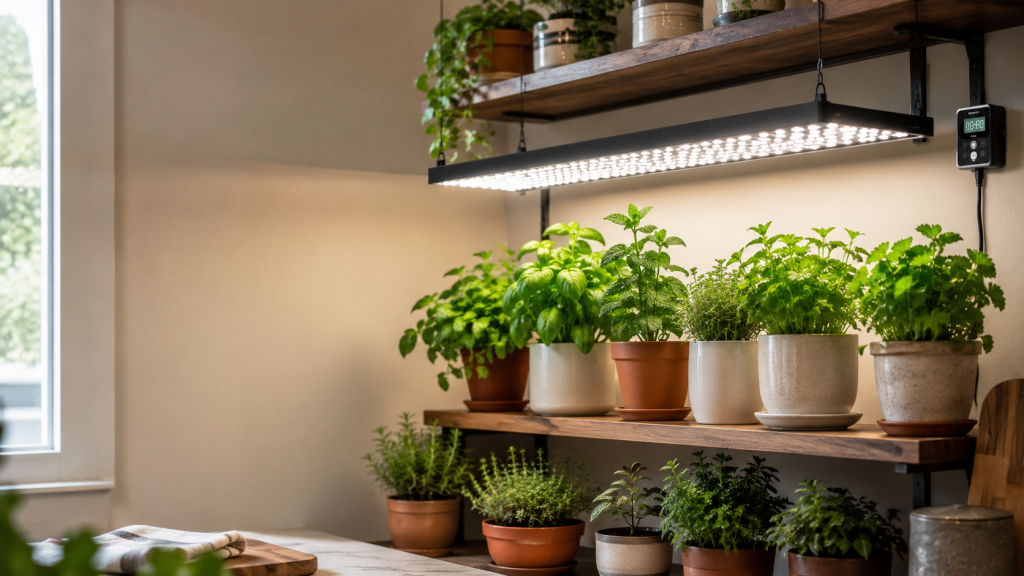
Growing herbs indoors can be incredibly rewarding, but one challenge stops many gardeners from getting consistent results: insufficient light. Basil becomes leggy, parsley grows slowly, and cilantro often struggles during winter when daylight hours are limited. That’s why many successful indoor gardeners rely on LED grow lights for herbs.
Modern LED grow lights provide the light intensity and spectrum herbs need to produce lush foliage, strong stems, and flavorful harvests year-round. Whether you’re growing a few kitchen herbs on a windowsill or maintaining an indoor herb shelf in an apartment, the right grow light can make a significant difference.
This guide explains how LED grow lights work, what features matter most, how to choose the right fixture, and how to avoid common mistakes that prevent indoor herbs from thriving.
Quick Answer Box
LED grow lights for herbs provide the light energy plants need when natural sunlight is insufficient. Most culinary herbs grow best under full-spectrum LED lights for 12–16 hours daily. Position lights 6–18 inches above plants depending on fixture strength, and use a timer to maintain a consistent day-night cycle. Full-spectrum LEDs are generally the best option because they support healthy leaf growth while remaining energy efficient and suitable for indoor living spaces.
Why Herbs Need Supplemental Lighting Indoors
Most culinary herbs evolved in environments where they receive several hours of direct sunlight every day. Indoor conditions rarely provide comparable light levels, even near bright windows.
Glass filters sunlight, buildings create shade, and seasonal changes dramatically reduce available light during fall and winter. As a result, herbs often receive less energy than they need to grow properly.
When herbs don’t receive enough light, they respond by stretching toward available light sources. This creates weak stems, sparse foliage, and reduced harvests.
Common signs of inadequate lighting include:
- Long, stretched stems
- Pale or yellowish leaves
- Slow growth
- Smaller leaves
- Reduced aroma and flavor
- Plants leaning toward windows
LED grow lights solve these problems by providing a reliable source of light regardless of weather, season, or window orientation.
Signs Your Herbs Need More Light
| Symptom | Likely Cause | Recommended Solution |
|---|---|---|
| Leggy growth | Insufficient light intensity | Move light closer or upgrade fixture |
| Pale foliage | Low photosynthesis | Increase daily light exposure |
| Slow growth | Inadequate lighting duration | Extend lighting schedule |
| Weak stems | Uneven light source | Provide overhead lighting |
| Plants leaning | Light coming from one direction | Rotate plants or use grow lights |
What Makes LED Grow Lights Ideal for Herbs?
LED grow lights have become the preferred choice for indoor gardeners because they are efficient, versatile, and easy to use.
Unlike older lighting technologies, LEDs convert more electricity into usable plant light while producing less excess heat.
Benefits include:
- Lower energy consumption
- Longer lifespan
- Reduced heat output
- Multiple fixture sizes
- Better spectrum control
- Suitable for apartments and small spaces
For indoor herb gardens, LEDs provide enough intensity to support healthy growth without generating excessive heat that could damage foliage.
Many modern fixtures also include built-in timers, dimmers, and adjustable mounting options, making them especially convenient for home gardeners.
How to Choose the Best LED Grow Lights for Herbs
The best LED grow lights for herbs balance light quality, intensity, coverage, and efficiency. Rather than focusing only on wattage, look for fixtures designed specifically for indoor plant growth.
Full-Spectrum Lighting
Full-spectrum LEDs provide wavelengths similar to natural sunlight.
Benefits include:
- Compact growth
- Healthy leaf production
- Improved plant structure
- Natural-looking light indoors
Coverage Area
Every fixture is designed to illuminate a specific growing space.
A countertop herb garden requires less coverage than a shelving unit filled with containers.
Always match fixture coverage to your growing area.
Adjustable Height
Herbs grow continuously and light requirements change as plants mature.
Adjustable fixtures allow you to maintain optimal light intensity.
Build Quality
Quality fixtures typically offer:
- Better efficiency
- More reliable performance
- Longer lifespan
- Improved heat management
Understanding Light Spectrum for Herb Growth
Most herbs grow best under full-spectrum white LED grow lights. These fixtures provide the blue and red wavelengths plants use most efficiently during photosynthesis.
Blue Light
Blue wavelengths support:
- Leaf development
- Compact growth
- Strong stems
- Dense foliage
Red Light
Red wavelengths support:
- Photosynthesis
- Plant energy production
- Overall growth
Modern full-spectrum LEDs combine these wavelengths while producing a pleasant white light that looks more natural in kitchens, offices, and living spaces.
Spectrum Comparison
| Light Type | Performance for Herbs | Notes |
|---|---|---|
| Full-spectrum LED | Excellent | Best overall choice |
| White LED grow light | Excellent | Natural appearance |
| Red/Blue LED | Good | Effective but visually harsh |
| Fluorescent grow light | Fair | Less efficient |
| Household LED bulb | Poor | Usually lacks sufficient intensity |
How Long Should LED Grow Lights Stay On?
Most herbs require 12–16 hours of daily light.
The exact amount depends on:
- Herb species
- Light intensity
- Plant maturity
- Supplemental sunlight availability
Recommended Lighting Schedule
| Herb | Daily Light Hours |
|---|---|
| Basil | 14–16 |
| Oregano | 14–16 |
| Thyme | 14–16 |
| Mint | 12–14 |
| Parsley | 12–14 |
| Cilantro | 12–14 |
A common mistake gardeners make is running grow lights around the clock. Plants benefit from a dark period because important biological processes occur during nighttime hours.
Aim for:
- 12–16 hours of light
- 8–12 hours of darkness
A timer makes maintaining this schedule much easier.
How Far Should Grow Lights Be from Herbs?
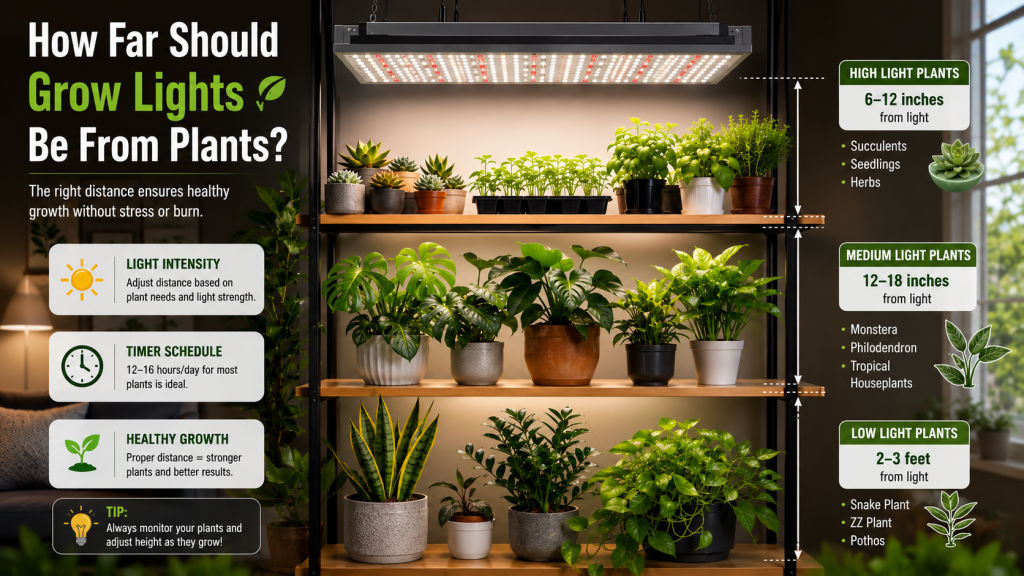
Most LED grow lights perform best when positioned 6–18 inches above herb plants.
Distance varies depending on fixture strength.
Placement Checklist
- Position lights directly above plants.
- Keep low-output lights 6–8 inches above foliage.
- Keep medium-output lights 8–12 inches above foliage.
- Keep high-output lights 12–18 inches above foliage.
- Raise fixtures as plants grow taller.
- Monitor plant response and adjust if necessary.
If lights are too far away, plants often become leggy and weak. If lights are too close, leaves may bleach or develop signs of stress.
What Most Grow Light Guides Get Wrong
Many guides focus heavily on wattage, but wattage only measures electricity consumption. It does not indicate how much usable light reaches plants.
A properly designed 30-watt grow light can outperform a poorly designed 100-watt fixture if it delivers better light distribution and spectrum.
Another common misconception is that herbs need expensive commercial-grade grow lights. Most home herb gardens thrive under affordable full-spectrum LED fixtures designed for small indoor growing spaces.
Many gardeners also underestimate the importance of placement. Even high-quality fixtures perform poorly when mounted too far above plants.
The goal is not simply more light it’s delivering the right amount of light consistently.
Troubleshooting Indoor Herbs Under LED Lights
Even with quality lighting, herbs can occasionally develop problems.
Common Problems and Solutions
| Problem | Likely Cause | Solution |
|---|---|---|
| Leggy stems | Light too weak | Increase intensity |
| Yellow leaves | Overwatering | Adjust watering schedule |
| Leaf scorch | Fixture too close | Raise light |
| Uneven growth | Poor coverage | Reposition fixture |
| Slow development | Short lighting duration | Increase daily hours |
When troubleshooting herb problems, evaluate watering, drainage, temperature, and airflow alongside lighting.
Expert Tips for Better Results
Use Reflective Surfaces
White walls or reflective materials help maximize available light around plants.
Harvest Frequently
Regular harvesting encourages bushier growth and more productive plants.
Combine Natural and Artificial Light
Even a sunny window supplemented with LED lighting can significantly improve herb growth.
Improve Air Circulation
Gentle airflow strengthens stems and helps reduce disease issues.
These simple improvements often provide better results than purchasing a more expensive fixture.
Conclusion
Successful indoor herb gardening starts with providing enough light. The best LED grow lights for herbs deliver consistent, full-spectrum illumination that supports healthy foliage, strong stems, and continuous harvests throughout the year.
Choose a quality full-spectrum fixture, match coverage to your growing space, position lights correctly, and maintain a regular lighting schedule. Combined with proper watering and basic plant care, these practices can help herbs thrive even in apartments and homes with limited natural sunlight.
If your indoor herbs have been struggling on a windowsill, upgrading to an appropriate LED grow light is often the single most effective step you can take toward healthier, more productive plants.
For a wider look at fixtures beyond herbs, our grow light setup guide walks through the full setup process step by step. If you are starting from scratch, our indoor herb garden guide covers soil, pots, and watering as well as light. You can also see our picks for the best herbs for indoors if you are still deciding what to grow.
Frequently Asked Questions
1. Are LED Grow Lights for Herbs Worth It?
Yes. LED grow lights provide consistent light that many indoor environments cannot supply naturally. They help prevent leggy growth, improve leaf production, and allow herbs to grow year-round regardless of season or window conditions.
2. What Color LED Grow Light Is Best for Herbs?
Full-spectrum white LED grow lights are generally the best choice. They contain the blue and red wavelengths herbs need for photosynthesis while producing a natural-looking light suitable for kitchens and living spaces.
3. Can Herbs Grow Using Only LED Grow Lights?
Yes. Most culinary herbs can grow successfully under LED grow lights without natural sunlight if they receive sufficient intensity and an appropriate daily light schedule of approximately 12–16 hours.
4. How Many Hours Should Grow Lights Stay On for Basil?
Basil typically performs best with 14–16 hours of light daily. Consistent exposure helps maintain compact growth, vigorous leaf production, and strong flavor development.
5. How Close Should LED Grow Lights Be to Herbs?
Most fixtures should be positioned between 6 and 18 inches above the plant canopy. The ideal distance depends on light intensity, fixture design, and the growth stage of the herbs.