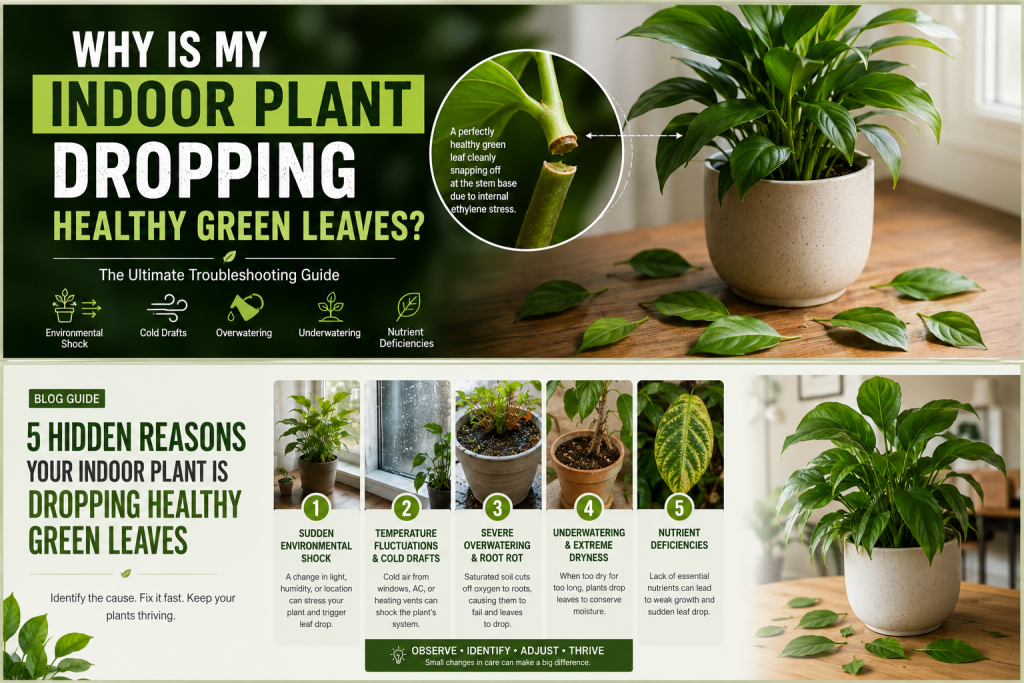
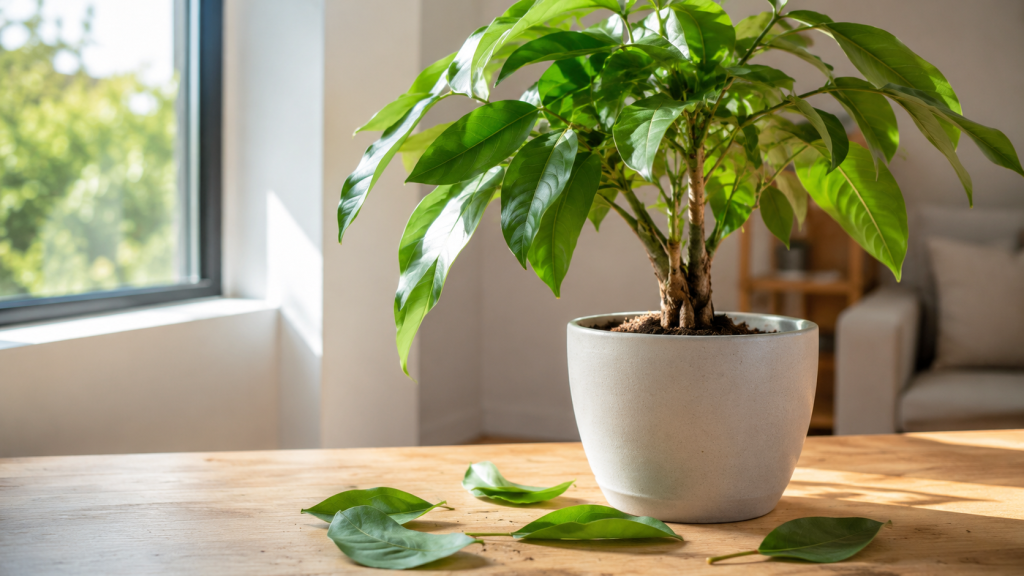
If you are wondering why your indoor plant is dropping healthy green leaves all of a sudden, you are dealing with one of the most frustrating experiences in indoor gardening. You walk over to your favorite houseplant, and with the slightest touch, a perfectly plump, vibrant, and completely green leaf snaps off and falls to the floor.
Unlike typical leaf shedding, where old foliage gradually turns yellow, withers, and dries up over several weeks, sudden green leaf drop feels like an immediate emergency. Your plant doesn’t look visibly sick, yet it is dropping healthy tissue without warning.
When an indoor plant drops healthy green leaves, it is almost always reacting to a sudden, severe physiological stress or structural shock. In the wild, plants drop foliage to conserve internal resources when their environment becomes hostile. Indoors, minor changes in your room’s setup can trigger this emergency response, causing the plant to cut off the fluid supply to its outer leaves to protect its core root system.
To stop this sudden defoliation before your plant loses its entire canopy, you need to identify the exact stressor behind the drop. Here is the ultimate troubleshooting guide to the hidden causes behind a plant dropping green leaves and exactly how to fix it fast.
The Anatomy of an Abscission Zone: Why Green Leaves Fall
To understand why a healthy leaf drops, you have to look at the point where the leaf stem (the petiole) connects to the main plant stalk. This area is called the abscission zone.
When a plant experiences sudden environmental stress or internal trauma, a specific chemical reaction takes place:
- Hormonal Trigger: The plant produces a sudden burst of stress hormones, specifically ethylene gas.
- Cellular Collapse: This hormone signals the cells in the abscission zone to quickly soften, dissolve, and separate.
- The Clean Break: This structural separation creates a clean break that physically drops the leaf from the body of the plant before the leaf has a chance to turn yellow or show outward signs of decay.
1. Sudden Environmental Shock (Drastic Location Changes)
The single most common reason a houseplant drops crisp green leaves is a sudden change in its surrounding microclimate, commonly referred to as environmental shock. Plants are incredibly sensitive creatures of habit. They adapt their cellular structure and photosynthetic rates to the exact light levels, humidity, and airflow of the specific spot where they live.
If you suddenly move a plant from a high-light greenhouse to a dim corner of your living room, or even relocate it to a different room in your house, the sudden drop in available energy panics the plant. To cope with the sudden decrease in light, the plant rapidly drops its excess healthy foliage because it no longer has enough light energy to support a large canopy.
The Warning Signs
- The green leaf drop begins within 3 to 7 days of moving the plant to a new location or bringing it home from the nursery.
- The dropped leaves look completely healthy, without any spots, discoloration, or active pests.
- This is incredibly common in sensitive varieties like Ficus trees (weeping figs), crotons, and unstable Monstera cultivars.
How to Fix It
- Match Environments: When bringing a new plant home, try to match its original light and humidity levels as closely as possible.
- Acclimate Slowly: If you must move a houseplant to a dimmer room, move it gradually over a two-week period, shifting it a few feet closer to its destination every few days.
- Maintain Stability: Once a plant is placed in a suitable spot with bright, indirect light, keep it there and avoid moving your pots around constantly.
2. Temperature Fluctuations and Hidden Cold Drafts
Tropical houseplants thrive in steady, warm ambient temperatures, ideally between 65°F and 80°F (18°C to 27°C). Sudden blasts of cold or hot air can instantly disrupt the plant’s internal circulatory system.
If a plant is sitting near an open window during a chilly breeze, right in front of a powerful air conditioning unit, or next to a heating vent, the temperature of the leaf surfaces changes rapidly. This sudden temperature fluctuation shocks the plant’s vascular system, causing the cells at the base of the leaf stem to collapse and release the leaf prematurely.
The Warning Signs
- The leaf drop happens suddenly after a sudden outdoor weather change or after turning on home climate systems.
- The green leaves closest to the window glass, doors, or ventilation paths will drop first.
- The hidden or protected side of the plant remains completely intact.
How to Fix It
- Check the Glass: Make sure no part of the foliage is physically touching a cold glass window pane during winter.
- Redirect Airflow: Move your plants entirely out of the direct path of any air conditioning vents, forced-heat registers, or drafty external doors.
- Keep Temperatures Consistent: Maintaining a steady room temperature is essential for preventing the rapid hormonal changes that cause healthy leaves to drop.
3. Severe Overwatering and Early Root Rot
We often associate overwatering with yellowing leaves, but a sudden, massive influx of water can cause healthy green leaves to drop before they even have a chance to change color. When the soil mix is completely saturated with stagnant water, the tiny air pockets in the dirt are completely flooded.
This cuts off oxygen to the root system, causing the roots to suffocate instantly. Unable to breathe, the roots stop working and can no longer send vital water or nutrients upward. The plant enters an emergency survival state, dropping lower green leaves to reduce the volume of tissue the failing root system has to maintain.
The Warning Signs
- The lower leaves drop first while still looking mostly green, though they may feel slightly soft, limp, or heavy.
- The soil mix feels constantly wet and muddy and does not dry out after several days.
- The container emits a sour, stagnant, or swamp-like smell when you get close to the dirt.
How to Fix It
- Hold the Water: Stop watering immediately and check the drainage holes of your pot to ensure water isn’t trapped at the bottom.
- Inspect the Roots: If the soil is muddy, slide the plant out of its pot. Healthy roots are firm and white, while suffocating roots look black and mushy and smell bad.
- Repot in Fresh Soil: Trim away any decayed roots and repot the houseplant into a fresh, airy soil mix containing plenty of perlite or orchid bark to ensure excellent drainage.
4. Rootbound Stress and Chronic Underwatering
On the opposite end of the spectrum, severe root dehydration can also cause a plant to shed its green leaves. If an indoor plant has completely outgrown its current pot, its root system becomes a tightly wound, dense mass with very little remaining soil to retain moisture.
When you water a severely rootbound plant, the liquid passes straight through the gaps without being absorbed by the core. The dehydrated roots send an immediate panic signal to the upper canopy, causing the plant to shed lower green leaves to minimize moisture loss through transpiration.
The Warning Signs
- The leaves drop from the bottom of the plant upward, looking completely dry but still green.
- You notice roots physically curling around the top of the soil or growing aggressively out of the bottom drainage holes.
- The pot feels incredibly light when lifted, and the soil dries out completely within 24 to 48 hours of a heavy watering.
How to Fix It
- Bottom-Water Thoroughly: Give the plant a deep, thorough soak using the bottom-watering method to ensure the dry, hardened root ball absorbs moisture completely.
- Upgrade Pot Size: Once the plant has hydrated and stabilized for a few days, transplant it into a new pot that is 2 inches wider than its current container.
- Add Fresh Media: Fill the outer gaps with fresh, premium potting mix to give the roots plenty of space and structural support to hold onto water properly.
5. Sudden Lighting Changes (Low-Light Starvation)
Light is food for your houseplants. Through photosynthesis, leaves convert light energy into sugars to sustain the plant’s living cells. If an indoor plant is suddenly subjected to a prolonged period of darkness—such as during a week of heavily overcast storm clouds or because window blinds were kept closed while you were away on vacation—the plant can no longer generate enough energy to support its existing leaf volume.
To adapt to this low-energy environment, the plant sheds its oldest lower leaves while they are still green to save its remaining resources for its new top growth.
The Warning Signs
- The leaf drop happens progressively over a week or two of low-light conditions.
- The leaves that drop are usually the older, lower foliage that sits furthest away from the light source.
- The top leaves directly facing the window remain firmly attached.
How to Fix It
- Relocate Closer to Light: Move your plant closer to a bright window that receives plenty of bright, indirect sunlight.
- Utilize Artificial Light: If your home naturally lacks adequate window light, especially during the dark winter months, consider installing a full-spectrum LED grow light directly above your plant collection.
- Maintain Photoperiod: Providing a steady, reliable light source for 12 to 14 hours a day will give the plant the energy it needs to sustain its full green canopy.
Conclusion
To figure out why my indoor plant is dropping healthy green leaves, you simply need to evaluate any recent changes in its surroundings. Whether it is a sudden shift in location, an unseen cold draft, or an abrupt imbalance in soil moisture, healthy defoliation is always an emergency cry for stability. By systematically assessing the warning signs outlined above and applying the correct structural or environmental fix, you can stop cellular stress in its tracks, secure the abscission zones, and permanently preserve your houseplant’s lush, vibrant canopy.
Browning is a different warning sign, so read our guide on leaves turning brown if the colour starts to change. You may also see stalled plant growth after leaf drop, so keep light and feeding steady while the plant recovers. If the remaining foliage starts curling, our guide to curling leaves will help you find the cause.
Frequently Asked Questions
1. Will a plant grow new leaves on the bare stems where green leaves fell off?
Yes. Most houseplants have dormant nodes along their stems. Once you fix the environmental shock or watering issue, the plant will stabilize and can push out fresh growth from those bare spots during spring and summer.
2. Should I fertilize my houseplant while it is actively dropping healthy green leaves?
No. Never fertilize a stressed plant, as it can burn the fragile roots and worsen the shock. Wait until the leaf drop stops completely and you see active new growth before resuming your feeding schedule.
3. Why does my Ficus Benjamina drop green leaves every time I move it?
Ficus trees are extremely sensitive to change. Their leaves adapt specifically to the exact light angle of one spot. Moving or rotating the pot forces the plant to drop its old foliage to grow new leaves better suited for the new spot.
4. How can I tell if green leaf drop is caused by overwatering or under-watering?
Check the soil moisture. If the dropped leaves are soft and the soil is muddy, overwatering is the cause. If the leaves are crisp and the potting soil is bone-dry and pulling away from the edges, under-watering is the culprit.
5. Can a severe pest infestation cause healthy green leaves to drop suddenly?
It is rare. Pests usually leave visible warning signs like yellow spots, sticky residue, or webbing before a leaf falls. If the dropped leaves are completely clean and vibrant green, the issue is environmental shock or incorrect watering.