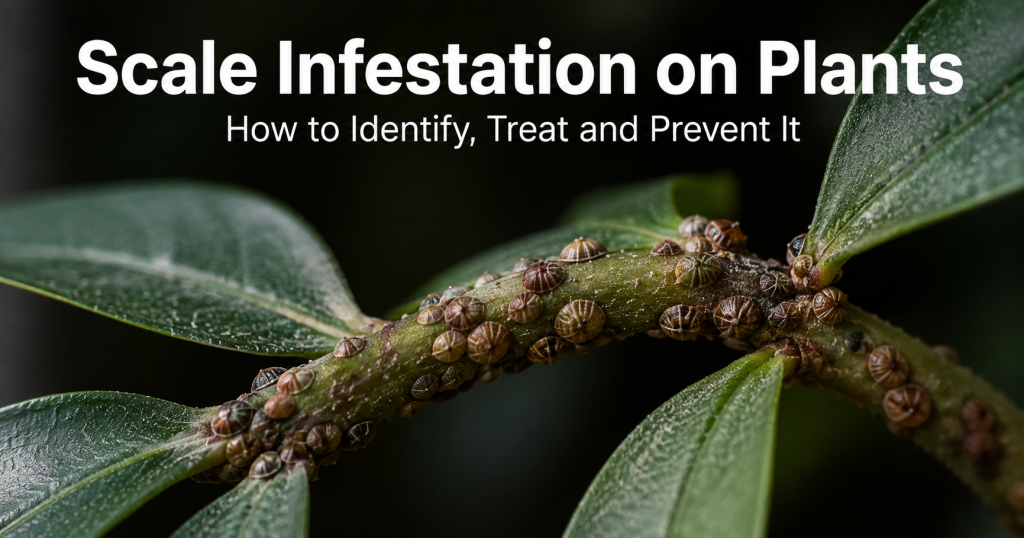
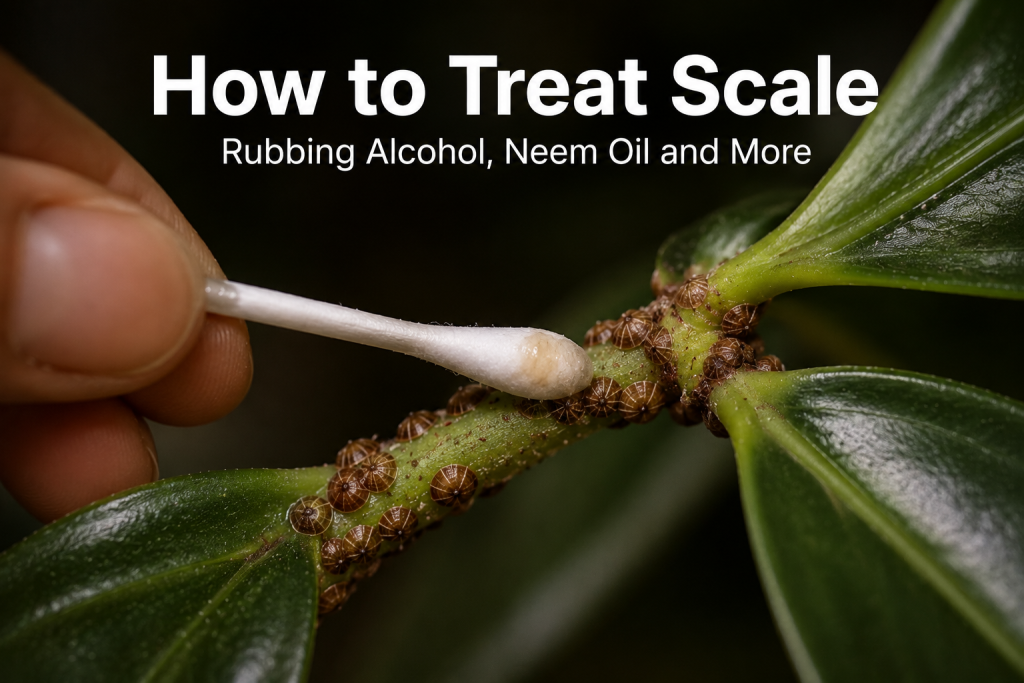
If you’ve noticed small, brown, shell-like bumps clinging to your plant’s stems or leaves that don’t wipe off easily, you’re likely dealing with a scale infestation on plants. Scale insects are one of the trickier indoor plant pests to deal with, not because treatment is complicated but because they’re so easy to miss until the infestation has already spread. Here’s everything you need to know to identify scale, get rid of it effectively, and stop it from coming back.
What Is Scale on Plants?
Scale insects are small, sap-sucking pests that attach themselves to plant tissue and feed by piercing through to the plant’s vascular system. Unlike most insects, adult scale don’t move once they’ve settled on a feeding spot. Instead, they develop a hard or waxy outer shell that protects them while they feed, which is exactly what makes them look like bumps or crusty patches rather than insects at first glance.
There are two main types you’re likely to encounter in houseplants:
Armored scale develops a hard, shield-like cover that’s separate from the insect’s body. These are generally harder to kill with contact treatments since the shell protects them from sprays.
Soft scale produces a waxy coating that’s part of the insect itself, tends to be slightly larger, and also excretes honeydew as it feeds, which can lead to sooty mold growth on leaves.
Both types cause similar damage and are treated using the same general approach, though armored scale often requires more persistent treatment.
Signs Your Plant Has Scale
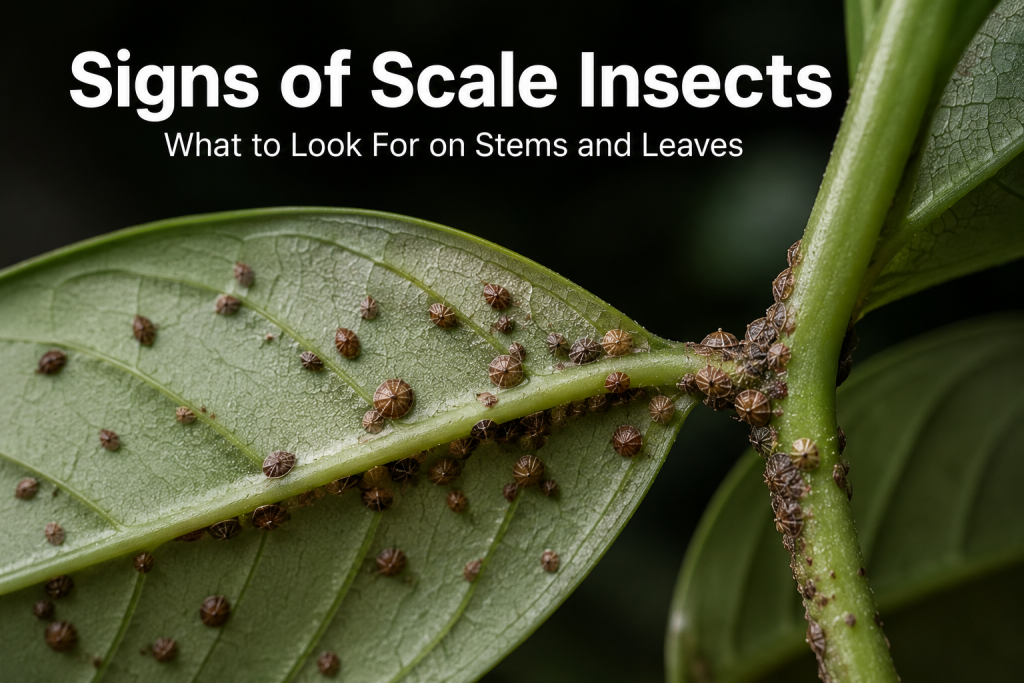
Brown, tan, or black bumps on stems and leaves. These are the scale insects themselves, or their shells. They typically cluster along stems, at leaf joints, and on the undersides of leaves. They look like small, immovable lumps that seem to be part of the plant rather than something sitting on it.
Sticky residue on leaves or surfaces below the plant. Soft scale in particular produces honeydew, a sugary excretion that leaves a tacky film on leaves, pots, and whatever surface the plant sits on.
Sooty mold. A dark, powdery coating that develops on leaves over time as mold grows on the honeydew residue.
Yellowing leaves and stunted growth. As scale feeds heavily, it drains the plant of nutrients, causing leaves to yellow, drop, or fail to develop properly.
Ants around the plant. Similar to mealybugs, ants are attracted to the honeydew soft scale produces, so an unexplained ant presence near a houseplant can be an early warning sign.
To confirm you’re dealing with scale rather than a natural growth or blemish, try scraping one of the bumps off with your fingernail. A scale insect will come off the plant surface cleanly, often revealing a soft body or residue underneath.
Why Your Plant Got Scale
Scale insects most commonly arrive on new plants brought home without being properly inspected first. They hide well in stem joints and on the undersides of leaves, making them easy to miss at the point of purchase.
Plants that have spent time outdoors during warmer months can also pick up scale before being brought back inside. Once established indoors, scale can spread slowly from plant to plant through direct contact or on hands and tools used during plant care.
Warm, stable indoor temperatures favor scale reproduction, which means infestations can build quietly over weeks or months before becoming obvious. Stressed or weakened plants tend to be more vulnerable, since healthy plants have a stronger natural ability to resist and recover from pest damage.
How to Get Rid of Scale on Plants
1. Isolate the affected plant
Move it away from other plants immediately to prevent scale from spreading through contact.
2. Manually remove scale with rubbing alcohol
This is the most effective first step for scale specifically. Dip a cotton swab or soft cloth in rubbing alcohol and wipe directly over the scale bumps. The alcohol dissolves the protective coating and kills the insects on contact. For a heavier infestation, use a soft toothbrush dipped in diluted rubbing alcohol to scrub along stems and leaf undersides more thoroughly.
3. Rinse the plant
After manual removal, rinse the plant under running water to wash off dead scale, eggs, and residue. Pay close attention to stem joints and the undersides of leaves.
4. Apply insecticidal soap or neem oil
Treat the entire plant with insecticidal soap or neem oil, making sure to coat all surfaces, including stems and the undersides of leaves. Reapply every 5-7 days for at least four weeks, since scale eggs can continue hatching well after the adult insects are gone.
5. Consider horticultural oil for armored scale
If you’re dealing with armored scale that’s proving resistant to soap and neem oil, horticultural oil (sometimes called dormant oil) is more effective at smothering armored scale specifically. Apply according to product instructions and test on a small area first to make sure your plant tolerates it.
6. Prune heavily infested sections
For stems or branches that are heavily covered with scale, pruning them back entirely is often faster and more effective than trying to treat each insect individually.
How to Prevent Scale From Coming Back
Inspect new plants carefully before bringing them near your existing collection, paying close attention to stem joints, the undersides of leaves, and any bark-like areas where scale tends to hide.
Quarantine new plants for two to three weeks before placing them with your main collection, which gives you time to spot any pests that weren’t obvious at first inspection.
Wipe down leaves and stems occasionally with a damp cloth, since this removes early-stage crawlers (juvenile scale that haven’t yet settled and developed their shell) before they establish themselves.
Keep plants healthy and avoid overwatering or under-fertilizing, since stressed plants are more vulnerable to scale and other pest problems.
If you move plants outdoors seasonally, check them carefully for scale and other pests before bringing them back inside.
Conclusion
Scale infestation on plants can feel discouraging because the bumps look so embedded and stubborn, but with consistent treatment, it’s very manageable. Manual removal with rubbing alcohol combined with regular insecticidal soap or neem oil applications will clear up most infestations within four to six weeks. The key, as with all plant pests, is starting treatment as soon as you notice the problem and sticking with it long enough to break the egg-to-adult life cycle completely.
Frequently Asked Questions
Can scale spread to other plants in my home?
Yes, though more slowly than some other pests since adult scale doesn’t move. However, juvenile crawlers are mobile before they settle, and scale can also transfer on hands, tools, or clothing during plant care. Isolating an infested plant right away is still important.
Are scale insects harmful to humans or pets?
No, scale insects don’t bite or pose any health risk to people or pets. They’re strictly a plant pest, and the concern is entirely about the damage they cause to your plants.
How long does it take to get rid of scale completely?
Most infestations take four to six weeks of consistent treatment to fully clear, since scale eggs hatch in waves and new crawlers can emerge well after the visible adults are gone. Patience and consistency are essential.
Why do scale insects look like part of the plant?
The hard or waxy shell that adult scales develop is specifically a defense mechanism. It protects them from predators and makes them harder to remove, which is why manual treatment with rubbing alcohol is such an important first step rather than relying on sprays alone.
Will scale come back after treatment?
It can, especially if a new infested plant is introduced or if some eggs survived the treatment cycle. Regular inspection of new plants and occasional wiping down of existing plants are the best ways to catch any reoccurrence early.